PoE Technology
History of POE Technology
1. Early Stage (Before 2000)
Before PoE technology was introduced, network devices required two separate connections: one for data (Ethernet cable) and another for electrical power. This made installation complex and expensive, especially for devices like IP phones and wireless access points. To solve this problem, companies such as Cisco Systems started developing their own proprietary methods to send power through Ethernet cables.
2. Standardization – IEEE 802.3af (2003)
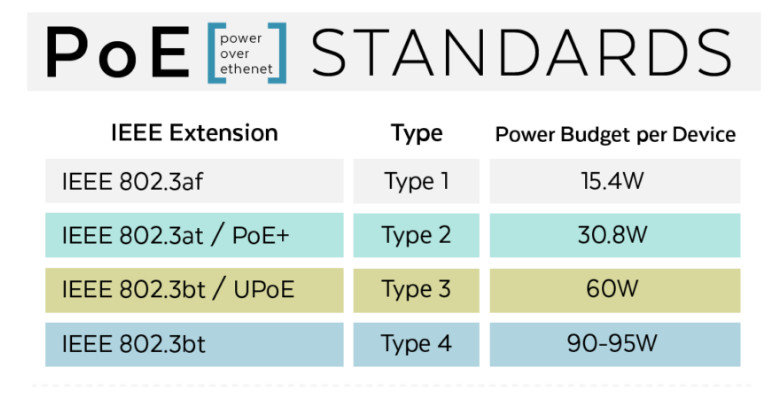
In 2003, the IEEE officially introduced the first PoE standard called IEEE 802.3af. This standard allowed devices to receive both power and data over a single Ethernet cable. It could deliver up to 15.4 watts of power, which was sufficient for devices l ike VoIP phones and basic wireless access points.This standard made PoE widely accepted and compatible across different vendors.
3. Advancement – IEEE 802.3at (PoE+) (2009)
As network devices became more advanced and required more power, IEEE introduced the IEEE 802.3at standard in 2009, also known as PoE+. This version increased the power delivery to 30 watts. It supported more demanding devices such as high-performance wireless access points, IP cameras with zoom features, and video phones.
4. High Power Era – IEEE 802.3bt (2018)
In 2018, IEEE released IEEE 802.3bt, also called PoE++ or 4PPoE. This standard significantly increased power delivery to 60 watts (Type 3) and up to 100 watts (Type 4). It enabled PoE to power larger devices such as LED lighting systems, digital signage, thin clients, and even some laptops. This marked a major expansion of PoE beyond traditional networking devices.
5. Modern Usage (Present Time)
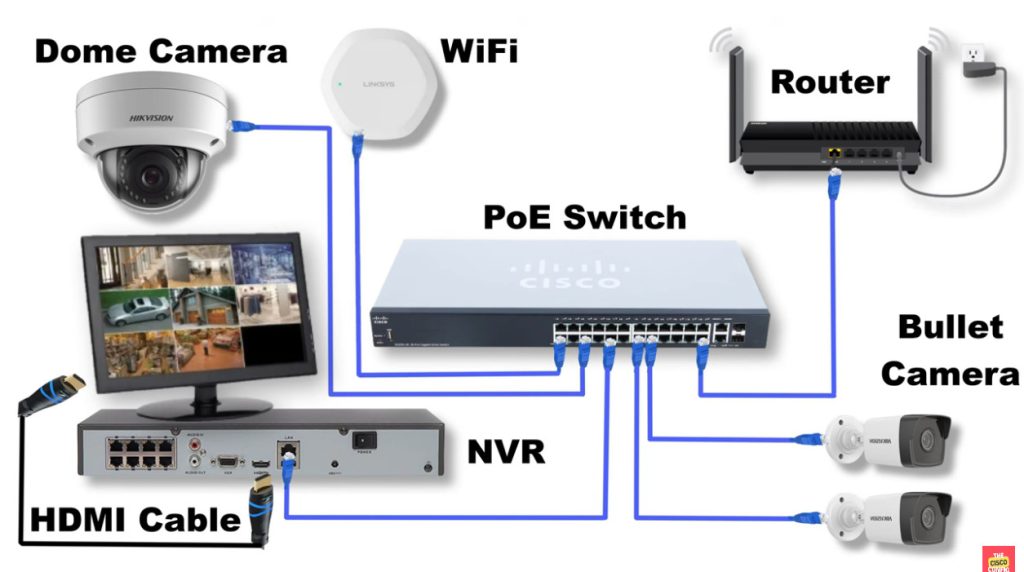
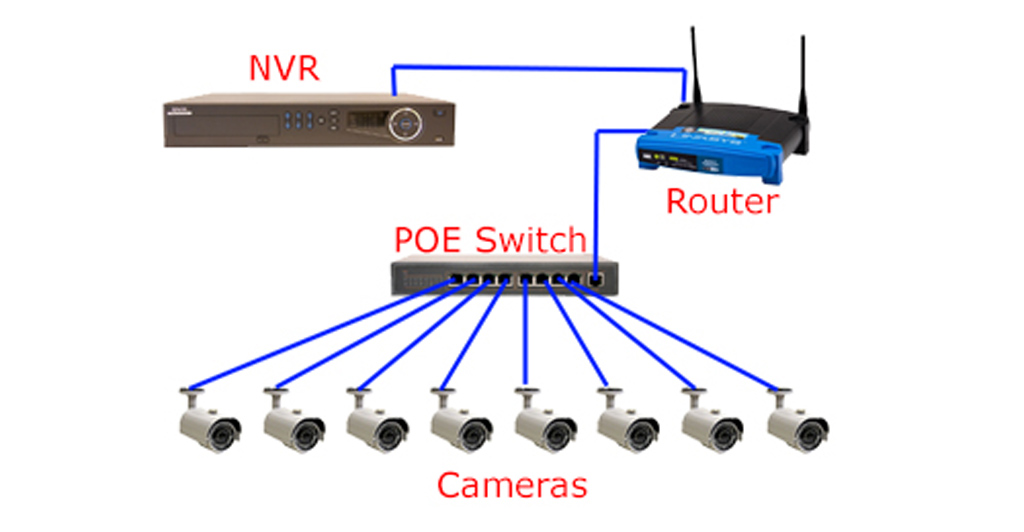
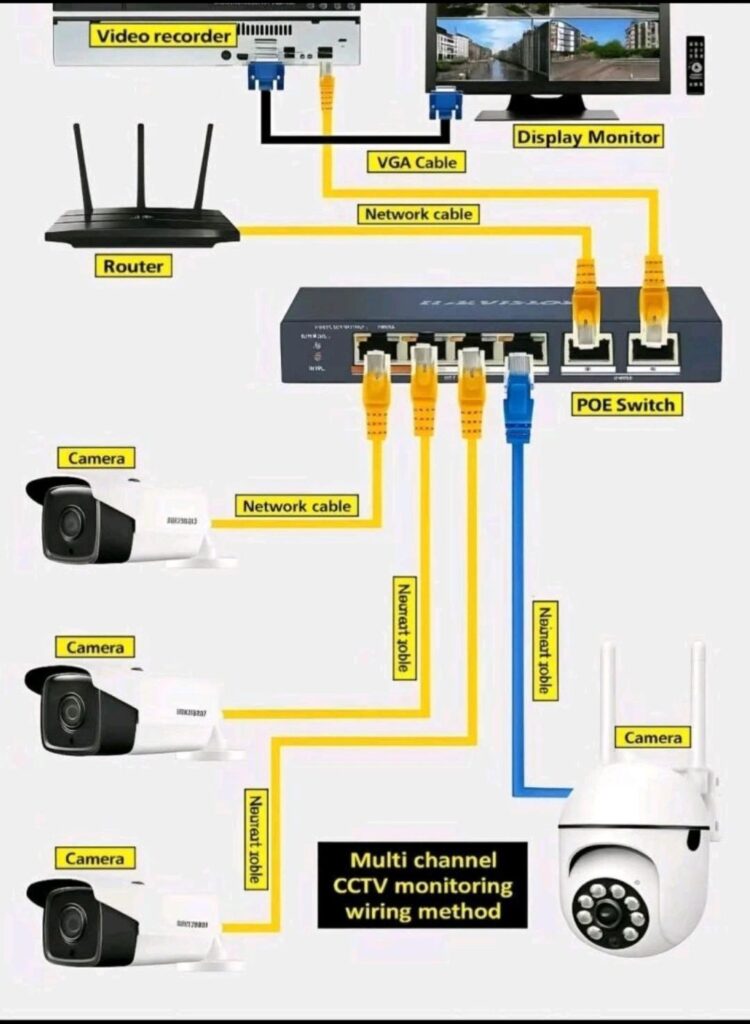
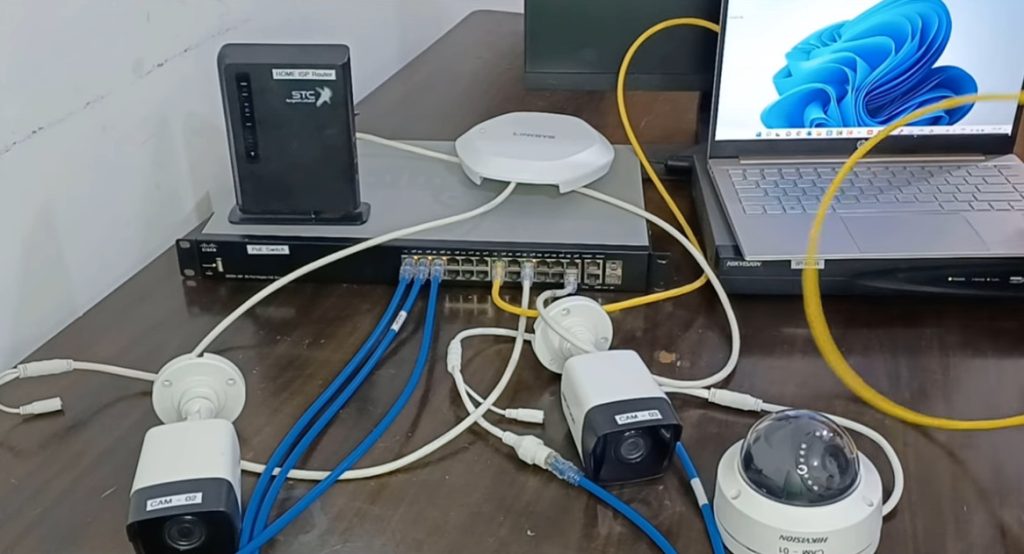
Today, PoE is widely used in enterprise and home networks. It is commonly used for CCTV IP cameras, wireless access points, IoT devices, and smart building systems. PoE simplifies network design by reducing the need for electrical wiring and allows centralized power management from switches.
6. Future of PoE
The future of PoE looks strong with the growth of IoT, smart cities, and automation. PoE is expected to become more energy-efficient and capable of supporting even higher power devices. It will continue to play a key role in modern network infrastructure and intelligent building systems.
What is POE
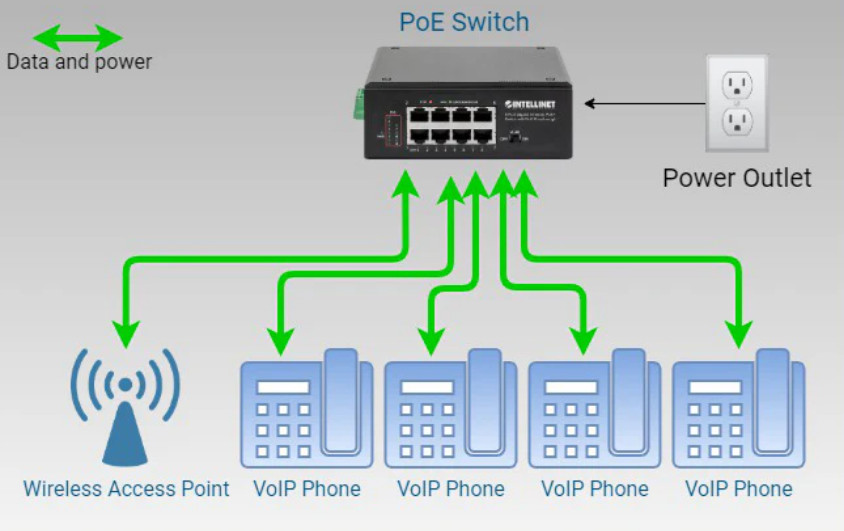
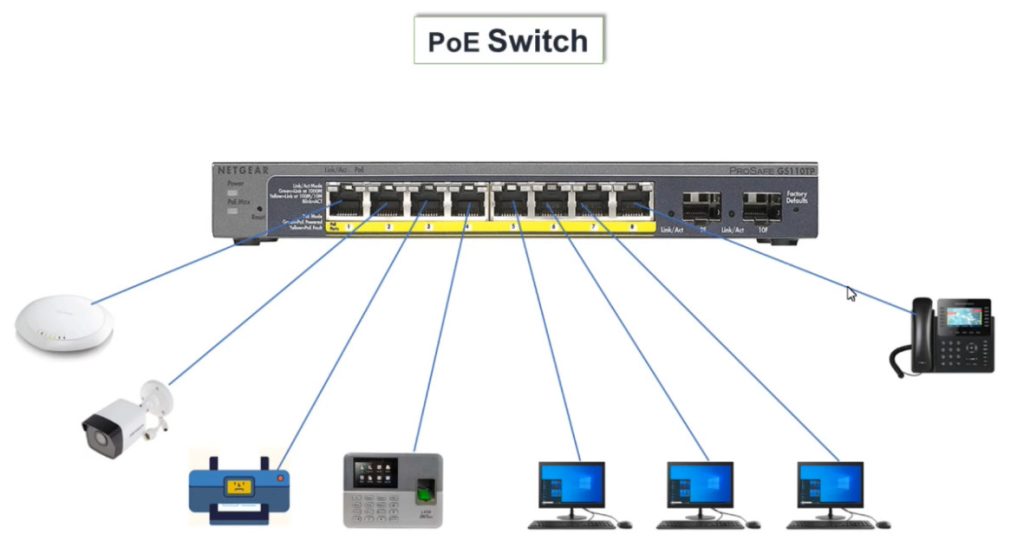
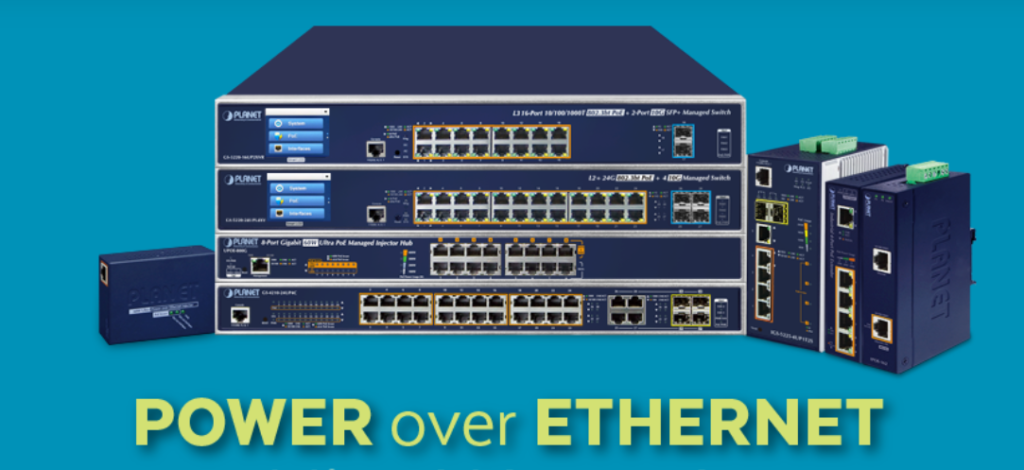
PoE (Power over Ethernet) is a networking technology that allows a single Ethernet cable to carry both data and electrical power to network devices at the same time. This means devices like IP cameras, wireless access points, VoIP phones, and IoT sensors can work without needing a separate power adapter or nearby electrical socket. PoE greatly simplifies installation, reduces cabling cost, and improves flexibility in placing devices anywhere an Ethernet cable can reach.
PoE works by injecting low-voltage DC power (usually 48V DC) into the Ethernet cable from a PoE-enabled switch or PoE injector. The powered device (called a PD – Powered Device) detects that PoE power is available and safely draws only the amount of power it needs. The technology follows IEEE standards such as 802.3af (PoE), 802.3at (PoE+), and 802.3bt (PoE++ or 4PPoE). Standard PoE (802.3af) can supply up to 15.4 watts per port, PoE+ (802.3at) up to 30 watts per port, and PoE++ (802.3bt) up to 60–90 watts per port, which is enough to power devices like PTZ cameras, video conferencing systems, LED lights, and small computers.
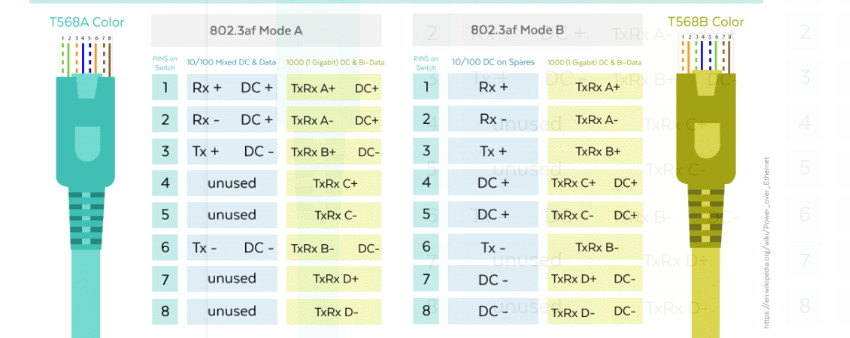
From a technical point of view, PoE can deliver power in two ways: Mode A uses the same wire pairs that carry data, while Mode B uses the spare wire pairs (in 10/100 Mbps Ethernet). In Gigabit Ethernet, all four pairs are used for data and power together. Before supplying power, the PoE switch performs a detection and classification process to ensure the connected device supports PoE and to determine how much power it requires. This prevents damage to non-PoE devices and ensures safe operation. In summary, PoE is a smart and efficient way to power network devices over Ethernet, making modern networks easier to deploy, manage, and scale.
The most common types of PoE applications include:
- VOIP phones
- IP cameras
- Wireless Access Points
Why Need POE in Company Environment
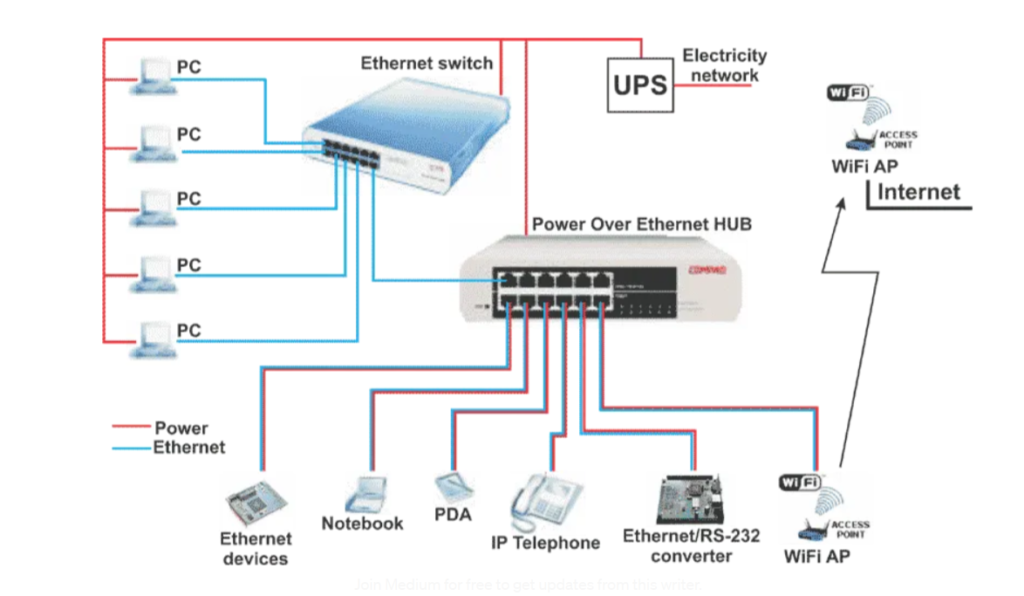
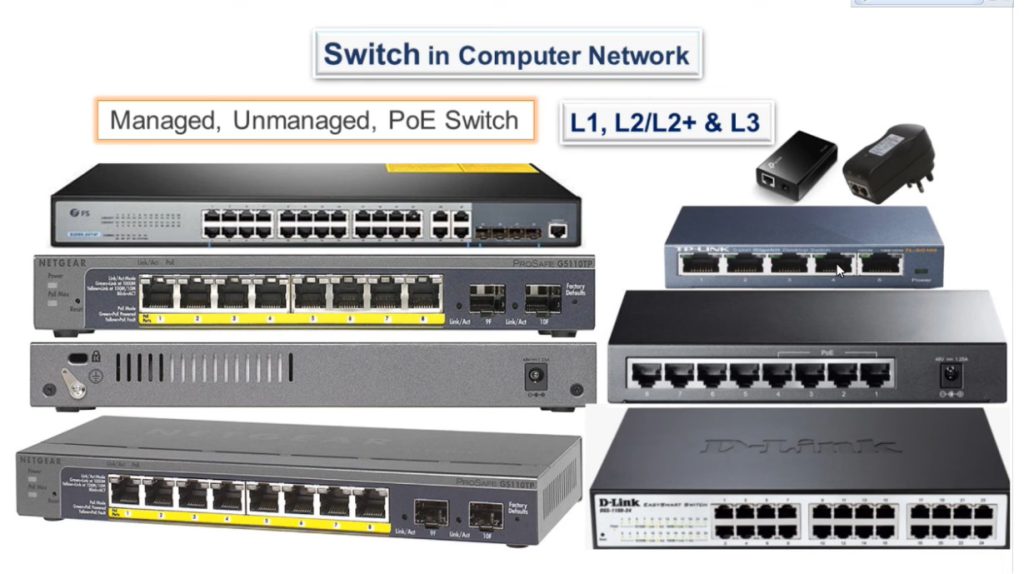
In a company environment, PoE (Power over Ethernet) is needed because it provides a simple, centralized, and reliable way to power network devices such as IP phones, wireless access points, IP cameras, access control systems, and IoT devices using the same Ethernet cable that carries data. This reduces the need for separate electrical wiring and power adapters at every device location, making installation faster, cleaner, and more cost-effective. With PoE, all devices can be powered directly from a PoE switch that is usually connected to a UPS in the server room, so even during a power cut, critical devices like IP phones, Wi-Fi access points, and security cameras continue to work without interruption. PoE also makes network expansion easy, because new devices can be installed anywhere an Ethernet cable is available, without waiting for electricians to add power sockets.
Without PoE in a company environment, several problems arise. Each device requires its own power adapter and nearby electrical outlet, which increases cabling clutter, installation time, and maintenance complexity. In many office areas or ceilings (where access points and cameras are mounted), power sockets may not be available, forcing companies to run extra electrical lines and increasing infrastructure cost. Power failures also become harder to manage because devices are not centrally backed up by UPS, so during an outage, Wi-Fi, phones, and cameras may stop working even if the network core is still running. Troubleshooting becomes more difficult since failures can be caused by either data cables or separate power supplies. In short, without PoE, company networks become more expensive to install, harder to manage, less flexible, and less reliable compared to a PoE-based network design.
What are the advantages of PoE
Power over Ethernet (PoE) offers many practical advantages in modern networks, especially in company and enterprise environments. The main benefit of PoE is that it allows a single Ethernet cable to carry both data and power, which simplifies installation and eliminates the need for separate power adapters and electrical wiring at device locations. This reduces cabling cost, saves time during deployment, and keeps offices and server rooms neat and organized.
Another major advantage of PoE is centralized power management. All PoE devices receive power from PoE switches that can be connected to a UPS, ensuring that critical devices like IP phones, wireless access points, and security cameras continue to operate during power outages. Network administrators can also remotely monitor, restart, or control the power to devices from the switch, which makes troubleshooting and maintenance much easier.
PoE also improves flexibility and scalability. Devices such as Wi-Fi access points, IP cameras, and access control systems can be installed in optimal locations (ceilings, walls, corridors) without worrying about nearby power sockets. As the company grows, new devices can be added quickly without extra electrical work. Additionally, PoE is a safe and standardized technology that includes automatic detection and power negotiation, which protects non-PoE devices from damage.
In summary, the advantages of PoE include simpler installation, lower infrastructure cost, centralized and reliable power, easier management, flexible device placement, and improved network uptime, making it an essential technology for modern enterprise networks.
Maximum Cable Length PoE
A PoE switch can supply both data and electrical power to network devices over a single Ethernet cable, but it has a defined maximum cable length of 100 meters (328 feet) according to Ethernet standards. This distance includes about 90 meters of permanent cable and 10 meters of patch cords. Beyond 100 meters, the signal becomes weak due to voltage drop and data loss, which can cause PoE devices such as IP cameras, wireless access points, or VoIP phones to disconnect or fail to power on properly. Therefore, in normal network design, PoE devices should always be installed within 100 meters of the PoE switch for stable operation.
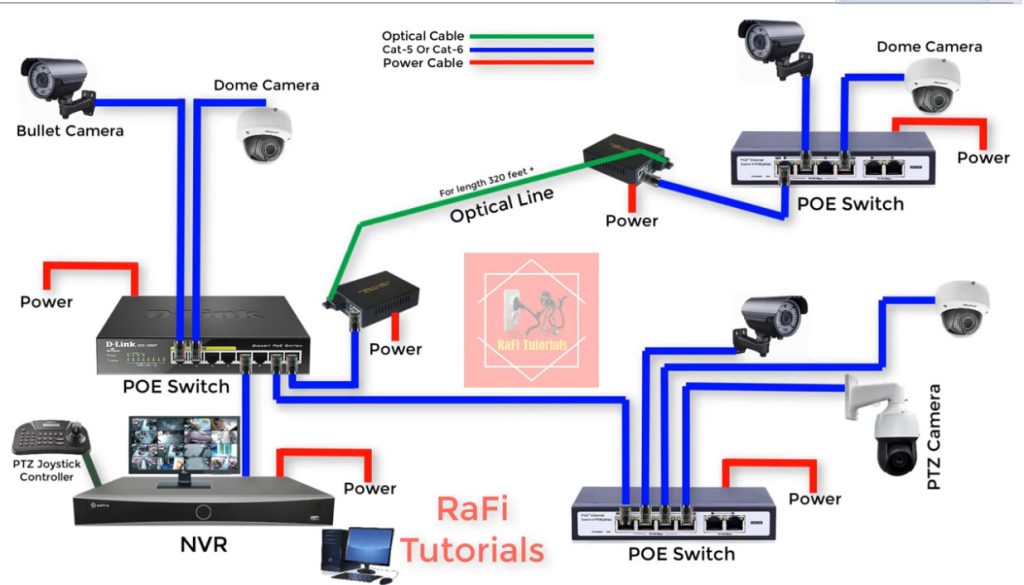
PoE Extend Mode (also called Long Range PoE mode) is a special feature available on some PoE switches that allows power and data to be transmitted over longer distances, usually up to 200–250 meters, for low-bandwidth devices like IP cameras. When extend mode is enabled, the switch reduces the Ethernet speed (commonly from 1000 Mbps or 100 Mbps down to 10 Mbps) to compensate for signal loss and ensure stable power delivery over long cables. This mode is mainly used in surveillance networks where cameras are installed far away, such as parking areas, roads, or factory yards, and where high data speed is not required. In simple terms, a PoE switch normally supports up to 100 meters of cable, and PoE extend mode allows longer distance by lowering data speed while maintaining power to remote devices.
What is PoE Injector
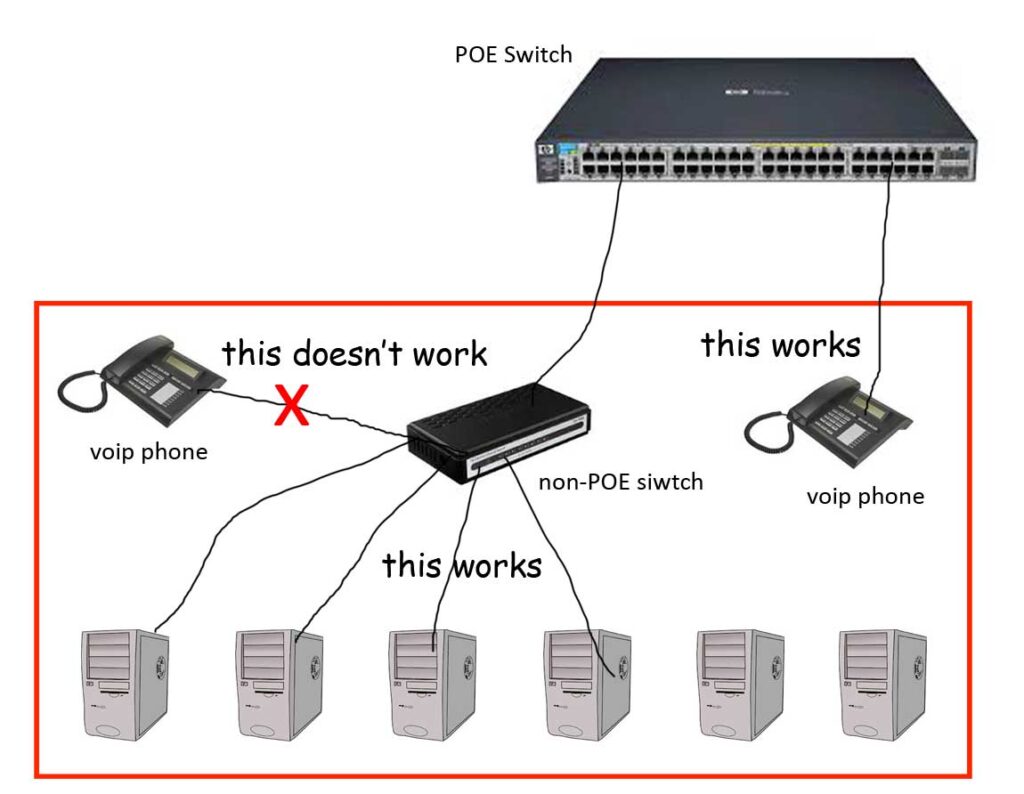
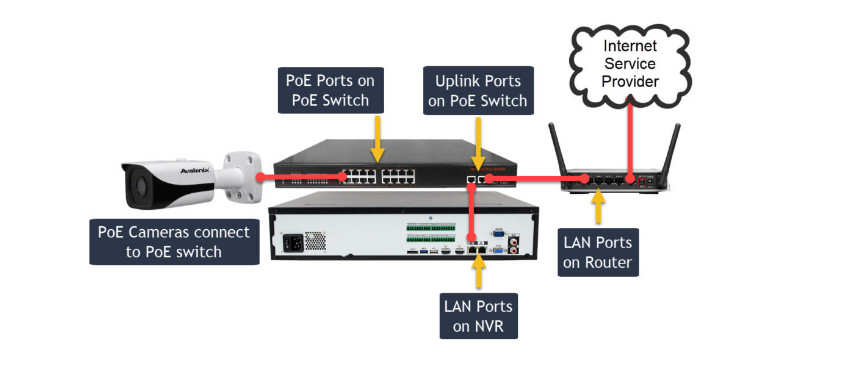
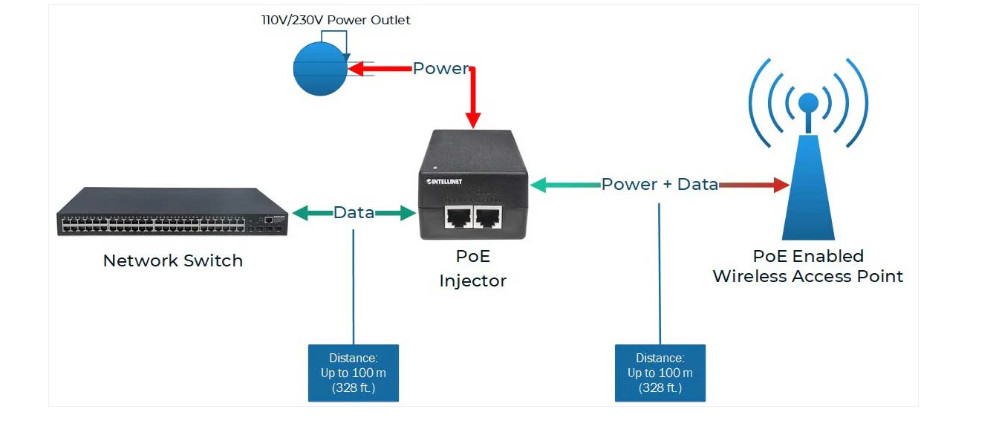
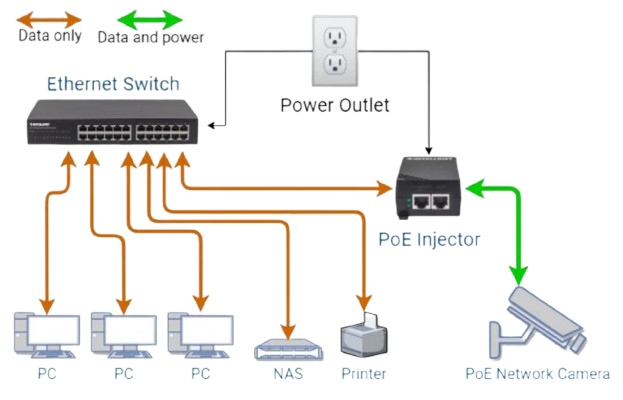
A PoE Injector (Power over Ethernet Injector) is a device used to supply electrical power along with data over a single Ethernet cable to PoE-enabled devices such as IP cameras, wireless access points, VoIP phones, and access control systems. It is mainly used when the network switch does not support PoE. The PoE injector is installed between the non-PoE switch and the powered device: one Ethernet cable connects from the switch to the injector (data only), and another Ethernet cable goes from the injector to the device (data + power). The injector adds the required DC power (usually 48V) into the Ethernet line while keeping the data signal intact.
PoE injectors follow IEEE standards like 802.3af (15.4W), 802.3at (30W), and 802.3bt (60–90W) to safely detect and deliver the correct amount of power to the connected device. They are commonly used in small networks or temporary installations where replacing an existing switch with a PoE switch is not economical. In simple terms, a PoE injector is a power adapter for network devices that sends power through the Ethernet cable instead of using a separate electrical socket near the device.
RJ45 PINS
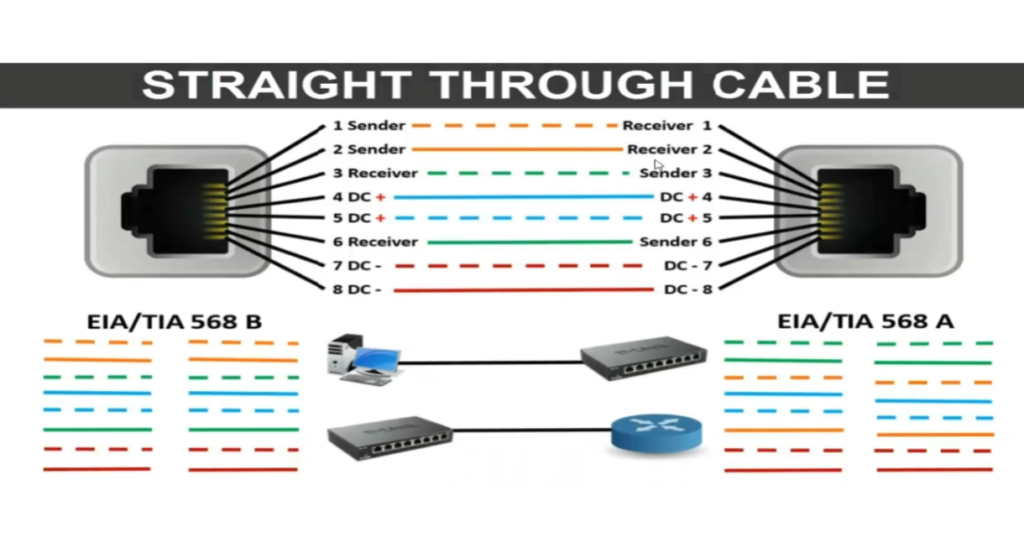
An RJ45 connector has 8 pins (4 twisted pairs) and is used in Ethernet cables (Cat5e, Cat6, etc.) to carry data signals and, in the case of PoE (Power over Ethernet), also electrical power. In normal Ethernet communication without PoE, only certain pins are used for data transmission. For 10/100 Mbps Ethernet, data is carried on pins 1–2 (Transmit) and pins 3–6 (Receive), while pins 4–5 and 7–8 remain unused. In Gigabit Ethernet (1000 Mbps), all 8 pins are used for data, meaning all four pairs transmit and receive data simultaneously for higher speed.
When PoE (Power over Ethernet) is used, electrical power is added to the same RJ45 cable along with data. Power can be delivered in two main ways. In Mode A, power is sent on the same pairs that carry data, which are pins 1–2 and 3–6. In Mode B, power is sent on the spare pairs, which are pins 4–5 (positive) and pins 7–8 (negative), while data continues on pins 1–2 and 3–6. In modern networks using Gigabit Ethernet and PoE+ / PoE++, power and data are carried together over all four pairs (all 8 pins) to support higher power levels up to 60W or 90W. In simple words, RJ45 pins are used for data communication, and when PoE is enabled, the same pins also safely carry DC power to devices like IP cameras, Wi-Fi access points, and IP phones through one single cable.
PoE Injector
PoE Network