OLT (Optical Line Terminal)
What is OLT
What is OLT (Optical Line Terminal)?
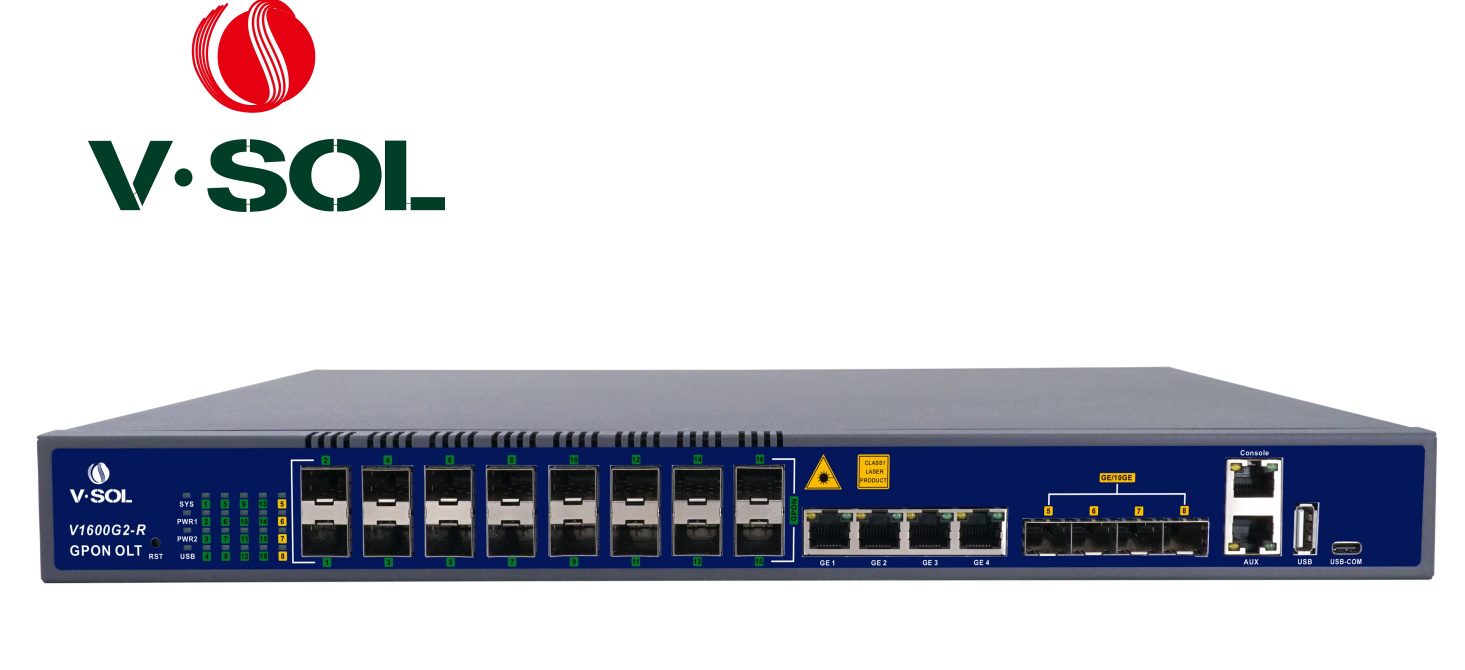
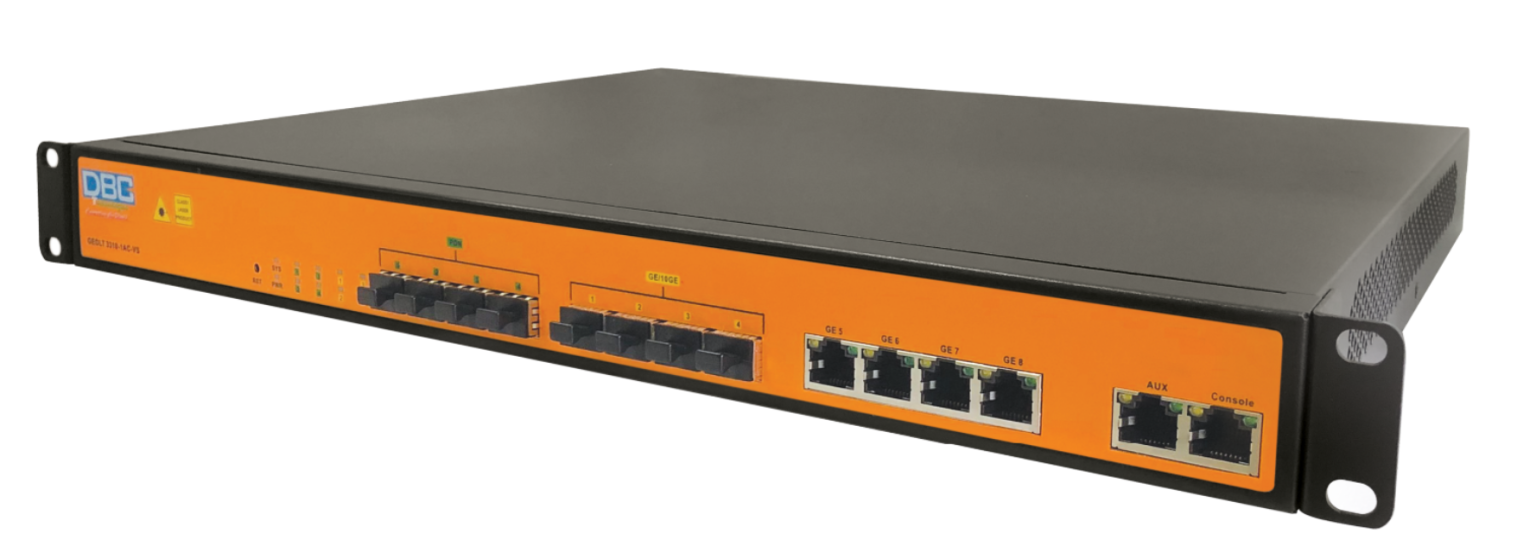
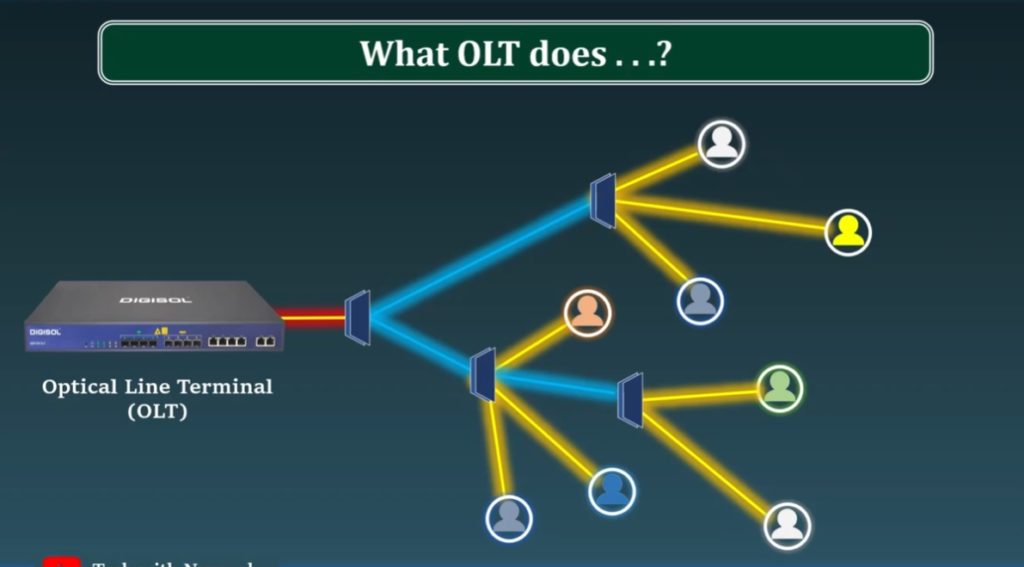
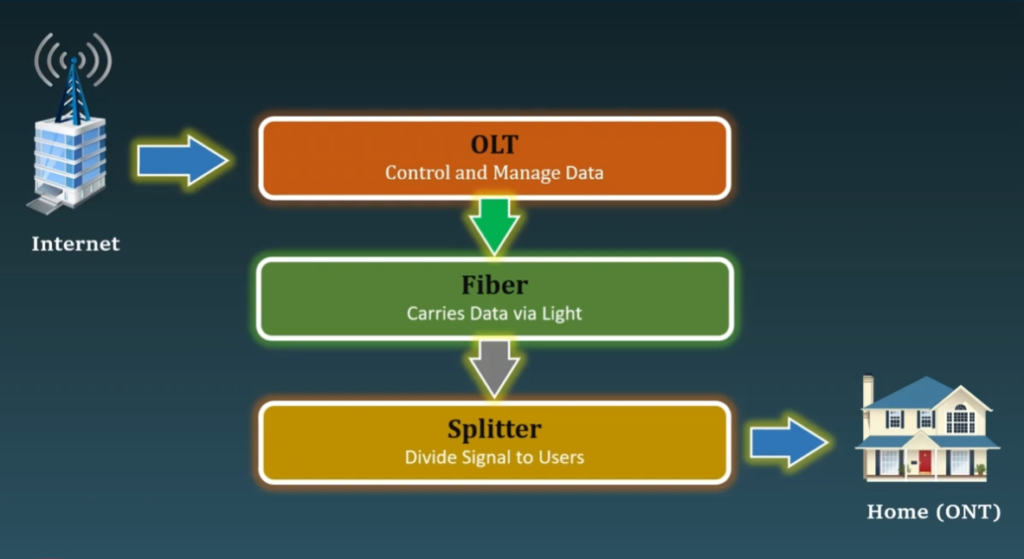
An OLT (Optical Line Terminal) is a central device used in fiber-optic networks, especially in GPON (Gigabit Passive Optical Network) systems. It is located at the service provider’s main office or data center and acts as the starting point of the fiber network. The OLT connects the internet backbone to multiple users through fiber cables.
How OLT Works
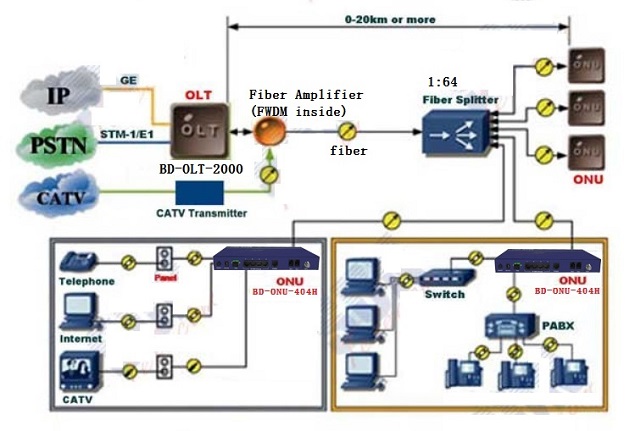
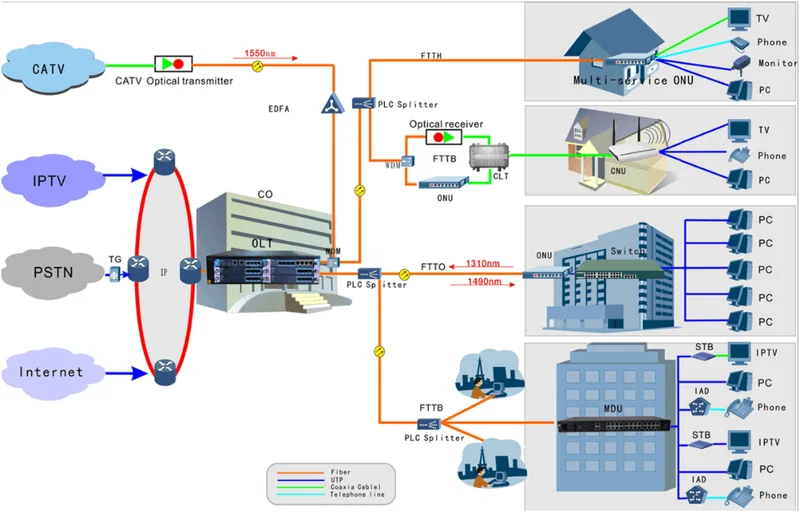
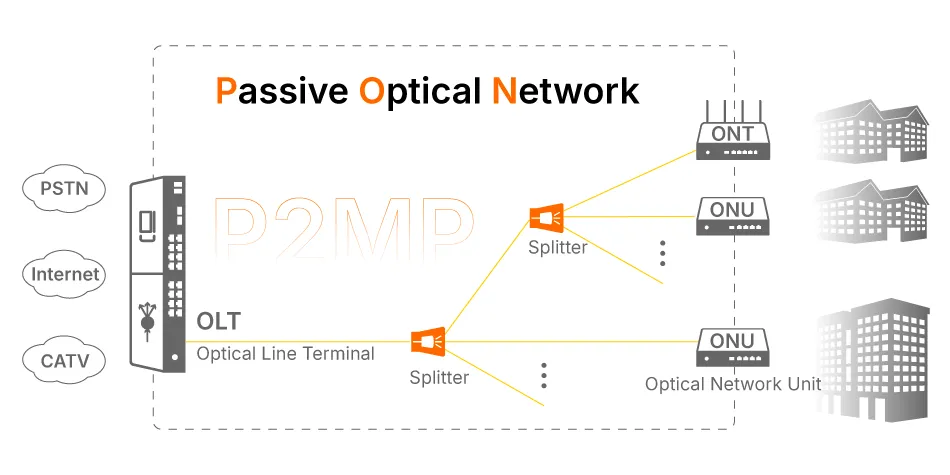
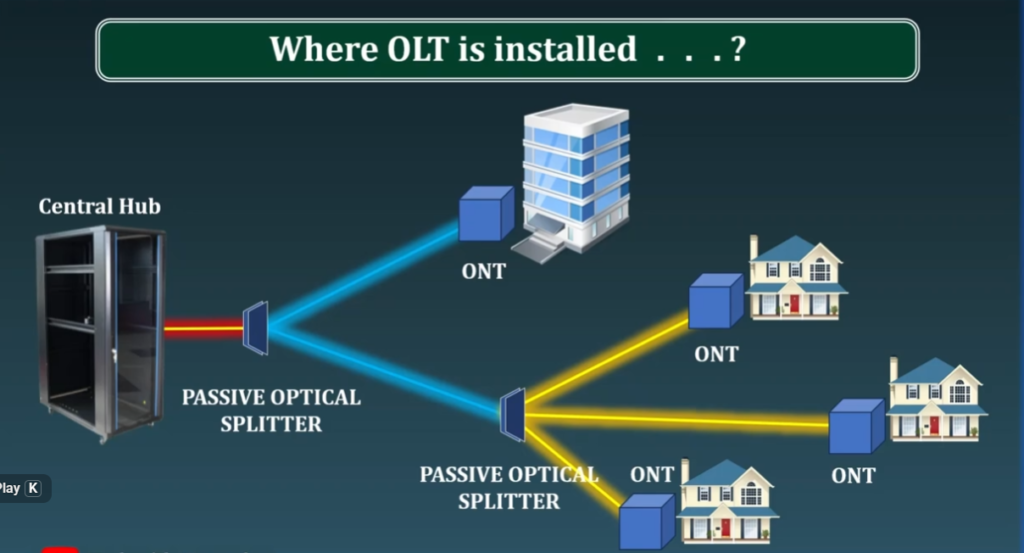
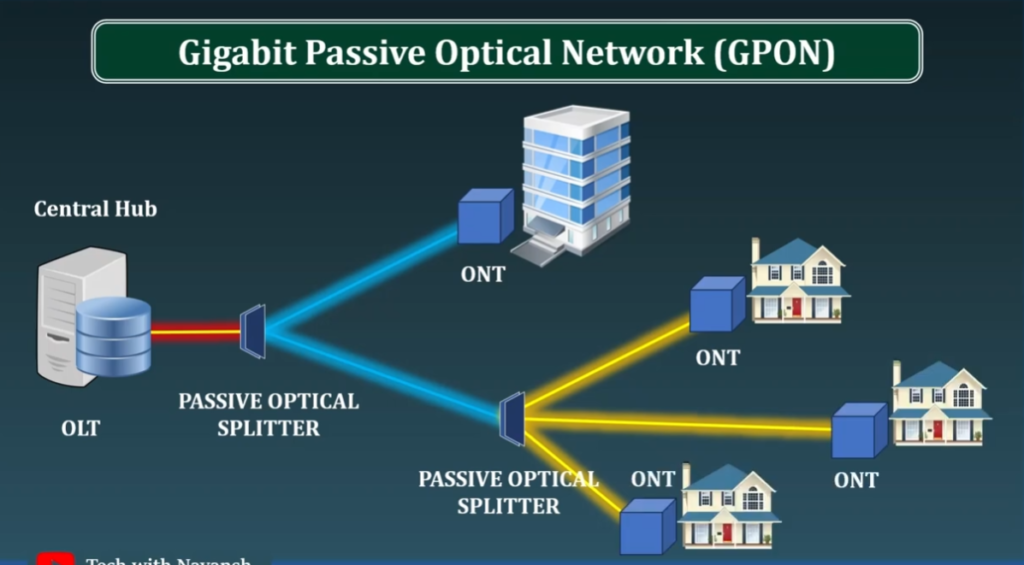
The OLT sends data from the internet to many users using a single optical fiber. This signal is then split using passive splitters and distributed to multiple homes or offices. On the user side, devices like ONT/ONU receive the signal and convert it into usable internet, voice, or TV services.
Main Functions of OLT
- Controls and manages the entire fiber network
- Converts electrical signals into optical signals
- Distributes bandwidth to multiple users
- Monitors network performance and user connections
Example
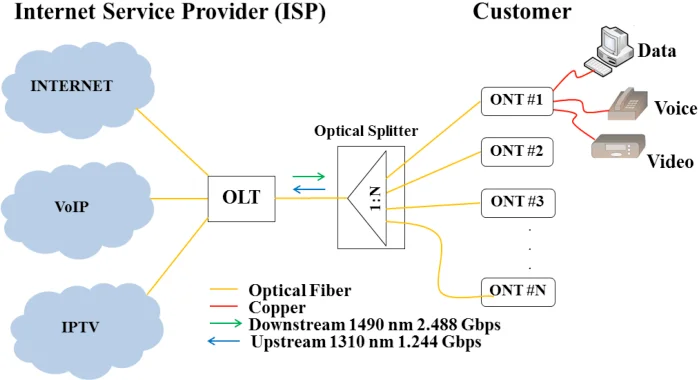
In an ISP (Internet Service Provider) network, the OLT is installed at the central office. From there, one fiber line goes to a splitter, and then multiple connections go to different homes. Each home gets internet through an ONT device, but all are controlled by the single OLT.
What is an OLT
The full form of OLT is Optical Line Terminal. It serves as the service provider’s endpoint in a PON architecture, managing signal conversions and communication with Optical Network Terminals (ONTs) or Optical Network Units (ONUs) located at user premises. Acting as the control center, it ensures stable delivery of high-speed internet, voice, and video services.
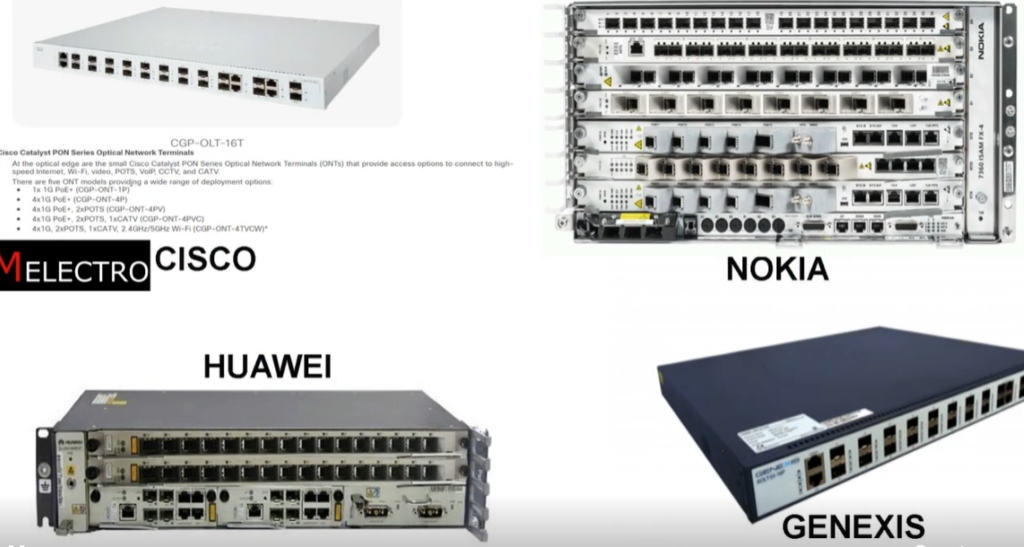
An OLT device typically includes key modules such as:
- Control Board: Oversees system operation and ensures reliability.
- DC Power Supply Board: Provides stable power to modules.
- Fan Unit: Manages airflow and temperature.
- Service Frame: Houses the functional boards.
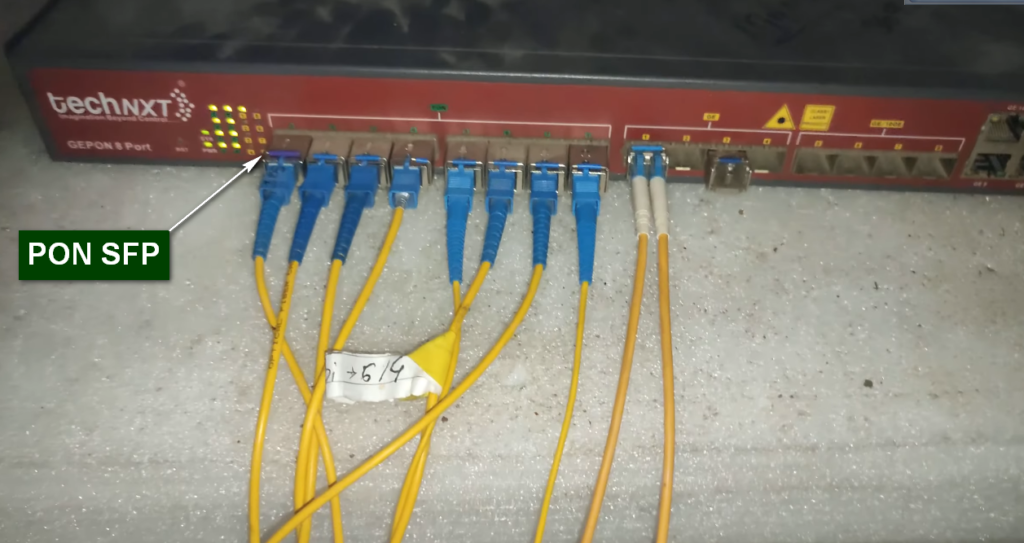
- Uplink Boards: Connects OLT to core routers and switches for external communication.
Main Functions and Features of an OLT
Modern OLTs integrate advanced functionalities to deliver both operational efficiency and flexible service provisioning.
Core Network Control and Bandwidth Allocation
OLT software dynamically allocates bandwidth to each ONU based on user demand and service type. This ensures smooth delivery for high-bandwidth applications like 4K streaming and VoIP.
Device Management and Monitoring
Through protocols such as OMCI (ONT Management and Control Interface), operators can remotely configure, upgrade, and monitor ONUs. This centralized control significantly reduces on-site maintenance costs.
Quality of Service (QoS) and Security
OLT systems prioritize service traffic—voice, video, and data—using QoS mechanisms. Advanced encryption and authentication ensure user privacy and protect against network intrusions.
Redundancy and Energy Efficiency
Carrier-grade OLTs include power supply and link redundancy to ensure uninterrupted operation. Many new-generation GPON and XGS-PON OLTs adopt modular and energy-saving designs to support sustainable network expansion.
How Does OLT Work in PON
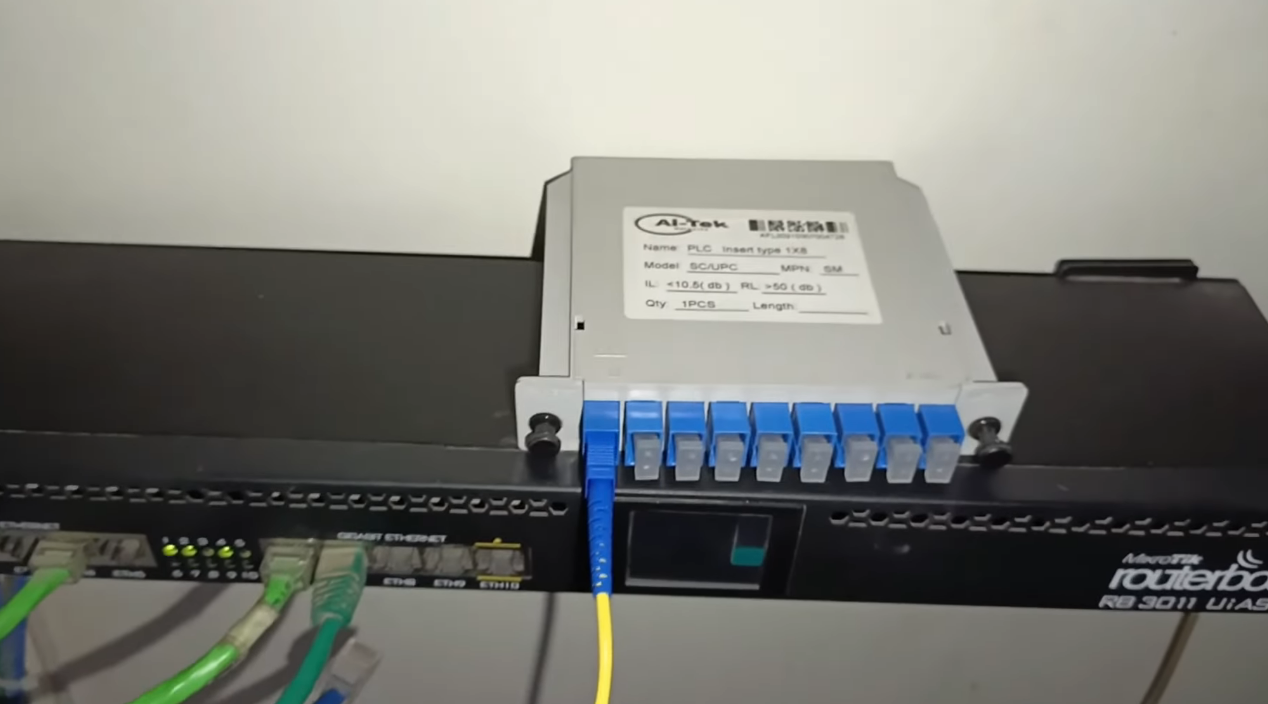
In a PON system, the OLT acts as the network’s master node. It connects to the provider’s core network via the uplink port and to multiple ONUs or ONTs through optical splitters.




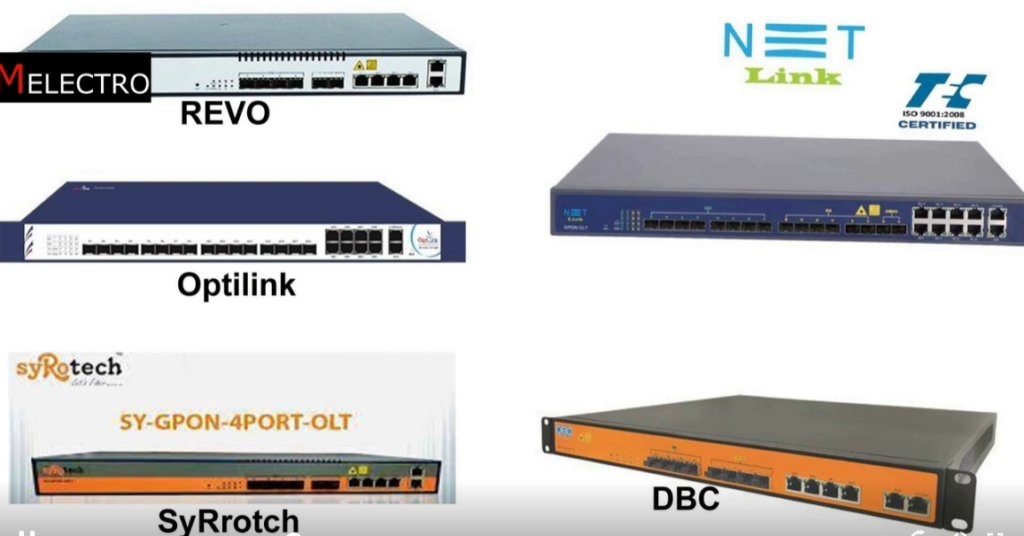
Signal Conversion and Direction
The OLT converts electrical signals into optical signals for downstream transmission and receives upstream signals from users. Data is broadcast downstream, while upstream signals are transmitted in assigned time slots to prevent collision.
Bandwidth Allocation
Using Time Division Multiple Access (TDMA), the OLT allocates specific time intervals to each ONU or ONT. This ensures efficient, collision-free data flow and stable bandwidth for all subscribers.
Network Control
The OLT monitors link status, manages bandwidth dynamically, and communicates control commands to all connected devices, maintaining synchronization across the network.
OLT Types and Configurations
OLT devices are classified based on both PON standard and hardware form factor.
1. Types by PON Standard
| Type | Standard | Downstream/Upstream Speeds | Use Cases |
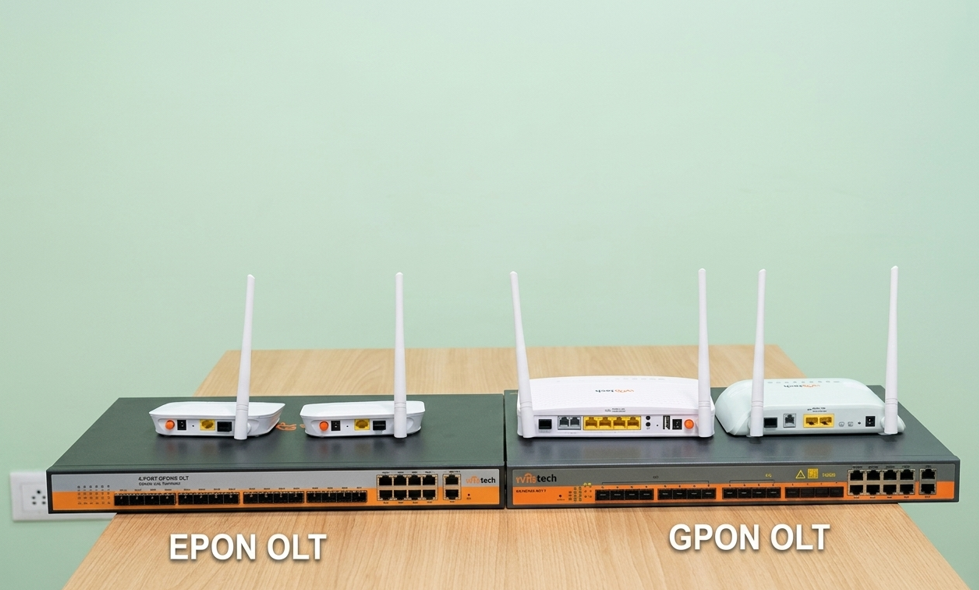
| EPON OLT | IEEE 802.3ah | 1.25 Gbps / 1.25 Gbps | Affordable broadband for residential access |
| 10G EPON OLT | IEEE 802.3av | 10 Gbps / 10 Gbps or 10 Gbps / 1 Gbps | Metro networks, business users needing higher speeds |
| GPON OLT | ITU-T G.984 | 2.5 Gbps / 1.25 Gbps | FTTH, FTTB deployments for balanced performance |
| XG-PON OLT | ITU-T G.987 | 10 Gbps / 2.5 Gbps | IPTV, video-heavy services with high downstream needs |
| XGS-PON OLT | ITU-T G.9807.1 | 10 Gbps / 10 Gbps | Cloud, 8K video, enterprise symmetrical traffic |
| Combo PON OLT | ITU-T G.984 + G.9807.1 | Dual-mode: GPON & XG(S)-PON | Hybrid deployments for gradual GPON to XGS-PON migration |
While GPON and EPON OLTs are widely used for cost-effective FTTH rollouts, XG(S)-PON and Combo PON OLTs offer future-proof flexibility for higher bandwidth applications.
2. Types by Hardware Configuration
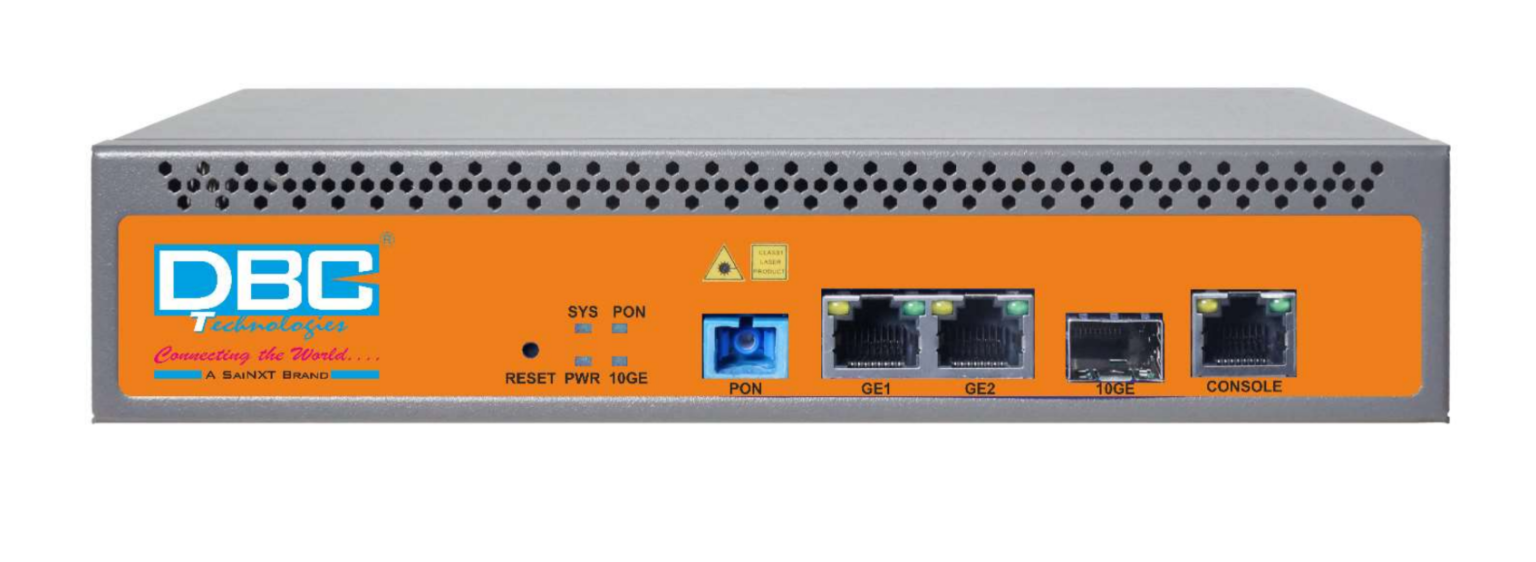
- Box OLT: Compact and integrated, suitable for small to medium networks.
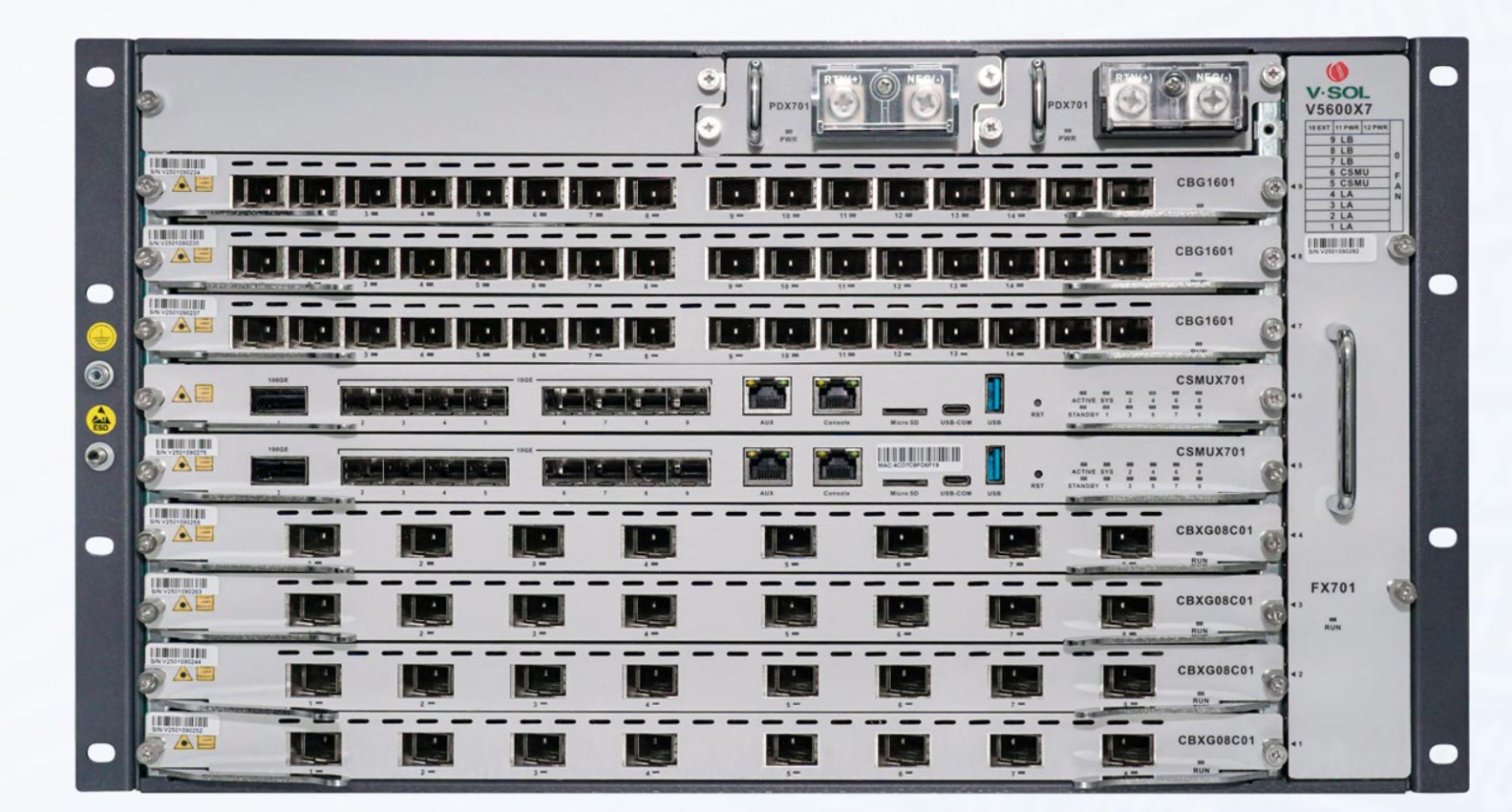
- Chassis OLT: Modular design with multiple PON boards, ideal for carriers and large ISPs needing redundancy and scalability.
For community or SME networks, a Box OLT offers cost efficiency and easy deployment. For telecom operators or city-wide networks, a Chassis OLT provides long-term scalability and redundancy.
Common Deployment Scenarios of OLT
OLTs support a wide range of fiber broadband deployments across residential, business, and industrial sectors.
FTTH, FTTB, and FTTC Deployments
In FTTH, OLTs deliver high-speed internet directly to households; FTTB serves multiple users within a building; FTTC places the OLT closer to end-users to optimize signal strength.
Enterprise and ISP Use Cases
Internet Service Providers deploy OLTs to manage large subscriber bases efficiently. Enterprises use smaller-capacity OLTs to build private fiber networks that support data centers and internal communication systems.
Industrial and Campus Network Scenarios
Industrial parks, educational institutions, and smart campuses adopt OLT-based FTTx networks to ensure stable, high-bandwidth internal connectivity.
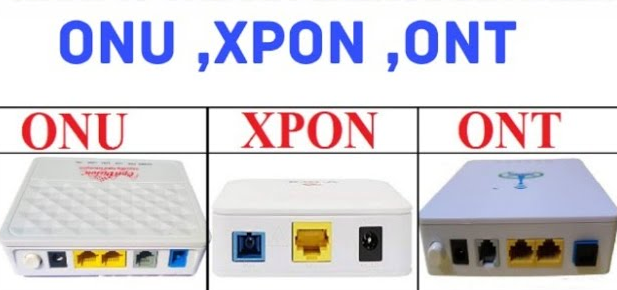
ONU, ONT, XPON
1. ONU (Optical Network Unit)
An ONU (Optical Network Unit) is a device in a fiber-optic network that receives optical signals from the OLT and converts them into electrical signals for users. It is usually installed in a shared location, such as outside a building, on a pole, or in a basement. One ONU can provide internet service to multiple users.
👉 Example:
In an apartment building, a single ONU is installed in the basement. From that ONU, Ethernet cables go to different flats, giving internet access to many users from one device.
2. ONT (Optical Network Terminal)
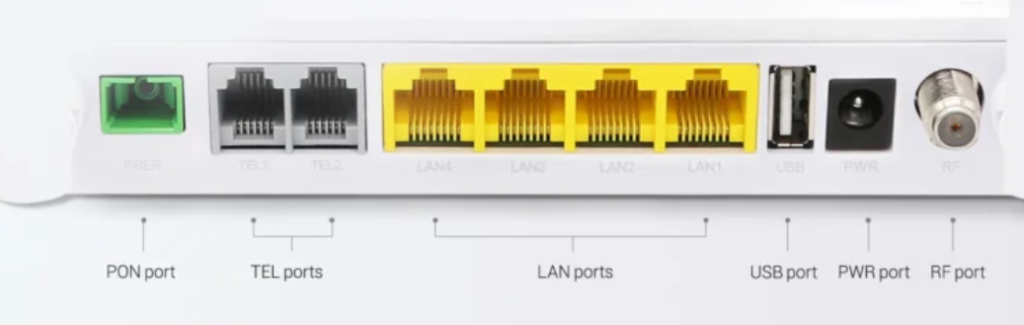
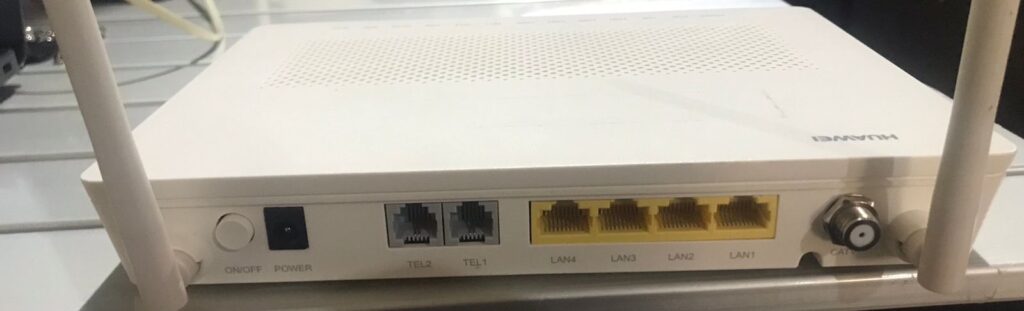
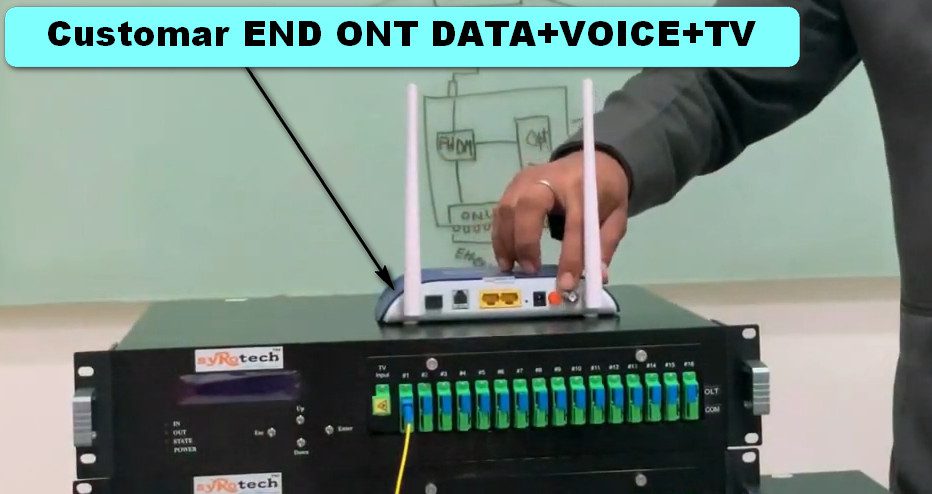
An ONT (Optical Network Terminal) is similar to an ONU but is designed for individual use. It is installed inside a home or office and connects directly to the user’s router, TV, or phone. It converts the fiber signal into usable internet services.
👉 Example:
In a home FTTH connection, the fiber cable comes directly into your house and connects to an ONT. From the ONT, a LAN cable goes to your Wi-Fi router, giving internet access to your devices.
3. What is XPON
XPON is a type of fiber-optic technology used in broadband networks that supports both GPON (Gigabit Passive Optical Network) and EPON (Ethernet Passive Optical Network) in a single device. It is mainly used in FTTH (Fiber to the Home) connections to provide internet, TV, and voice services.
How XPON Works
XPON devices (like ONT/ONU) can automatically detect whether the network is GPON or EPON and adjust accordingly. This means the same device can work with different ISP infrastructures without needing separate hardware.
Example
If an ISP uses GPON in one area and EPON in another, an XPON ONT can work in both areas without changing the device. This makes installation easier and reduces cost.

Triple Play Service
What is Triple Play Service
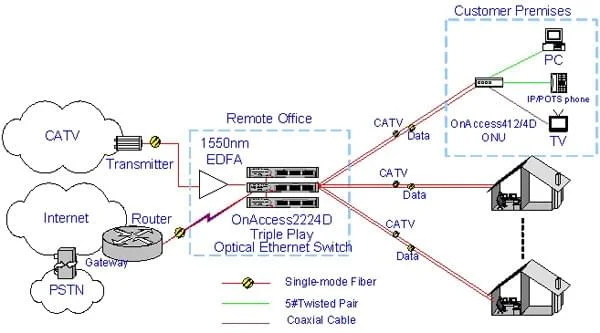
Triple Play Service is a telecom service where a single service provider delivers three services together over one connection (usually fiber or broadband).
The Three Services in Triple Play
- Internet (Data) – High-speed broadband connection
- Voice (Telephone) – Landline or VoIP calling
- Video (TV/IPTV) – Television channels or streaming services
How It Works
In modern fiber networks (like FTTH), one fiber cable comes from the ISP’s OLT to your home (ONT). This single connection carries all three services—internet, TV, and phone—at the same time.
Example
A company like Reliance Jio provides:
- High-speed internet
- Jio TV (IPTV service)
- Voice calling
All through one fiber connection → this is Triple Play Service.