Fortinet, Inc. is an American cybersecurity company headquartered in Sunnyvale, California, who develop and market security solutions like firewalls, endpoint security and intrusion detection systems.
Fortinet has offices all over the world in US, Canada, Chile, Mexico, Argentina, Brazil, Algeria, Austria, Belgium, Denmar, Czech Republic, Finland, France, Germany, Greece, Hungary, Ireland, Israel, Italy, Norway, Poland, Qatar, Romania, Saudi Arabia, Spain, Sweden, Switzerland, Netherlands, UK, Turkey, UAE, Australia, China, Hong Kong, India, Indonesia, Japan, Korea, Malaysia, Philippines, Singapore, Taiwan, Thailand, and Vietnam.
Founded in 2000 by brothers Ken Xie and Michael Xie, the company’s first and main product was FortiGate, a physical firewall. The company later added wireless access points, sandbox and messaging security. The company went public in November 2009.[4]


History of Fortinet
In 2000, Ken Xie and his brother Michael Xie co-founded Appligation, Inc., which they renamed ApSecure and finally Fortinet (from the phrase “Fortified Networks”).
Fortinet introduced its first product, FortiGate, in 2002, followed by anti-spam and anti-virus software.The company raised $13 million in private funding from 2000 to early 2003.Fortinet’s first channel program was established in October 2003.
The company began distributing its products in Canada in December 2003 and in the UK in February 2004.By 2004, Fortinet had offices in Asia, Europe, and North America.
Fortinet Products
Fortinet products are mainly focused on cybersecurity and networking. The company is best known for its FortiGate firewalls, but it also offers a complete security ecosystem called the Security Fabric. This means all products work together to protect networks, users, applications, and data.
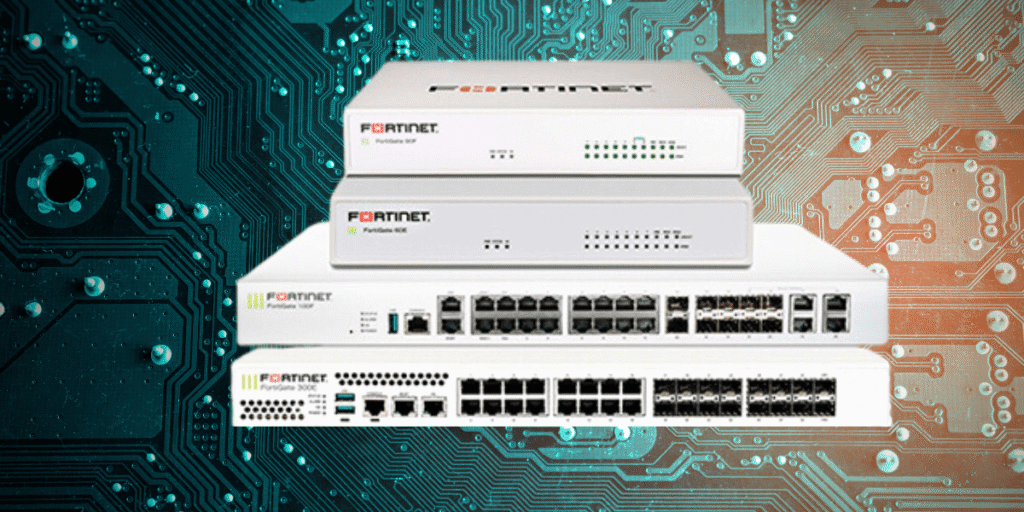
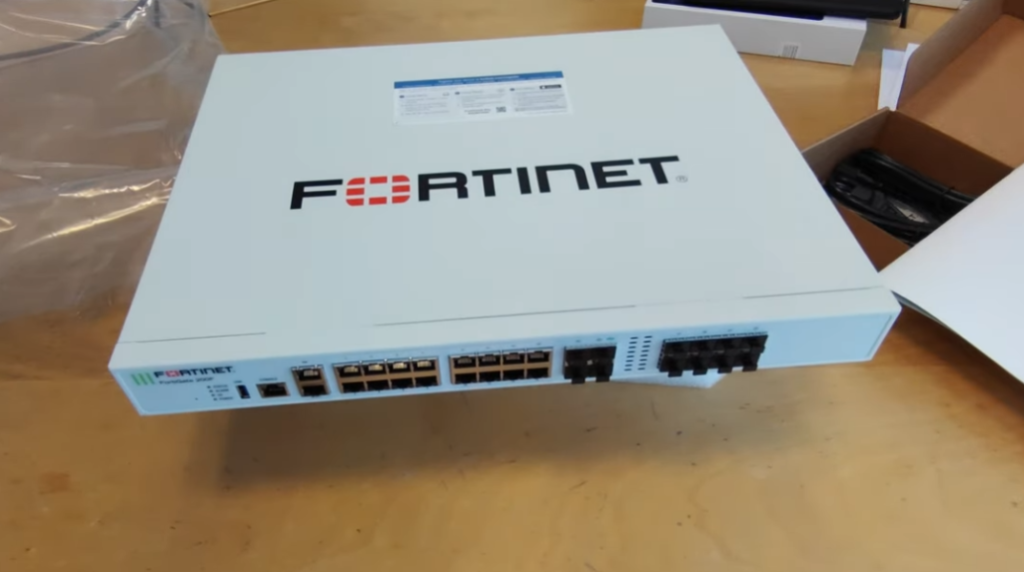
The most important product is the FortiGate firewall, which is a next-generation firewall (NGFW). Popular models include entry-level Fortinet FortiGate 40F Firewall, mid-range Fortinet FortiGate 60F, and enterprise-level Fortinet FortiGate 200F Network Security. These devices provide firewall protection, VPN, intrusion prevention (IPS), antivirus, and web filtering in one system. Smaller models are used for offices, while high-end models are used in data centers and large enterprises.
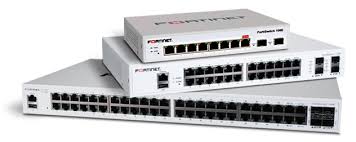
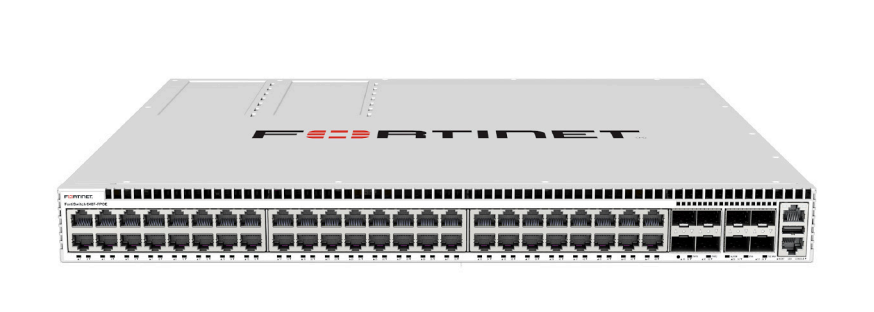
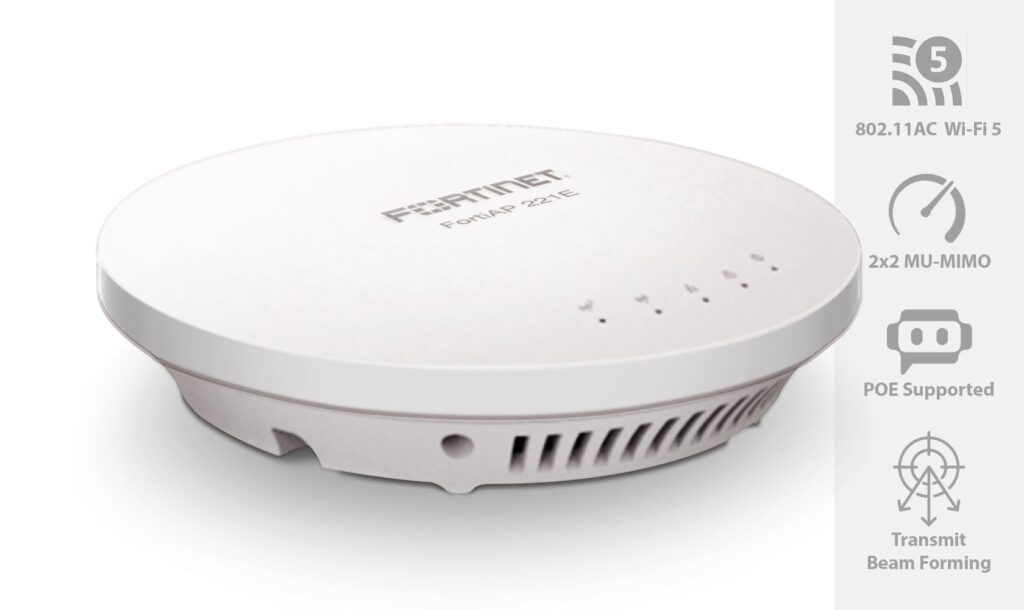
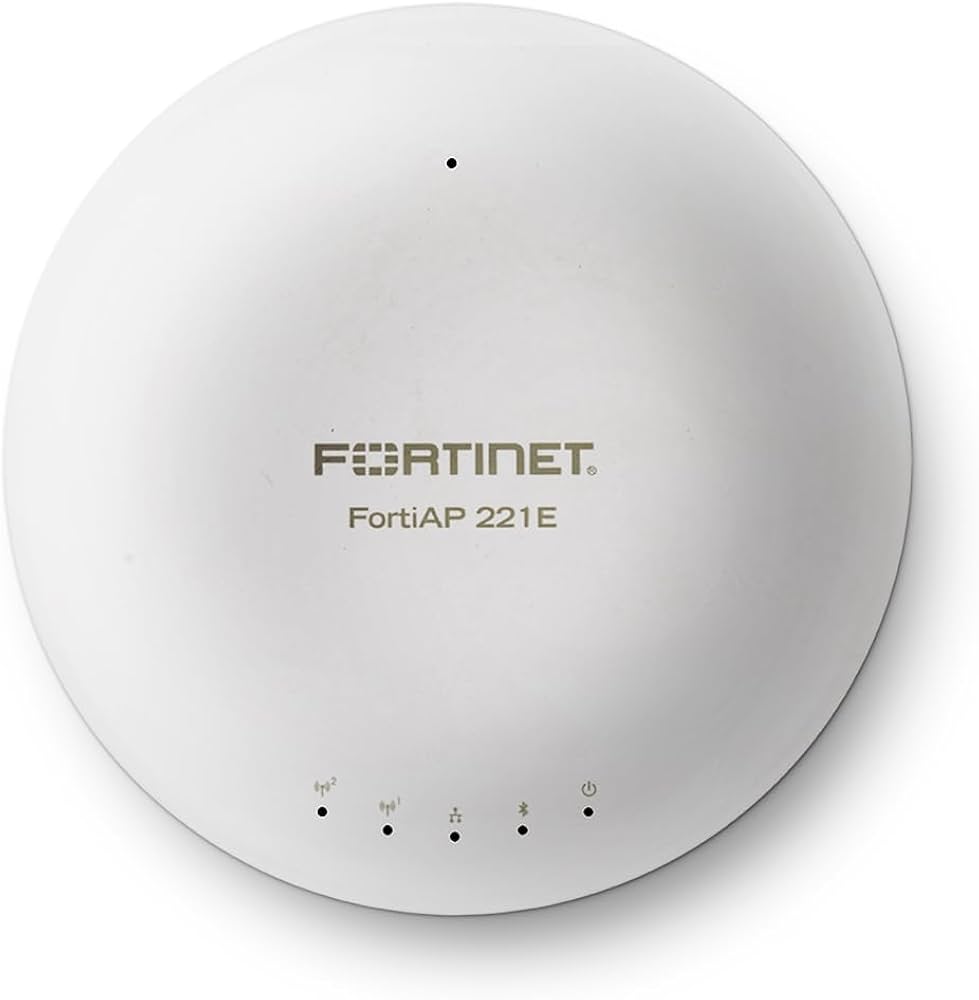
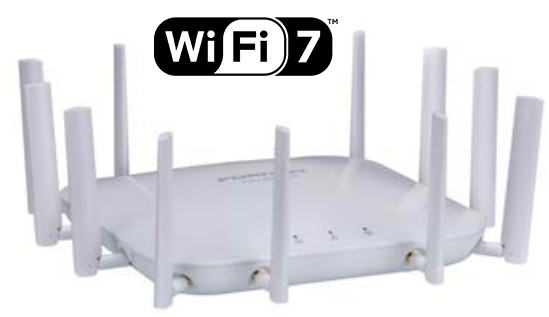
Fortinet also offers wireless and switching products such as FortiAP (wireless access points) and FortiSwitch. These help create secure office networks by integrating Wi-Fi and LAN switching directly with the firewall. All devices are managed together through a single system, making network management easier.
Another major product category is endpoint security, including FortiClient. This software is installed on user devices (laptops, desktops) and provides VPN access, antivirus, and endpoint protection. It works with FortiGate to enforce security policies even for remote users.
Fortinet provides advanced threat protection tools like FortiSandbox, which detects unknown (zero-day) malware by analyzing suspicious files in a secure environment. This is used in high-security environments where advanced threats are a concern.
For centralized management and analytics, Fortinet offers products like FortiManager and FortiAnalyzer. These tools help administrators manage multiple firewalls, monitor traffic, generate reports, and respond to threats quickly across large networks.
In summary, Fortinet products include:
- FortiGate – Next-Generation Firewall (NGFW) that provides firewall, VPN, IPS, antivirus, web filtering, and application control.
- FortiSwitch – Secure managed Ethernet switches that integrate seamlessly with FortiGate.
- FortiAP – Enterprise wireless access points for secure and high-performance Wi-Fi.
- FortiClient – Endpoint security client offering VPN, Zero Trust Network Access (ZTNA), and endpoint protection.
- FortiAnalyzer – Centralized logging, monitoring, reporting, and security analytics platform.
- FortiManager – Centralized management solution for configuring and monitoring multiple Fortinet devices.
- FortiWeb – Web Application Firewall (WAF) that protects web applications from cyber attacks.
- FortiMail – Secure email gateway providing anti-spam, anti-phishing, and malware protection.
- FortiAuthenticator – Identity and access management solution with authentication and Single Sign-On (SSO).
- FortiToken – Multi-Factor Authentication (MFA) solution for secure user verification.
- FortiNAC – Network Access Control solution that identifies, authenticates, and secures connected devices.
- FortiSandbox – Advanced threat detection platform that analyzes suspicious files in an isolated environment.
- FortiSIEM – Security Information and Event Management solution for real-time threat monitoring and compliance.
- FortiSOAR – Security orchestration and automated incident response platform.
- FortiEDR – Endpoint Detection and Response solution for detecting and stopping advanced threats.
- FortiSASE – Cloud-delivered Secure Access Service Edge combining networking and security.
- FortiProxy – Secure web proxy that protects users from web-based threats and controls internet access.
- FortiDDoS – Dedicated protection against Distributed Denial-of-Service (DDoS) attacks.
- FortiADC – Application Delivery Controller that improves application performance, availability, and load balancing.
- FortiExtender – LTE/5G WAN gateway providing reliable network connectivity.
- FortiOS – The operating system that powers Fortinet Security Fabric and integrates all Fortinet security solutions.

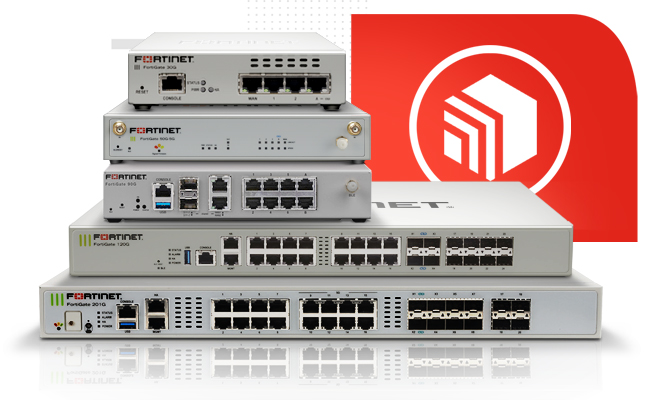
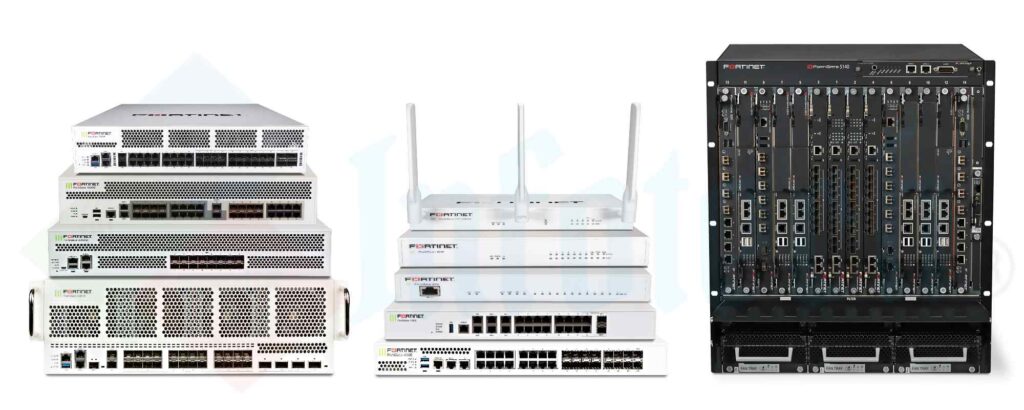
Fortinet Network Security Firewall
Fortinet Switch
Fortinet (AP) Access Point
Fortinet Growth
Fortinet was founded in 2000, but real growth started after it launched its first product FortiGate firewall in 2002. This product combined multiple security features (firewall + antivirus + VPN) into one device, which was a new concept at that time called UTM (Unified Threat Management). This innovation helped Fortinet quickly gain attention in the cybersecurity market.
Between 2003 and 2008, Fortinet expanded globally. The company opened offices in multiple countries and built partner networks. By 2008, Fortinet became profitable, which is a major milestone for any tech company. During this period, its FortiGate devices became widely used in enterprises.
A major growth year was 2009, when Fortinet became a public company by listing on the NASDAQ. This IPO helped the company raise funds and expand faster. Around this time, Fortinet already held a strong position in the UTM firewall market and continued to grow its revenue and global presence.
From 2010 to 2016, Fortinet saw strong market growth. By 2010, it had hundreds of millions in revenue and became one of the leaders in network security. In 2016, it introduced the Security Fabric architecture, which connected different security products into one platform—this was a big step in enterprise cybersecurity solutions.
From 2017 to 2020, Fortinet expanded its product portfolio. It added products like switches, wireless access points, sandboxing, and cloud security. It also entered fast-growing areas like SD-WAN and AI-based security. By this time, Fortinet was competing with top companies like Cisco and Palo Alto Networks.
From 2020 to present, Fortinet is in high growth phase. The company is focusing on modern technologies like SASE (Secure Access Service Edge), Zero Trust, and cloud security. As of recent results, Fortinet generates billions of dollars in annual revenue and continues to grow globally with strong demand for cybersecurity solutions.
Simple Timeline (Easy to Remember)
- 2000 → Company founded
- 2002 → First FortiGate firewall launched
- 2008 → Became profitable
- 2009 → IPO (big growth step)
- 2016 → Security Fabric introduced
- 2020+ → Cloud, AI, SASE growth phase
Fortinet Firewall Model
Fortinet designs FortiGate firewalls in multiple model series, each tailored for different environments.
Small Office & Home Office (SOHO) Models:
FortiGate Entry-level models like 30E, 40F, and 60F are designed for small businesses, home offices, and retail setups. These devices are compact, cost-effective, and easy to deploy, offering essential security features such as firewall protection, VPN, web filtering, and basic intrusion prevention. They are ideal where network traffic is low to moderate and simplicity is important.
Branch Office & Mid-Range Models:
Models such as 80F, 100F, and 200F are built for branch offices and mid-sized organizations. They provide higher throughput, more interfaces, and better performance compared to SOHO devices. These firewalls support advanced security services like SSL inspection, application control, and secure SD-WAN, making them suitable for distributed business networks.
Enterprise & Campus Models:
FortiGate models like 300E, 400F, and 600F are designed for large enterprises and campus networks. They offer high performance, scalability, and advanced threat protection. These devices can handle large volumes of traffic and support multiple security features simultaneously, including deep packet inspection, intrusion prevention systems (IPS), and advanced routing.
Data Center & High-End Models:
High-performance models such as 1000F, 1800F, and 2600F are intended for data centers and large-scale enterprise environments. These firewalls deliver extremely high throughput, low latency, and support for massive concurrent sessions. They are used in mission-critical networks where performance and reliability are crucial.
Carrier & Service Provider Models:
FortiGate carrier-grade models like 3000F, 4000F, and 7000 series are built for telecom operators and large service providers. They support ultra-high throughput, advanced scalability, and features like carrier-grade NAT (CGNAT). These systems are capable of handling millions of sessions and very high bandwidth demands.
Virtual Firewalls (FortiGate-VM):
FortiGate-VM is a virtual version of the FortiGate firewall that runs on cloud and virtual platforms such as Amazon Web Services, Microsoft Azure, and VMware. It provides the same security features as physical devices but is flexible and scalable for cloud environments and virtualized data centers.
Rugged & Industrial Models:
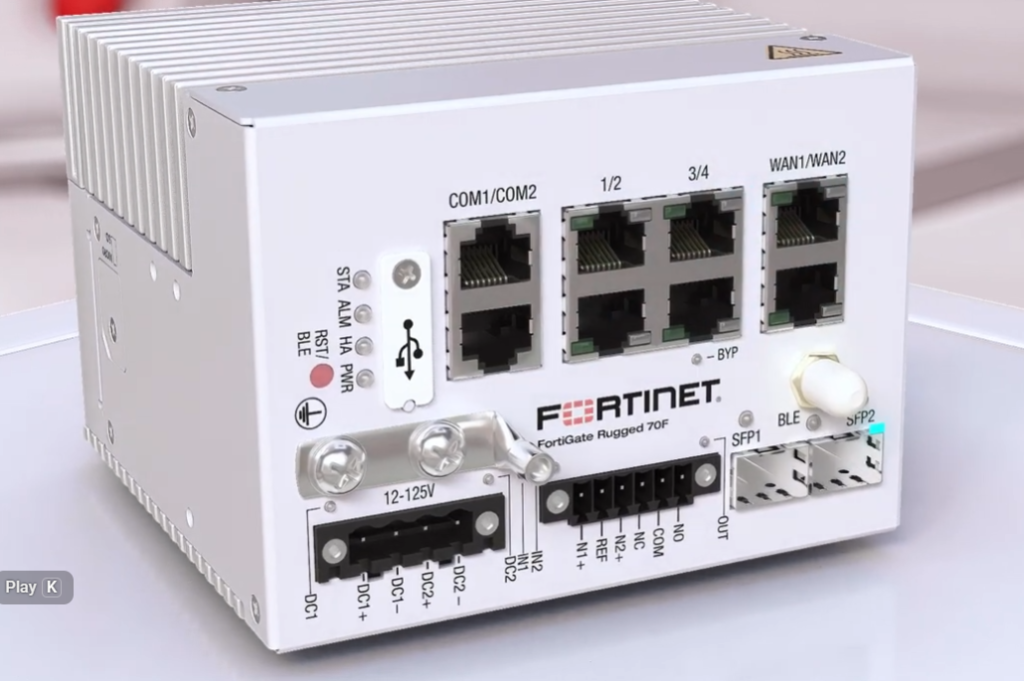
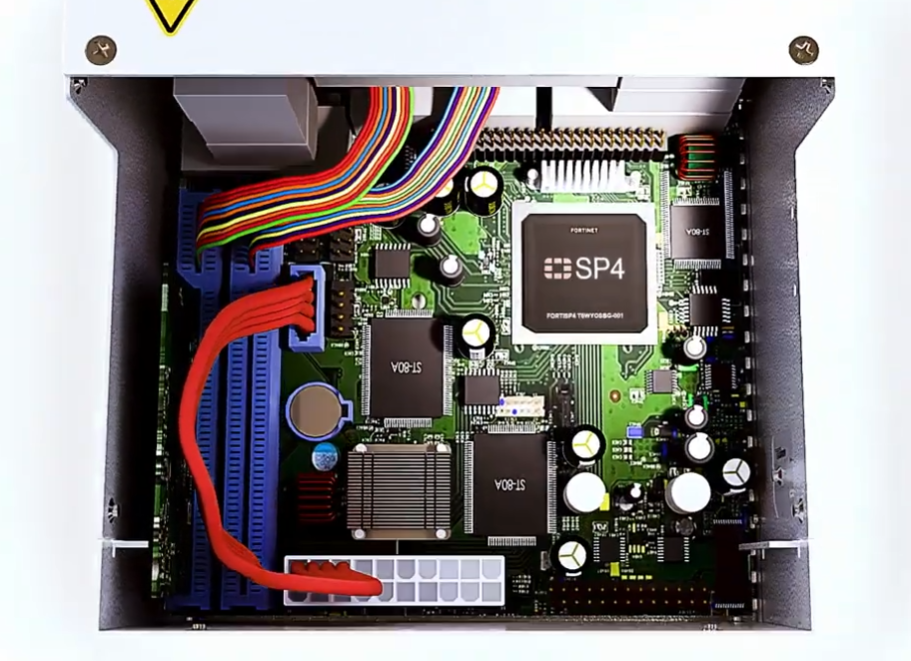
FortiGate rugged models like 60F Rugged or 70F Rugged are designed for harsh environments such as factories, oil and gas sites, or outdoor deployments. These devices can withstand extreme temperatures, dust, and vibration while maintaining reliable security operations.
Fortinet Firewall Model User Support
FortiGate models with approximate user support from Fortinet:
Small Office & Home Office Models (30E, 40F, 60F):
These entry-level FortiGate devices are suitable for small environments such as shops, startups, and home offices. They can typically support around 10 to 50 users, depending on internet usage. They work best for basic activities like web browsing, email, and light VPN usage, but may struggle if many users perform heavy tasks like video streaming or large downloads simultaneously.
Branch Office & Mid-Range Models (80F, 100F, 200F):
These models are designed for Branch Offices and Mid-sized Businesses. They generally support around 50 to 200 users with stable performance. They can handle moderate workloads including VPN access, application control, and secure internet access for multiple departments without significant slowdown.
Enterprise & Campus Models (300E, 400F, 600F):
These FortiGate firewalls are used in Large Organizations and Campus Networks. They can support approximately 200 to 1000 users and are capable of Handling High Traffic volumes along with advanced security features like intrusion prevention and SSL inspection. They are suitable for companies with multiple teams and heavy daily network usage.
High-End & Data Center Models (1000F, 1800F, 2600F):
These High-Performance devices are built for large enterprises and data centers. They can support around 1000 to 5000+ users depending on configuration and usage. They provide very high throughput, low latency, and are ideal for environments where many users access critical applications simultaneously.
Carrier & Service Provider Models (3000F, 4000F, 7000 Series):
These are carrier-grade FortiGate systems used by Telecom Operators and ISPs. Instead of typical office users, they support thousands to millions of subscribers. They are designed for extremely Large-Scale networks with very high bandwidth and session handling capacity.
Virtual Models (FortiGate-VM):
FortiGate-VM is the virtual version that runs on cloud platforms like Amazon Web Services and Microsoft Azure. The number of supported users depends on the allocated resources (CPU, RAM, and license), and it can scale from a few users to several thousand users based on deployment size.
- FortiGate 100F/101F is designed for mid-sized enterprises, generally recommended for 100–250 users, although it can handle more depending on security features enabled. It supports up to 500 concurrent SSL VPN users and is capable of handling over 5,000 local users, although external authentication (LDAP/RADIUS) is recommended for high counts.
- FortiGate 120G series is designed for mid-sized enterprises, generally supporting 200–500 users. It features 500 concurrent SSL-VPN user capacity, 3 million concurrent sessions, and 1.5 Gbps SSL-VPN throughput, making it suitable for environments with high security inspection needs.
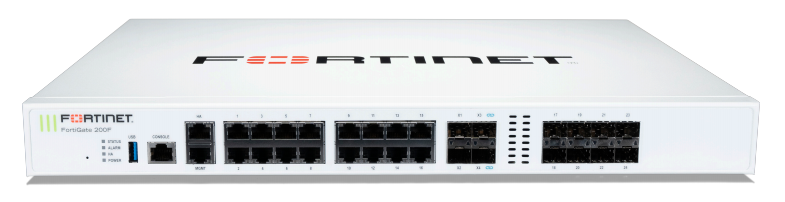
- FortiGate 200F is generally recommended for 200 to 300 users. It supports a maximum of 500 concurrent SSL VPN users and can handle up to 3 million concurrent sessions.
FortiGate 200G series is designed for medium-sized businesses, generally recommended for around 400-500 users. It supports up to 500 concurrent SSL-VPN users and handles a high volume of up to 11 million concurrent sessions, making it highly scalable for networks with high-speed
- FortiGate 300F series is designed to support 500 to 2,000 users in enterprise environments. It supports up to 8 million concurrent sessions and 450,000 new sessions per second.
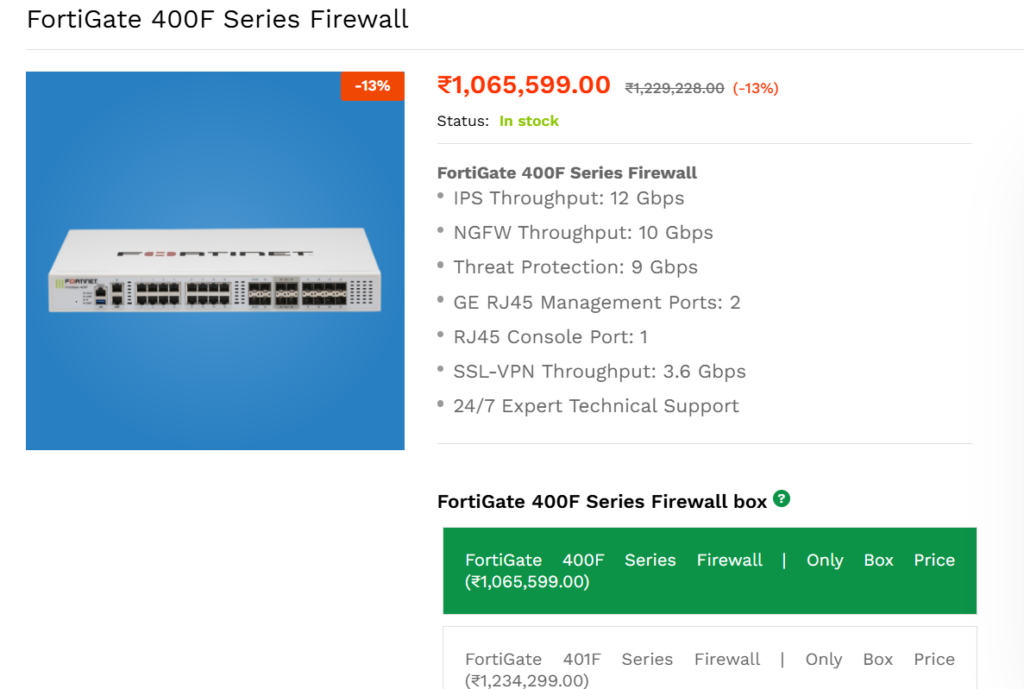
- FortiGate 400F series is generally rated to support 300 to 500 users in enterprise environments. It is capable of handling up to 5,000 concurrent SSL-VPN users in tunnel mode and supports 50,000 Client-to-Gateway IPsec VPN tunnels.
- FortiGate 400E is designed for networks with 250 to 1,000 users or devices. It supports a maximum of 4 million concurrent sessions and up to 5,000 concurrent SSL VPN users in tunnel mode.
- FortiGate 600F is typically recommended for networks with 500 to 750 users. However, its technical capacity is significantly higher, supporting up to 10,000 concurrent SSL VPN users and 50,000 client-to-gateway IPsec VPN tunnels.
- FortiGate 600E is designed for networks typically ranging from 250 to 1,000 users. While it supports up to 8 million concurrent sessions and 10,000 firewall policies, the specific user limit depends on the authentication method and traffic intensity.
- FortiGate 40F Firewall in India | Cutting-Edge Security …The FortiGate 40F is designed for small businesses and branch offices, officially recommended for 1-10 users or slightly more in light-use scenarios. It supports 200 concurrent SSL-VPN users, 700,000 concurrent sessions, and offers 310 Mbps threat protection throughput, making it ideal for small environments with high-speed internet.
- FortiGate 60E is recommended for small offices, typically supporting 15 to 25 users with full security features enabled. It can handle up to 50–100 users in basic browsing environments with fewer security features active.
- FortiGate 60F is designed for small to medium-sized businesses (SMBs), typically handling 25–50 users efficiently, although it can support up to 250+ users depending on feature utilization, such as deep packet inspection (SSL inspection) and IPS. It supports up to 200 concurrent SSL VPN users
- FortiGate 70F is designed for small to medium-sized businesses and is rated for a recommended range of 70 to 100 users. While it can support up to 200 concurrent SSL VPN users for remote access, actual performance depends heavily on the enabled security features and throughput requirements.
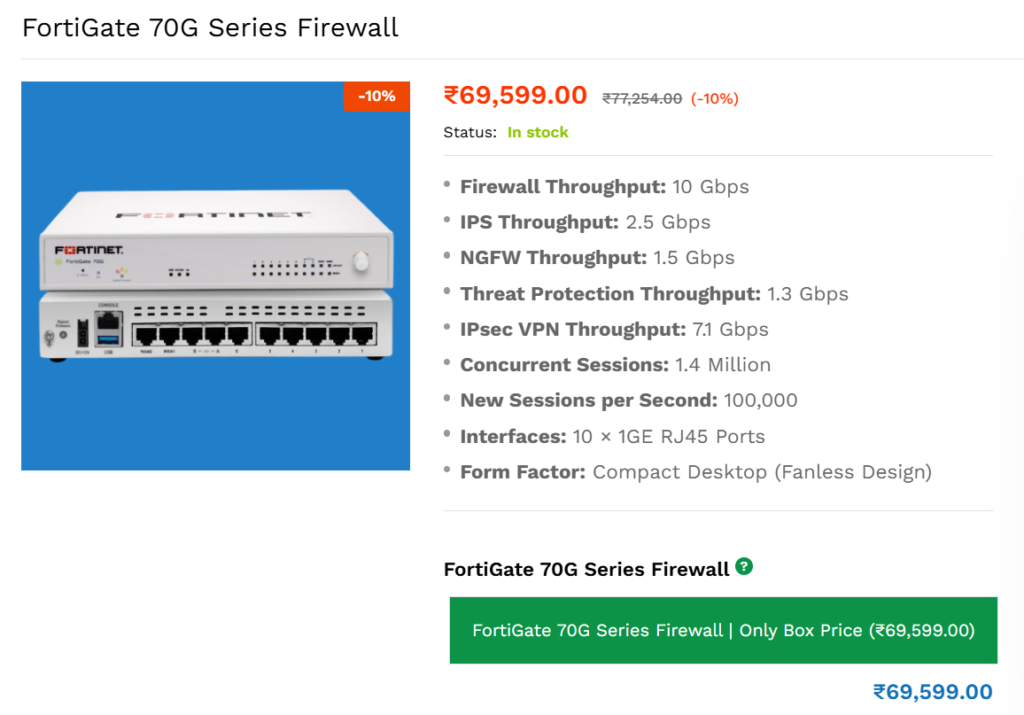
- FortiGate 70G is designed for small-to-medium businesses (SMBs) and branch offices, generally recommended for 25-100 users. It supports 1.4 million concurrent TCP sessions and features high performance with 10 Gbps firewall throughput and 1.3 Gbps threat protection. It does not have a strict, hard user license limit, but performance depends on traffic, SSL inspection, and feature usage.
- FortiGate 80F is generally recommended for 50–200 users, with a typical sweet spot of 50-100 users for full threat protection. It supports up to 200 concurrent SSL-VPN users and is designed for medium-sized enterprise branch offices, offering strong throughput (firewall, threat protection).
- FortiGate 80G is designed for small to medium-sized businesses, typically supporting 50 to 250 users or devices. It features a maximum concurrent session capacity of 1.5 million and supports up to 200 concurrent SSL VPN users.
- FortiGate 90F is designed for networks with 50 to 250 users or devices. It supports up to 500 client-to-gateway IPsec VPN tunnels and 200 concurrent SSL VPN users
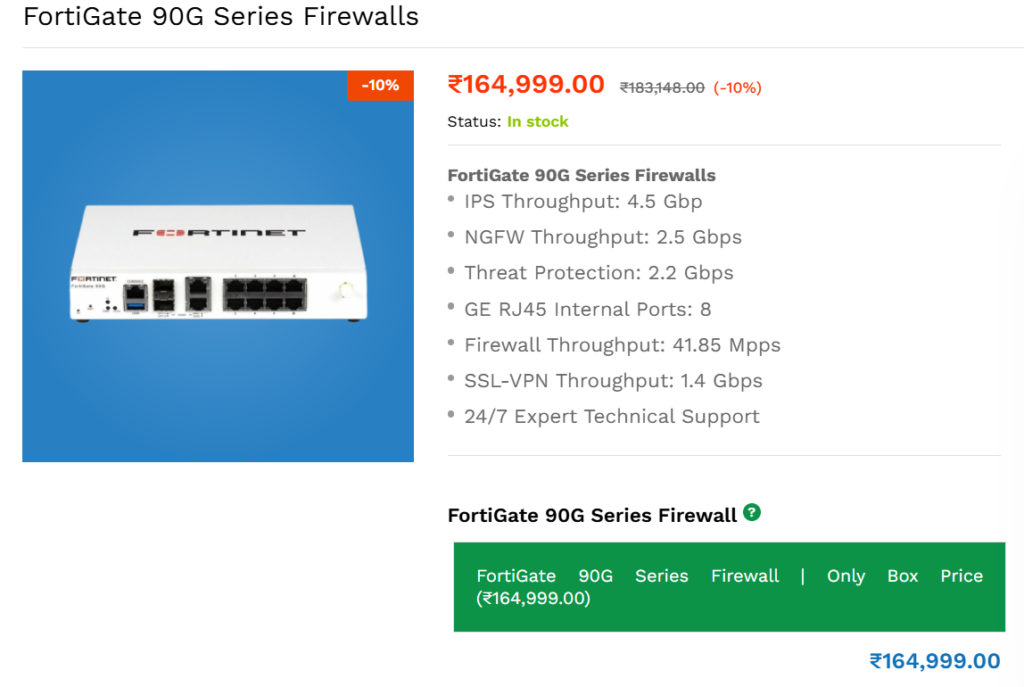
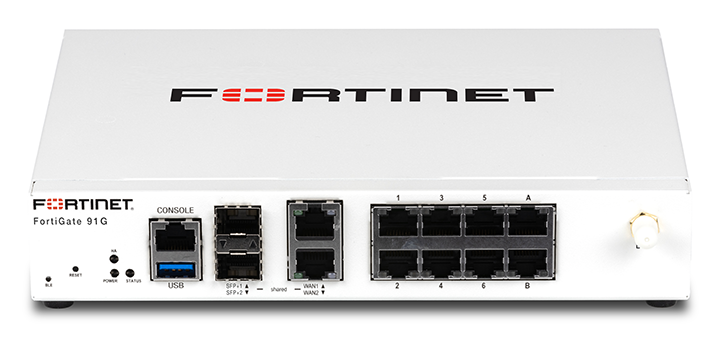
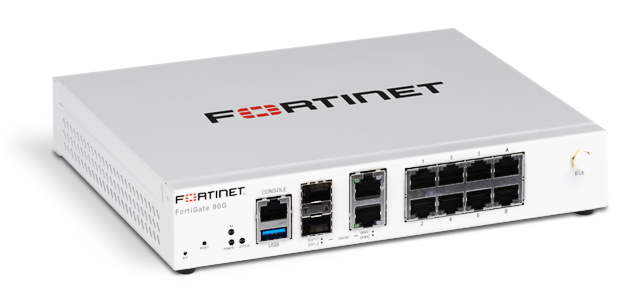
- FortiGate 90G is designed for medium-sized and distributed enterprises, typically handling 50-250 users or devices. It supports up to 200 concurrent SSL-VPN users in tunnel mode and 2,500 client-to-gateway IPsec VPN tunnels, with a total session capacity of 3 million, making it suitable for robust, high-traffic deployments.
Fortinet Firewall Series
FortiGate models from Fortinet are released in different series like E, F, G, which indicate generation and technology improvements. Here’s a clear paragraph-wise explanation:
E Series (Older Generation):
The E-series (like 60E, 100E, 300E) is an older generation of FortiGate firewalls. These models provide standard security features such as firewall, VPN, antivirus, and intrusion prevention. They use earlier hardware processors, so performance is lower compared to newer series. E-series devices are still used in many networks but are gradually being replaced by newer models.
F Series (Current Popular Generation):
The F-series (like 40F, 60F, 100F, 200F) is a newer and widely used generation. These devices come with improved hardware, including better security processors (SPU), which provide higher speed and better performance even when advanced features like SSL inspection are enabled. F-series firewalls are more efficient, consume less power, and support modern networking needs such as secure SD-WAN. This is the most commonly deployed series today.
G Series (Latest Generation):
The G-series is the latest generation of FortiGate firewalls. It offers even higher performance, improved AI-based security features, and enhanced efficiency compared to the F-series. These models are designed for modern networks with heavy cloud usage, high-speed internet, and advanced threat protection requirements. G-series devices are gradually being introduced as the next upgrade.
Simple Difference:
- E Series → Older, lower performance
- F Series → Improved, most commonly used
- G Series → Latest, highest performance
Fortinet Firewall Price in India
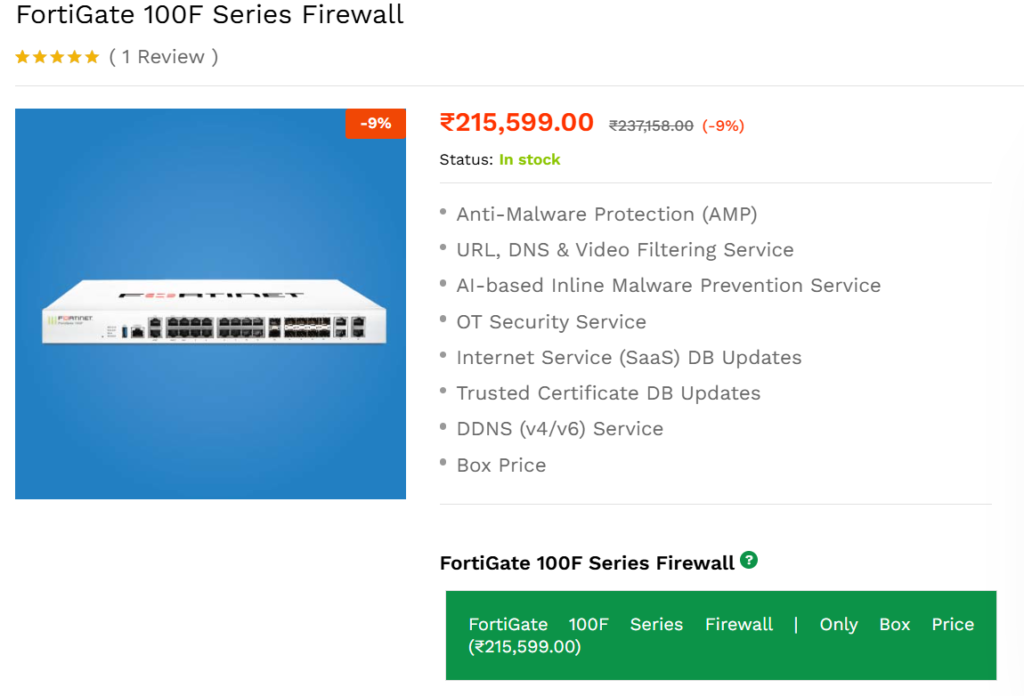
FortiGate 100F 100-200 users :- (₹215,599.00) FortiGate 100F Series Firewall License FC-10-F100F-950-02-12 | Unified Threat Protection | IPS | Advanced Malware Protection | Application Control | URL | DNS | Video Filtering | Antispam Service | FortiCare Premium | 1 Year (₹123,199.00) FC-10-F100F-950-02-36 | Unified Threat Protection | IPS | Advanced Malware Protection | Application Control | URL | DNS | Video Filtering | Antispam Service | FortiCare Premium | 3 Years (₹317,419.00)
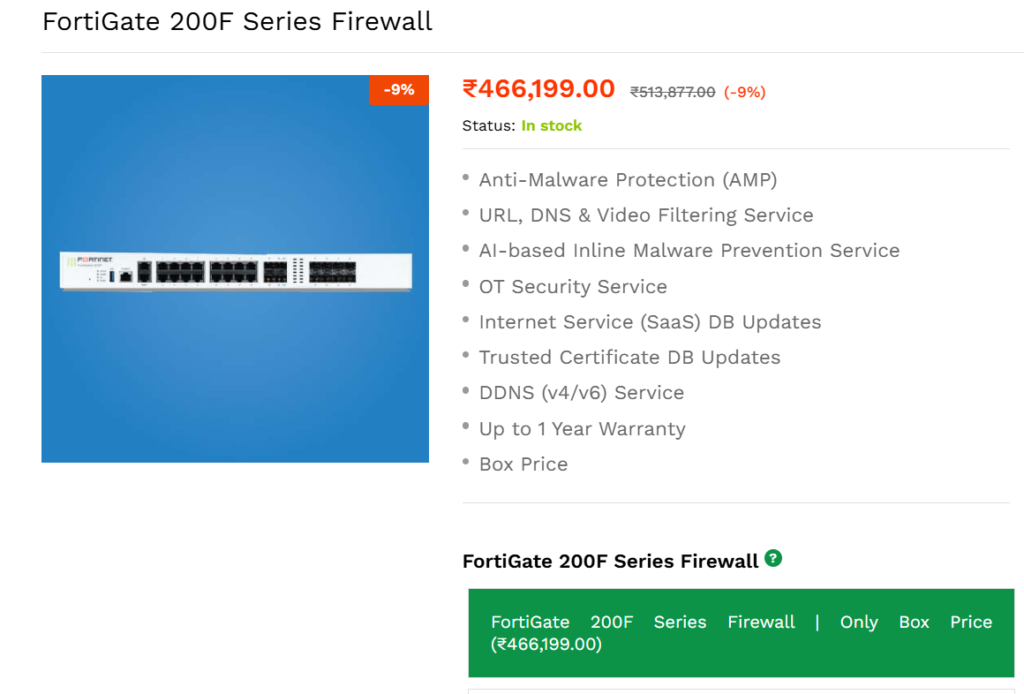
FortiGate 200F Series Firewall (₹466,199.00) FortiGate 200F Series Firewall License FC-10-F200F-950-02-12 | Unified Threat Protection | IPS | Advanced Malware Protection | Application Control | URL | DNS | Video Filtering | Antispam Service | FortiCare Premium | 1 Year (₹247,499.00)
FortiGate 70G Series Firewall (₹69,599.00) Unified Threat Protection | IPS | Advanced Malware Protection | Application Control | URL | DNS | Video Filtering | Antispam Service | and FortiCare Premium | 1 Year (₹39,699.00)
FortiGate 90G Series Firewall ₹164,999.00 FC-10-0090G-950-02-12 | Unified Threat Protection | IPS | Advanced Malware Protection | Application Control | URL | DNS | Video Filtering | Antispam Service | FortiCare Premium | 1 Year (₹98,899.00)
FortiGate 400F Series Firewall ₹1,065,599.00 FC-10-0401F-950-02-12 | Unified Threat Protection | IPS | Advanced Malware Protection | Application Control | URL | DNS | Video Filtering | Antispam Service | FortiCare Premium | 1 Year (₹1,697,299.00)
Entry-level FortiGate firewalls are designed for small offices and startups with around 10–50 users. Models like FortiGate 40F usually cost around ₹30,000 to ₹60,000 for hardware only. With security licenses (UTP bundle), the total yearly cost increases by ₹20,000–₹30,000. These devices provide basic firewall protection and free VPN, making them suitable for small businesses.
Lower mid-range firewalls such as FortiGate 60F are the most commonly used in India. Their hardware price ranges from ₹56,000 to ₹1,00,000, and with license subscription, the total yearly cost can go up by ₹30,000–₹50,000. These are ideal for small to medium businesses with up to 100 users and provide better performance and more ports than entry-level models.
Mid-range FortiGate firewalls like FortiGate 100F are used in medium-sized companies (100–500 users). In India, the hardware cost typically ranges from ₹1.9 lakh to ₹3.1 lakh. Security licenses for these models cost around ₹75,000 to ₹1.1 lakh per year. These firewalls support higher throughput, advanced security inspection, and features like high availability (HA) and SD-WAN.
High-range enterprise firewalls such as FortiGate 200F and above are designed for large organizations and data centers. Their hardware price starts from around ₹3.5 lakh and can go beyond ₹4.5 lakh or more depending on configuration. The yearly license cost is significantly higher, often ₹2 lakh or more. These devices offer very high performance, advanced threat protection, and support for complex networks with heavy traffic.
Very high-end FortiGate models like 400F, 600F, and 1800F are used in large enterprises, ISPs, and data centers. Their pricing in India can start from ₹10 lakh and go beyond ₹20 lakh depending on capacity and licensing. These systems are built for extremely high throughput and large-scale security deployments.
In summary, FortiGate firewall prices in India start from around ₹30,000 for basic models and can exceed ₹20 lakh for high-end enterprise systems. The final cost always depends on the license bundle, number of users, and security features required, and in many cases, the license cost becomes equal to or even higher than the hardware cost.
Major Features of Fortinet Firewalls
- Fortinet FortiGate Firewalls are called Next-Generation Firewalls (NGFW) because they provide not just basic firewalling, but multiple advanced security features in one device. These features work together as part of the Fortinet Security Fabric to protect networks, users, and data.
- The Core Firewall Features include packet filtering, stateful inspection, NAT (Network Address Translation), routing, and VLAN support. These are the basic networking functions that control traffic flow between networks. Administrators can create policies to allow or block traffic based on IP address, port, and protocol.
- VPN (Virtual Private Network) is a built-in feature and is free to use. FortiGate supports both IPsec VPN (site-to-site) and SSL VPN (remote users). This allows secure communication between branch offices or remote employees without additional licensing cost for basic usage.
- Intrusion Prevention System (IPS) is an advanced feature that detects and blocks cyberattacks such as exploits, scans, and vulnerabilities. It uses updated threat signatures to stop attacks in real time. This feature requires a license for full functionality.
- Antivirus and Anti-malware Protection scan network traffic to detect viruses, ransomware, and malicious files. FortiGate can block infected files before they enter your network. With a license, it receives real-time updates to protect against the latest threats.
- Web Filtering allows you to control internet usage by blocking websites based on categories like social media, gambling, or malicious sites,Adult Site. It helps improve security and employee productivity. Without a license, only manual blocking is available.
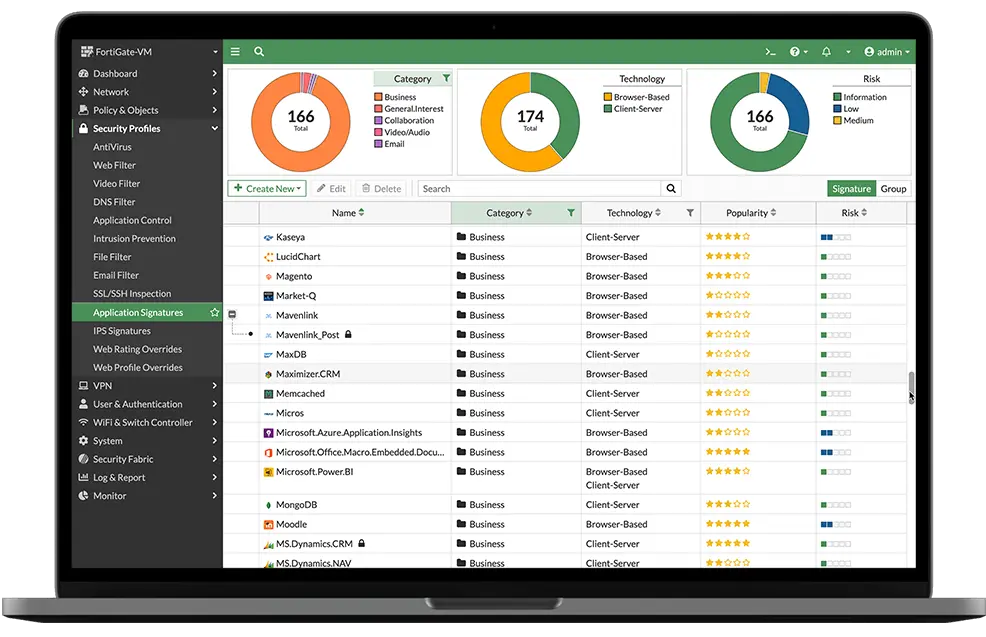
- Application Control identifies and controls applications such as YouTube, WhatsApp, or Facebook. You can block, allow, or limit bandwidth for specific apps. This helps manage network usage and prevent misuse.
- SSL inspection (Deep Packet Inspection) is a powerful feature that inspects encrypted HTTPS traffic. Since most internet traffic is encrypted, this feature is important to detect hidden threats inside secure connections.
- Secure SD-WAN is a modern networking feature that optimizes internet traffic across multiple WAN links. It improves performance, reduces cost, and ensures reliable connectivity for branch offices.
- Advanced Threat Protection includes features like sandboxing and AI-based detection. Suspicious files can be sent to sandbox environments for analysis, helping detect zero-day attacks that traditional antivirus cannot catch.
- User identity and access control integrates with systems like Active Directory to apply policies based on users instead of just IP addresses. This allows more precise control over who can access what.
- Logging, Monitoring, and Reporting provide visibility into network traffic, threats, and user activity. Administrators can generate reports and analyze security events for better decision-making.
- High Availability (HA) and Scalability features allow multiple FortiGate devices to work together for redundancy and load balancing. This ensures network uptime and reliability in enterprise environments.
FortiGate firewall features include:
- Next-Generation Firewall (NGFW) – Protects networks with advanced firewall security and application awareness.
- Intrusion Prevention System (IPS) – Detects and blocks network attacks and exploits in real time.
- Virtual Private Network (VPN) – Provides secure remote access and site-to-site connectivity using IPsec and SSL VPN.
- Web Filtering – Controls and blocks access to malicious or inappropriate websites.
- Application Control – Identifies and manages applications running on the network.
- Antivirus & Anti-Malware – Detects and blocks viruses, ransomware, spyware, and other malware.
- Anti-Spam – Protects email traffic from spam and phishing threats.
- SSL/TLS Inspection – Inspects encrypted traffic to detect hidden threats.
- Deep Packet Inspection (DPI) – Examines network traffic in detail for advanced threat detection.
- SD-WAN – Optimizes WAN traffic across multiple internet connections for better performance and reliability.
- High Availability (HA) – Ensures continuous network operation with automatic failover.
- Traffic Shaping & QoS – Prioritizes critical applications and manages bandwidth usage.
- Network Address Translation (NAT) – Securely translates private IP addresses to public IP addresses.
- VLAN Support – Segments networks to improve security and traffic management.
- Logging & Reporting – Provides detailed logs, reports, and security event monitoring.
- Centralized Management – Integrates with FortiManager and FortiAnalyzer for centralized administration.
- Threat Intelligence – Uses FortiGuard Security Services for real-time updates against emerging cyber threats.
- Zero Trust Network Access (ZTNA) – Grants secure application access based on user identity and device posture.
- Multi-Factor Authentication (MFA) – Enhances user authentication with an additional layer of security.
- Security Fabric Integration – Connects with other Fortinet products for unified visibility and automated threat response.
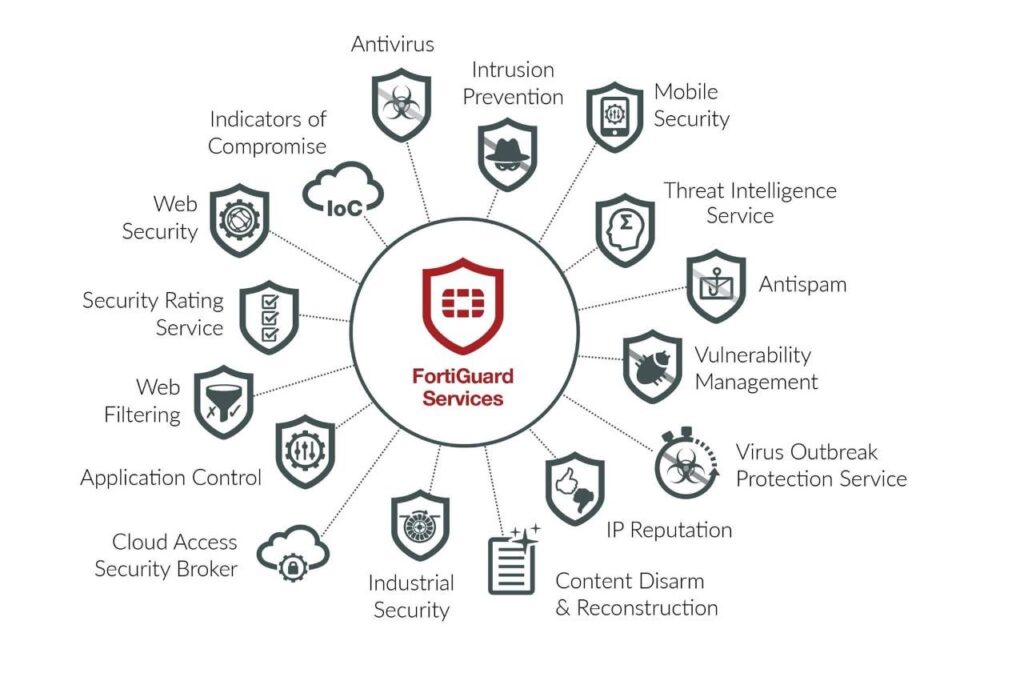
Fortinet Free vs Paid Features
Free features in FortiGate: firewalls are the basic networking and security functions that come included when you purchase the device (hardware only). These include firewall policy control, NAT, routing, VLAN, logging, and most importantly VPN (IPsec and SSL VPN). You can create site-to-site VPN and remote access VPN without any license cost. These features allow the device to work as a normal firewall/router, which is enough for basic network connectivity and security.
Another important free capability is basic application control and manual filtering. You can create firewall rules, block specific IPs, ports, or websites manually, and monitor traffic logs. However, this is limited because it does not use real-time threat intelligence or automatic updates. The firewall still works, but protection is basic and mostly manual.
Paid features in FortiGate: come under FortiGuard security services, which require a subscription license. These include antivirus, web filtering, intrusion prevention (IPS), DNS filtering, and anti-spam. These services use continuously updated threat databases to detect malware, phishing websites, and cyberattacks in real time. Without a license, these features either do not work or work in a very limited way.
The most common paid bundles are UTP (Unified Threat Protection) and Enterprise Protection. UTP includes essential security like antivirus, IPS, web filtering, and application control, while Enterprise adds advanced features like sandboxing and AI-based threat detection. These bundles are widely used because buying individual services separately is more expensive.
Another important paid component is FortiCare support, which provides firmware updates, technical support, and hardware replacement (RMA). Without FortiCare, you may not receive updates or vendor support, which is critical for security and troubleshooting in business environments.
In summary: FortiGate firewalls can work without a license using free features like firewall and VPN, but for full protection against modern cyber threats, paid services like antivirus, web filtering, and IPS are necessary. In real-world deployments, most companies use at least a UTP bundle because relying only on free features leaves the network exposed.
Fortinet Firewall With a License
Using a Fortinet FortiGate firewall with a license gives you the full security power of the device, not just basic firewalling
- First, you get real-time threat protection. With a FortiGuard license (like UTP or Enterprise), features such as antivirus, IPS, and web filtering are continuously updated from Fortinet’s global threat intelligence network. This means your firewall can detect and block the latest malware, ransomware, and hacking attempts automatically.
- Second, Web Filtering becomes intelligent and automatic. Instead of manually blocking websites, the firewall uses Fortinet’s huge category database to block harmful or unwanted content like phishing, adult sites, or social media. Policies can be applied easily to users or departments, improving both security and productivity.
- Third, antivirus and malware protection works effectively. With updated signatures, the firewall scans traffic in real time and blocks infected files before they enter your network. Advanced licenses can even detect unknown threats using sandboxing and AI-based analysis.
- Fourth, IPS (Intrusion Prevention System) actively stops attacks. The firewall can identify and block network attacks such as exploits, port scans, and vulnerability attempts. Because signatures are updated regularly, it protects against newly discovered threats as well.
- Fifth, you get firmware updates and technical support through FortiCare. This ensures your device stays stable, secure, and up to date. If any issue occurs, you can contact Fortinet support and get hardware replacement (RMA) if needed.
- Sixth, better visibility and control. Licensed features provide detailed reports, application control (like blocking YouTube or WhatsApp), and user-based monitoring. This helps administrators manage network usage and detect suspicious activity easily.
- Seventh, compliance and business safety. With full security services enabled, your network is more compliant with IT security standards and audits. This reduces the risk of data breaches and financial loss.
Fortinet Firewall Without a License Problem
Using a Fortinet FortiGate firewall without a license is possible, but it comes with serious limitations and risks.
- First, you lose real security protection. Without a FortiGuard license, features like antivirus, IPS (Intrusion Prevention), and web filtering do not receive updates or may not work at all. This means your firewall cannot detect new viruses, ransomware, or hacking attempts. In today’s environment, this is a major risk because cyber threats change daily.
- Second, Web Filtering becomes very limited. Without a license, you cannot use Fortinet’s real-time URL category database. You can only block websites manually by URL or IP, which is not practical for large networks. As a result, users can easily access unsafe or malicious websites.
- Third, antivirus and malware protection are ineffective. Even if the feature is technically present, it will not update its virus signatures. This makes it almost useless against modern threats, leaving your network vulnerable to infections and data breaches.
- Fourth, IPS (attack protection) will not work properly. IPS depends on updated threat signatures to block attacks. Without a license, new vulnerabilities and exploits will not be detected, so hackers can bypass your firewall more easily.
- Fifth, no official support and updates. Without FortiCare, you won’t get firmware updates, bug fixes, or technical support. This can cause stability issues and leave security holes unpatched.
- Sixth, compliance and business risk. Many companies require proper security controls for audits and compliance. Running a firewall without updated security services can fail audits and increase legal or financial risk if a breach happens.
Final understanding:
You can use FortiGate without a license for basic firewall + VPN only, but:
- ❌ No real threat protection
- ❌ No updates
- ❌ High security risk
👉 In real-world business use, running without a license is not recommended. Most organizations at least use a UTP license bundle to stay protected.
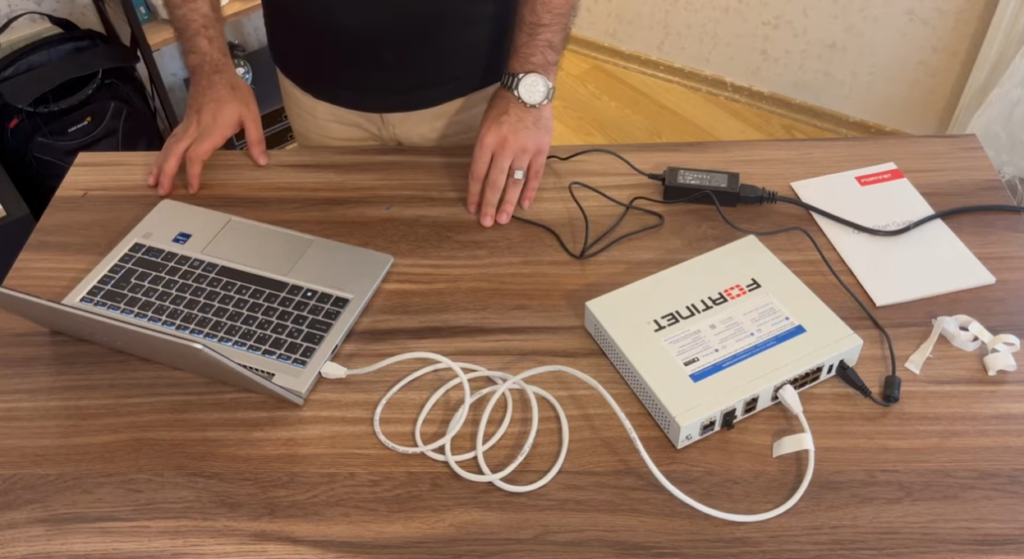
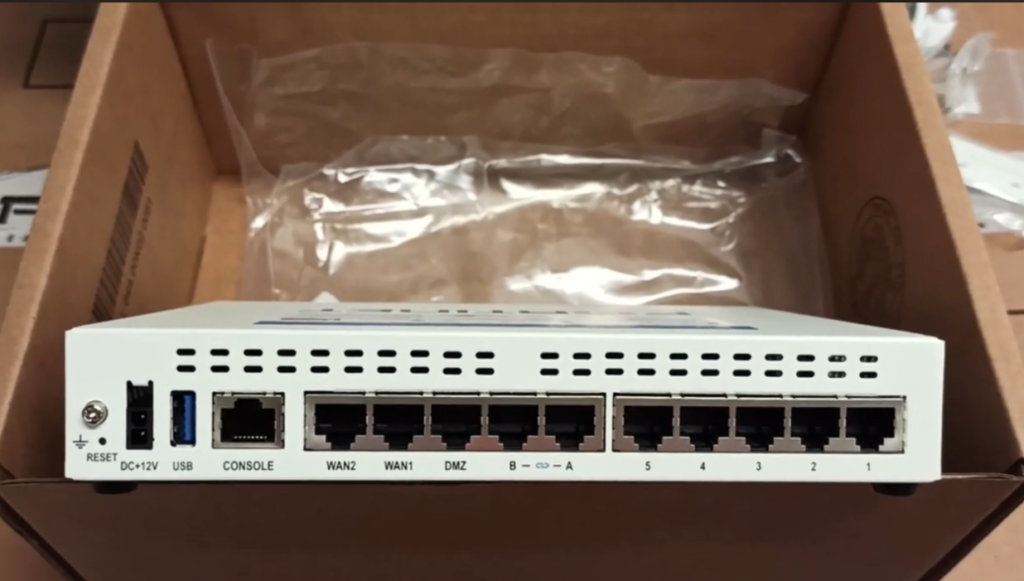
Fortinet Entery Level-Branch Firewall
FortiGate 90G
Data Sheet & Installtion Guide
2.2 Gbps
FortiGate 80F
900 Mbps
FortiGate 70G
1.3 Gbps
FortiGate 70F
800 Mbps
FortiGate 60F
700 Mbps
FortiGate 50G
1.1 Gbps
FortiGate 40F
600 Mbps
FortiGate 30G
500 Mbps
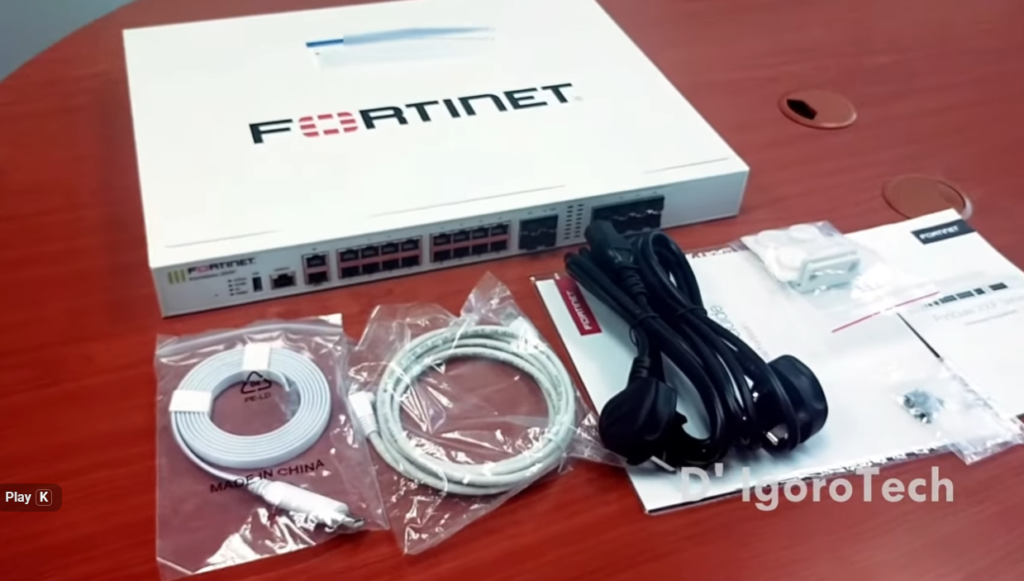
Fortinet MID-Range-Campus Firewall
FortiGate Firewall 100F Model
1 Gbps
FortiGate Firewall 120G Model
2.8 Gbps
FortiGate Firewall 200F Model
Data Sheet & Installtion Guide
3 Gbps
FortiGate Firewall 200G Model
6.4 Gbps
FortiGate Firewall 400F Model
9 Gbps
FortiGate Firewall 600F Model
10.5 Gbps
FortiGate Firewall 900G Model Data Sheet
20 Gbps

Fortinet High-End-Data Center
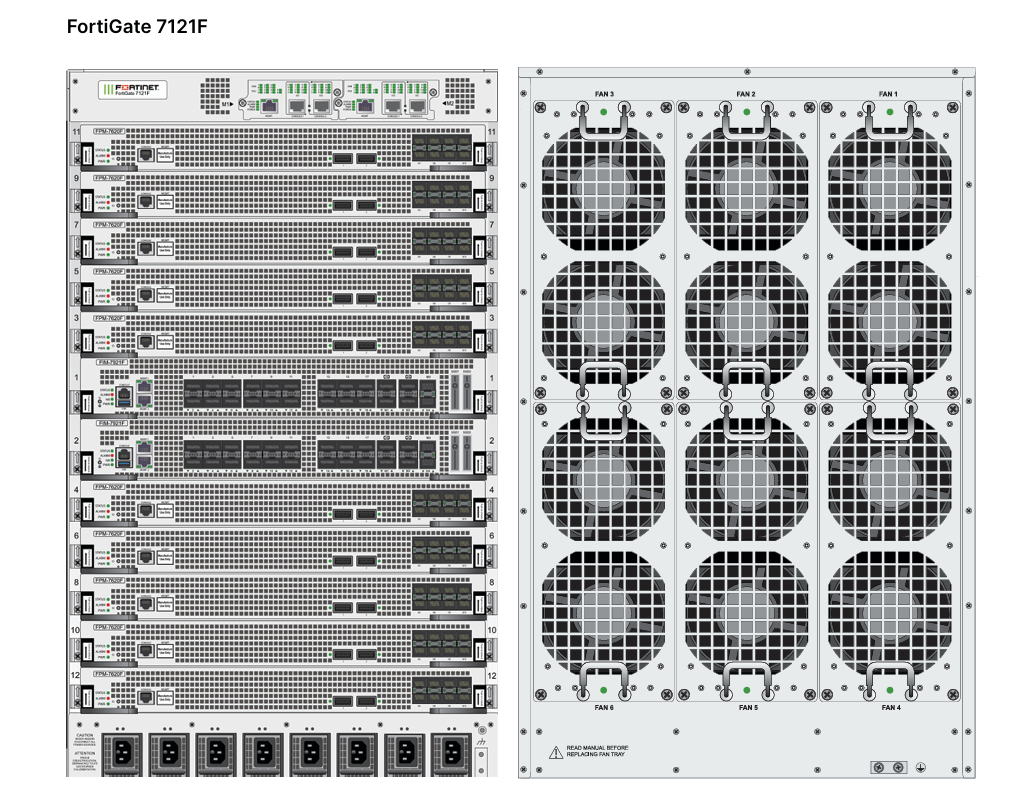
FortiGate 7121F
Data Sheet & Installtion Guide
520 Gbps
FortiGate 7081F
312 Gbps
FortiGate 6500F
100 Gbps
FortiGate 6001F
30-100 Gbps (licensable)
FortiGate 6300F
60 Gbps
FortiGate 4800F
70 Gbps
FortiGate 4400F
75 Gbps
FortiGate 4200F
45 Gbps
FortiGate 3700F
75 Gbps
FortiGate 3500F
63 Gbps
FortiGate 3200F
45 Gbps
FortiGate 3000F
33 Gbps
FortiGate 2600F
25 Gbps
FortiGate 1800F
15 Gbps
FortiGate 1000F
13 Gbps
Fortinet FG-90G Next-Gen firewall
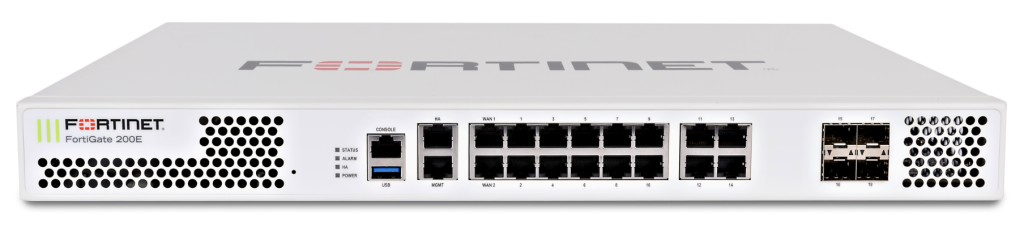
Fortinet FG-200F Next-Gen firewall
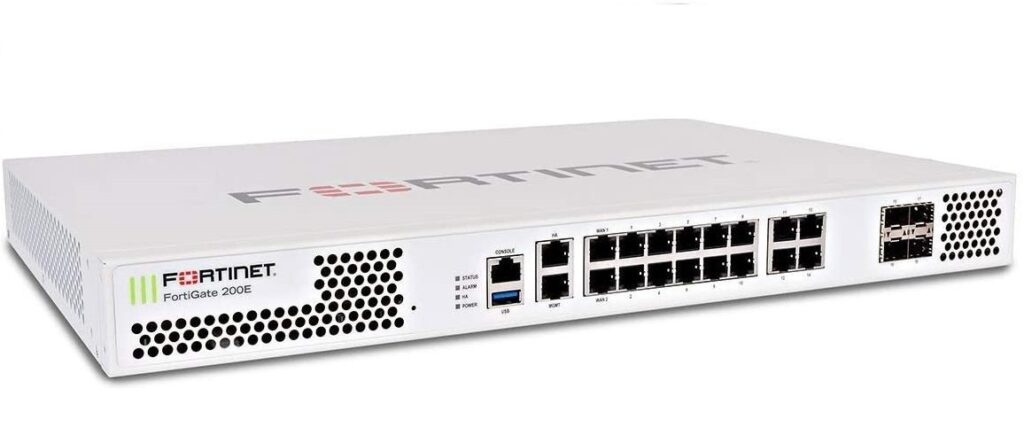
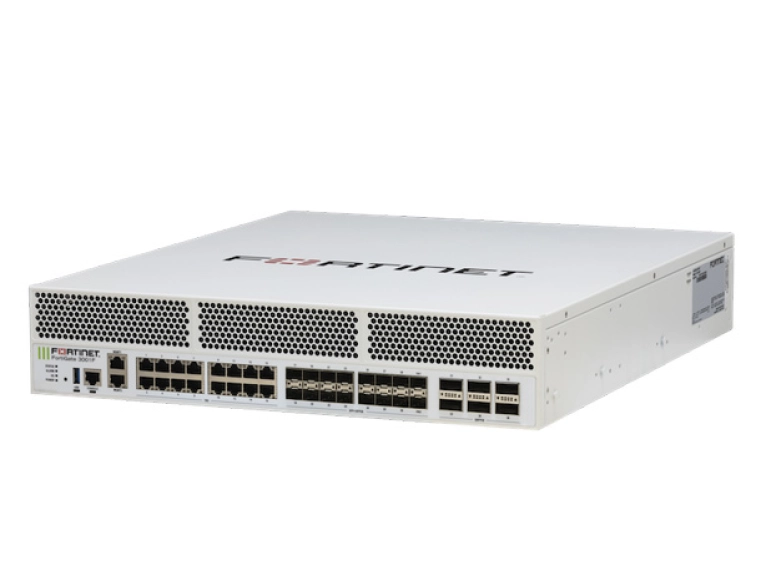
Fortinet FG-3000F-2600F-1800F Large Network ISP Next-Gen firewall
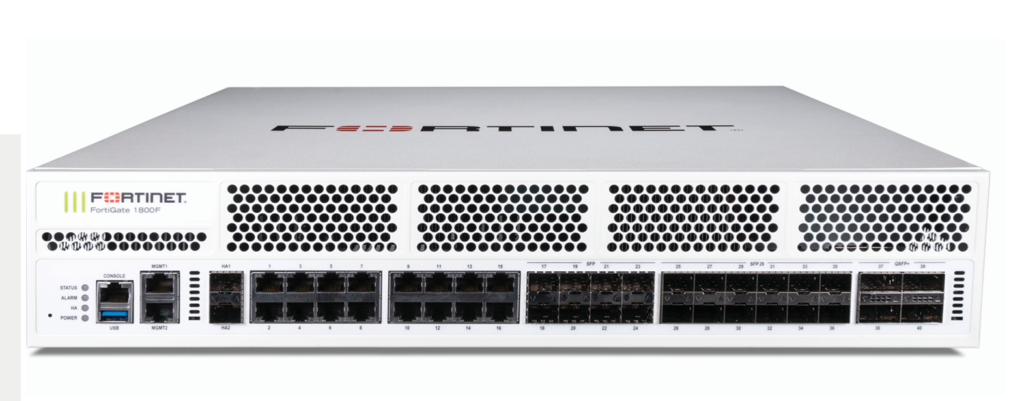
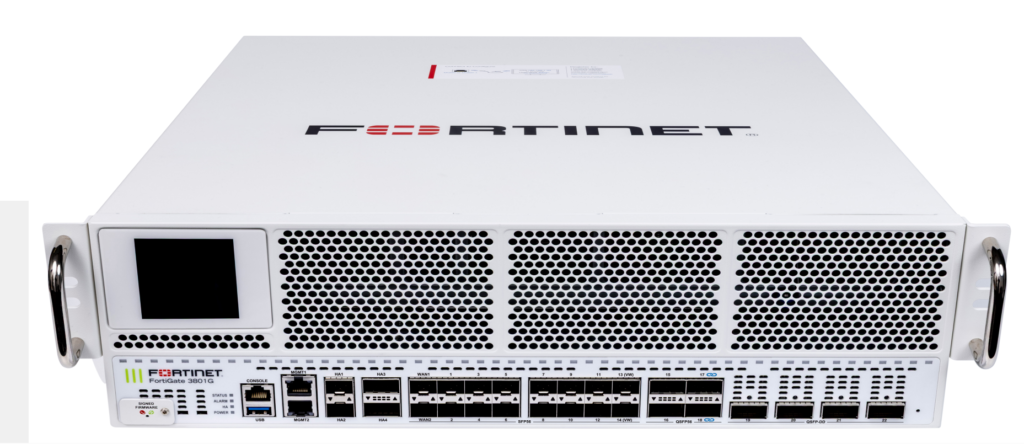
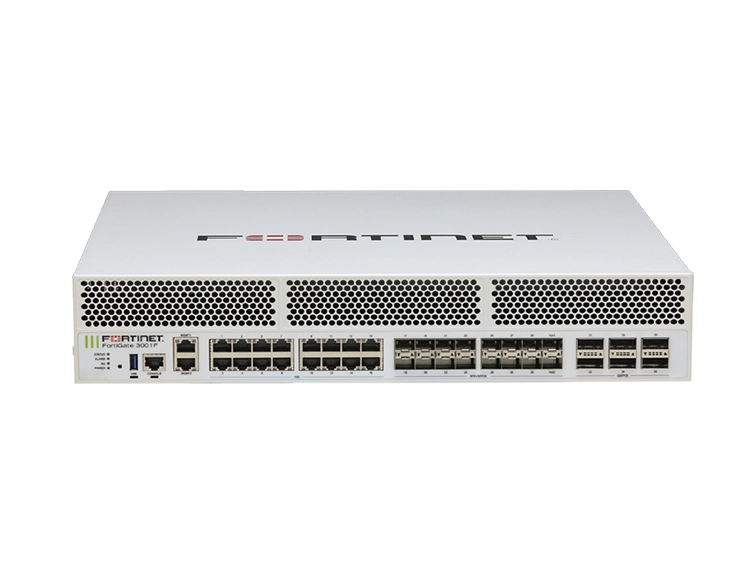
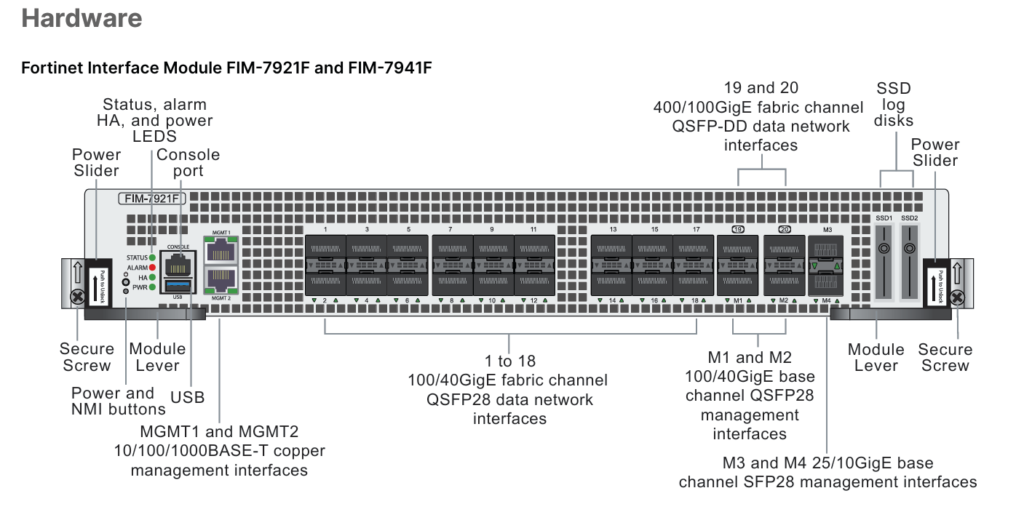
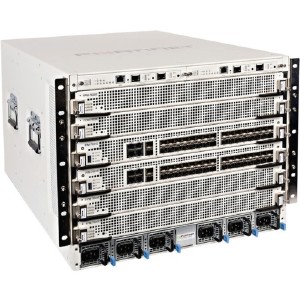
Fortinet FG-7121F Data Center Next-Gen firewall

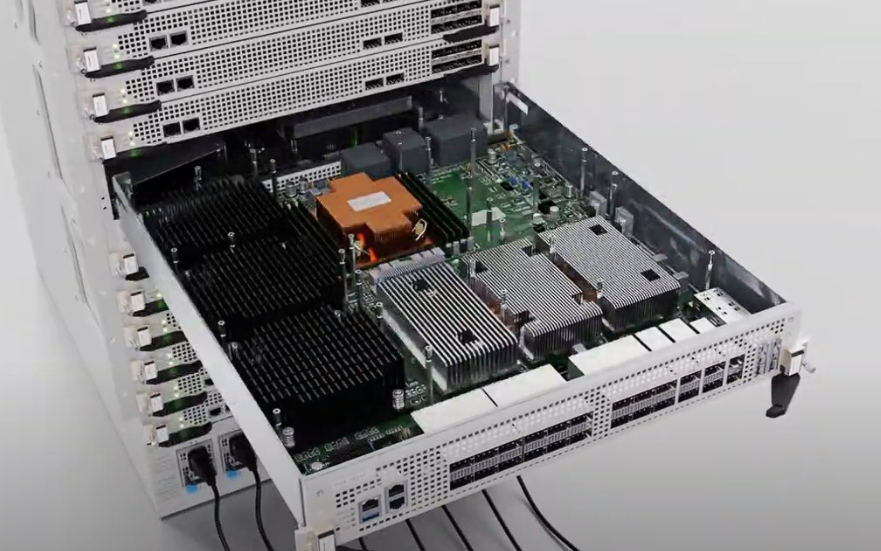
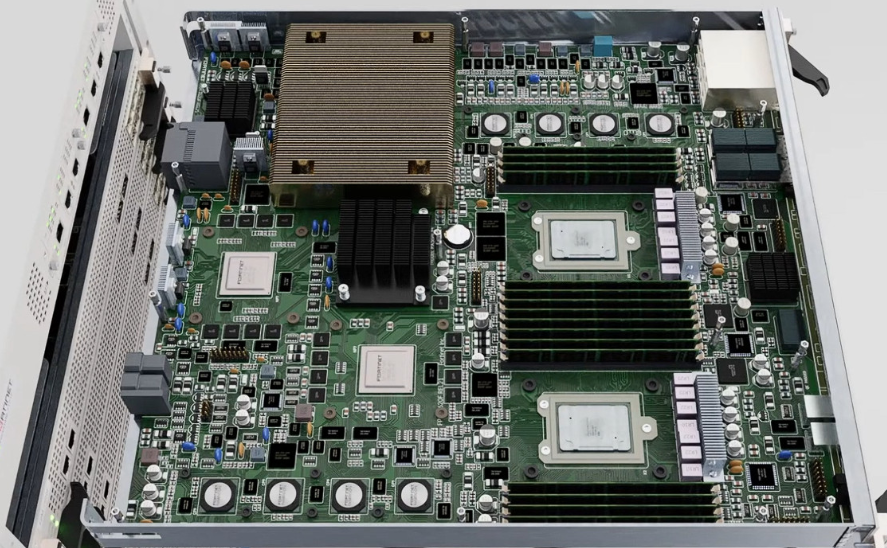
FortiGate Rugged 70F - Next-Generation Firewall