
What is Fortinet
Fortinet, Inc. is an American cybersecurity company headquartered in Sunnyvale, California, who develop and market security solutions like firewalls, endpoint security and intrusion detection systems.
Fortinet has offices all over the world in US, Canada, Chile, Mexico, Argentina, Brazil, Algeria, Austria, Belgium, Denmar, Czech Republic, Finland, France, Germany, Greece, Hungary, Ireland, Israel, Italy, Norway, Poland, Qatar, Romania, Saudi Arabia, Spain, Sweden, Switzerland, Netherlands, UK, Turkey, UAE, Australia, China, Hong Kong, India, Indonesia, Japan, Korea, Malaysia, Philippines, Singapore, Taiwan, Thailand, and Vietnam.
Founded in 2000 by brothers Ken Xie and Michael Xie, the company’s first and main product was FortiGate, a physical firewall. The company later added wireless access points, sandbox and messaging security. The company went public in November 2009.[4]
History
In 2000, Ken Xie and his brother Michael Xie co-founded Appligation, Inc., which they renamed ApSecure and finally Fortinet (from the phrase “Fortified Networks”).
Fortinet introduced its first product, FortiGate, in 2002, followed by anti-spam and anti-virus software.The company raised $13 million in private funding from 2000 to early 2003.Fortinet’s first channel program was established in October 2003.
The company began distributing its products in Canada in December 2003 and in the UK in February 2004.By 2004, Fortinet had offices in Asia, Europe, and North America.
Growth and expansion
According to market research firm IDC, by November 2009, Fortinet held over 15 percent of the unified threat management market. Also in 2009, CRN Magazine‘s survey-based annual report card placed Fortinet first in network security hardware, up from seventh in 2007.In November 2009, Fortinet had an initial public offering, opening on the NASDAQ Global Market under the ticker symbol FTNT. By the end of the first day of trading, the company had raised $156 million. The company later became listed on the NASDAQ Global Select Market, and became a component of the NASDAQ-100 index.[citation needed]
By 2010, Fortinet had $324 million in annual revenues and held the largest share of the unified threat management market according to IDC.
Recent history
In July 2014, Fortinet announced a technical certification program called the Network Security Expert (NSE) program. In March 2016, Fortinet launched a Network Security Academy to help fill open cybersecurity jobs in the U.S. Fortinet donated equipment and provided information to universities to help train students for jobs in the field. Also in 2016, Fortinet launched a program called FortiVet to recruit military veterans for cybersecurity jobs.
In January 2017, it was announced that Philip Quade, a former member of the NSA, would become the company’s chief information security officer.
In 2019, Fortinet’s FortiGate SD-WAN and Next Generation Firewall received a “Recommended” rating from NSS Labs.
In September 2021, Fortinet pledged to train one million people in support of President Joe Biden’s call to action to address the talent shortage in American cybersecurity.[21]
In March 2022, Fortinet announced the termination of operations in Russia. The company has stopped all sales, support, and professional services within Russia.[22][23]
Also in 2022, Network World reported that Fortinet had introduced new AI and ML-based security services utilizing telemetry from its global network.[24]
In June 2025, Fortinet was added to Investor’s Business Daily’s Big Cap 20 list of top-rated large-cap growth stocks, reflecting growing investor confidence in its performance and market position.
Acquisitions
In 2008, the company acquired the intellectual property of IPLocks, a database security and auditing company.
In August 2009, Fortinet acquired the intellectual property and other assets of Woven Systems, an Ethernet switching company.
Fortinet made four acquisitions from 2012 to 2016. The company acquired app-hosting service XDN (formerly known as 3Crowd) in December 2012,Coyote Point in 2013, and Wi-Fi hardware company Meru Networks in 2015. In June 2016, Fortinet acquired IT security, monitoring and analytics software vendor, AccelOps.
In June 2018, Fortinet acquired Bradford Networks, a maker of access control and IoT security solutions.
In October 2018, Fortinet acquired ZoneFox, a threat analytics company.
In late 2019, Fortinet acquired enSilo and CyberSponse.
In 2020, Fortinet acquired SASE cloud provider OPAQ Networks, and automated incident management company Panopta.
In Mach 2021, Fortinet acquired cloud and network security firm ShieldX.In July 2021, Fortinet acquired application security company Sken.Ai to offer continuous application security testing.
In June 2024, Fortinet acquired Lacework, a data-driven cloud security company for an undisclosed amount.In August 2024, Fortinet acquired Next DLP, a cloud based DLP provider company for an undisclosed amount.
Products
Fortinet released its first product, FortiGate, a firewall, in 2002, followed by anti-spam and anti-virus software. As functions like anti-spam were added, they were made available in a unified product along with the firewall and other functions.FortiGate was updated later to use application-specific integrated circuit (ASIC) architecture. The company has used ASIC in several of its products, including to support its SD-WAN features.
Initially, FortiGate was a physical, rack-mounted product but later became available as a virtual appliance that could run on virtualization platforms such as VMware vSphere.
In May 2004, Trend Micro, a competing cyber security and defense company, filed a legal complaint against Fortinet. Though the International Trade Commission initially ruled against Fortinet, the Trend Micro patents at the center of the dispute were later declared invalid in 2010. In 2005, an OpenNet study suggested that Myanmar, which was under American sanctions, had begun using Fortinet’s FortiGuard system for internet censorship. Fortinet stated that their products are sold by third-party resellers and that they acknowledged US embargoes; however, their sales director participated in a ceremony to deliver the firewall product to the prime minister.
In April 2016, Fortinet began building its Security Fabric architecture so multiple network security products could communicate as one platform.Later that year, the company added Security Information and Event Management (SIEM) products. In September 2016, the company announced it would integrate the SIEM products with the security systems of other vendors.
In 2017, Fortinet announced the addition of switches, access points, analyzers, sandboxes and cloud capabilities to the Security Fabric, in addition to endpoints and firewalls.Later in 2017, Fortinet created a standalone subsidiary, Fortinet Federal, to develop cybersecurity products for government agencies.Fortinet has received security effectiveness certifications through NSS Labs.[57]
in 2019, Fortinet grew to 21,000 WAN edge customers, according to a Gartner report.[58]
In February 2020, Fortinet released FortiAI, a threat-detection program that uses artificial intelligence.In July 2020, Fortinet launched multi-cloud SD-WAN.That year, BT Security selected Fortinet and other Threat Alliance members as Critical Partners.
Vulnerabilities and credential leaks
In September 2021, almost 500,000 login names and passwords for Fortinet VPN devices were published on a hacking forum. The credentials were allegedly scraped from devices vulnerable to a 2018 exploit (CVE-2018-13379).
In January 2025, the credentials and configuration files of over 15,000 FortiGate devices were leaked on a hacking forum.The data is believed to have been obtained from devices vulnerable to a 2022 exploit (CVE-2022–40684).[65]
Accomplishments in cybersecurity
In 2005, Fortinet created the FortiGuard Labs internal security research team.
By 2014, Fortinet had four research and development centers in Asia, as well as others in the US, Canada and France.[67]
In March 2014, Fortinet founded the Cyber Threat Alliance (CTA) with Palo Alto Networks in order to share security threat data across vendors. It was later joined by McAfee and Symantec.In 2015, the CTA published a white paper on the CryptoWall ransomware, which detailed how attackers obtained $325 million through ransoms paid by victims to regain access to their files.
In April 2015, Fortinet provided threat intelligence to Interpol in order to help apprehend the ringleader of several online scams based in Nigeria. The scams, which resulted in compromise of business emails and CEO fraud, had cost one business over $15 million.The following year, in March 2016, Fortinet and Cisco joined NATO in a data-sharing agreement to improve their information security capabilities.
Fortinet researchers discovered a spyware that scammed victims by impersonating the IRS. Also in 2017, researchers helped identify malware, called Rootnik, and ransomware, called MacRansom, that targeted Android and MacOS systems respectively.




Firewall Overview
A firewall is a network security device or software that monitors and filters incoming and outgoing network traffic based on predefined security rules. Firewalls are used to establish a barrier between trusted internal networks and untrusted external networks (such as the internet), allowing only authorized traffic to pass through. They are essential for protecting systems and networks from unauthorized access, cyberattacks, and malware.
Types of Firewalls
There are several different types of firewalls, each with its specific functionality, strengths, and use cases. Here are the main types:
1. Packet-Filtering Firewalls
- Description: The simplest type of firewall, packet-filtering firewalls work by inspecting individual packets (chunks of data) that pass through the firewall. These firewalls evaluate the packet headers against a set of predefined rules based on factors like IP addresses, port numbers, and protocols (e.g., TCP, UDP).
- How it works: If a packet matches a rule, it is either allowed or denied. If it does not match any rule, it is typically dropped.
Advantages:
- Fast and low-latency, as they only inspect the header.
- Simple to configure and deploy.
Limitations:
- Limited security, as they don’t analyze the content of the packet or state of the connection.
- Vulnerable to IP spoofing and certain types of attacks.
2. Stateful Inspection Firewalls
- Description: Also known as dynamic packet filtering, stateful inspection firewalls maintain a state table that tracks the state of active connections. This allows the firewall to make decisions based on the context of the traffic (e.g., whether a packet is part of an established, valid connection).
- How it works: When a packet arrives, the firewall checks its state table to determine whether the packet is part of an existing connection. If it is, the packet is allowed; otherwise, it is denied.
Advantages:
- More secure than simple packet filters, as it tracks the state of traffic.
- Helps prevent spoofing attacks.
Limitations:
- Slightly more resource-intensive compared to packet-filtering firewalls.
- Can be bypassed if the state table is not properly configured or maintained.
3. Proxy Firewalls (Application-Level Gateways)
- Description: A proxy firewall works by acting as an intermediary between the client and the server. The proxy firewall makes requests on behalf of the client, retrieves data, and then passes it to the client. It operates at the application layer of the OSI model.
- How it works: The firewall intercepts and inspects all traffic between the user and the internet, including application-specific protocols like HTTP, FTP, and DNS. It can analyze the entire payload and content of the communication.
Advantages:
- Very secure, as it can inspect traffic at the application layer.
- Can block malware, malicious content, and even certain types of behavior (e.g., downloading files from suspicious websites).
Limitations:
- Can introduce latency and performance bottlenecks because of deep packet inspection.
- Complex to configure and manage.
4. Next-Generation Firewalls (NGFW)
- Description: A next-generation firewall (NGFW) is a more advanced version of traditional firewalls. NGFWs combine the features of stateful inspection with additional functionalities such as application awareness, intrusion prevention, and advanced threat detection.
- How it works: NGFWs not only monitor and filter traffic based on IP address and port but also inspect the application layer, enforce granular policies based on application behavior, and integrate intrusion prevention systems (IPS), antivirus, and content filtering.
Advantages:
- Provides a multi-layered defense, integrating several security features.
- Can identify and block sophisticated attacks, such as zero-day threats and malware.
Limitations:
- More resource-intensive and potentially higher in cost.
- Requires regular updates to detect and mitigate the latest threats.
Cloud Firewalls (Firewall as a Service)
- Description: Cloud firewalls, also known as Firewall as a Service (FWaaS), are hosted in the cloud and provide security for cloud-based applications and infrastructure. These firewalls offer protection for cloud environments and are managed by third-party providers.
- How it works: These firewalls operate similarly to traditional firewalls but are deployed and managed in the cloud, offering protection for cloud services and users accessing cloud-based resources.
- Advantages:
- Scalable and flexible, ideal for cloud environments.
- Managed by service providers, reducing the need for in-house management.
- Limitations:
- Requires reliable internet connectivity to access and manage.
- May introduce latency due to the cloud infrastructure.
Conclusion
Each type of firewall serves a different purpose depending on the network requirements and security goals of an organization. For example:
- Packet-filtering firewalls are good for simple, basic security.
- Stateful inspection provides a higher level of security for more complex environments.
- NGFWs offer advanced threat protection and are suitable for businesses requiring high-level security.
- Proxy firewalls are useful when you need to inspect and filter content at the application layer.
Selecting the right type of firewall depends on factors such as network complexity, performance requirements, and the level of security needed.


Firewall Model
Fortinet offers a wide range of firewalls under its FortiGate series, catering to different network sizes and use cases. These firewalls are used to protect enterprises, data centers, and SMBs (Small and Medium-sized Businesses). The series ranges from entry-level models to high-end enterprise solutions, and they incorporate advanced features like deep packet inspection (DPI), SSL inspection, VPNs, and more.
Here is a breakdown of FortiGate models, from basic to advanced:
1. Entry-Level Models (Basic Use Cases)
These models are ideal for small businesses, branch offices, or smaller network environments. They offer essential security features without the complexity and cost of high-end solutions.
FortiGate 30E/40F/60F:
- Use Case: Small businesses, remote offices, SOHO (Small Office/Home Office) deployments.
- Features:
- Basic security features like IPS (Intrusion Prevention System), Web Filtering, VPN.
- Simplified management through FortiCloud or FortiManager.
- SSL VPN, IPsec VPN for remote access.
- High throughput and hardware acceleration for secure networking.
- Limited ports and lower throughput than higher-end models.
FortiGate 80F/90E:
- Use Case: Small to medium-sized businesses with basic security needs.
- Features:
- More throughput and additional ports compared to the 30E and 60F.
- Enhanced security features including more advanced IPS, application control, and user authentication.
- Advanced VPN options.
- More integrated with Fortinet’s SD-WAN capabilities.
2. Mid-Range Models (Advanced Features)
These firewalls cater to medium-sized businesses, regional data centers, and more complex security needs. These models offer additional performance, scalability, and more robust security features.
FortiGate 100F/200F/300E:
- Use Case: Medium-sized businesses, branch offices, larger networks, and campus environments.
- Features:
- Higher throughput and better multi-gigabit performance.
- Advanced features like UTM (Unified Threat Management), SD-WAN, and better SSL inspection.
- Enhanced VPN features (SSL/IPsec).
- Integrated with FortiAnalyzer for centralized logging and reporting.
- More powerful hardware for handling higher traffic loads.
FortiGate 500E/600E:
- Use Case: Enterprises, large branch offices, and data centers.
- Features:
- Increased scalability with multi-Gbps throughput.
- Stronger support for advanced security protocols like next-gen firewall capabilities, SSL inspection, and advanced threat protection.
- Redundant power supply and advanced hardware management.
- Advanced analytics integration (e.g., FortiAnalyzer, FortiSIEM).
- Flexible deployment options (virtual, physical, cloud).
- Enhanced SD-WAN for better network optimization.
3. High-End Models (Advanced Use Cases)
These models are designed for large enterprises, data centers, and high-traffic networks that require high throughput, advanced security, and the ability to handle complex, multi-site configurations.
FortiGate 1000D/2000E/3000F:
- Use Case: Large enterprises, data centers, high-performance networks.
- Features:
- Very high throughput for enterprise-grade deployments.
- Support for FortiOS features such as DDoS protection, advanced malware protection, deep inspection.
- Large-scale VPNs, SD-WAN with advanced features for optimization and security.
- Enterprise-grade logging and analytics.
- Integration with Fortinet’s Security Fabric, providing a unified view across multiple FortiGate firewalls.
- High-availability and load balancing for mission-critical environments.
FortiGate 5000 Series (e.g., FortiGate 5001E, 5003E):
- Use Case: Data centers, service providers, large-scale security environments.
- Features:
- Extremely high throughput (10Gbps and above).
- Designed for very large organizations or carriers with complex requirements.
- Advanced security automation and integration with Fortinet’s Security Fabric and FortiManager.
- Scalable architecture with support for 100G interfaces and hardware acceleration.
- Distributed deployment and advanced logging and reporting with FortiAnalyzer and FortiSIEM.
- Designed to handle the most demanding traffic loads and high-availability configurations.
4. Virtualized and Cloud Solutions (Advanced)
Fortinet also offers virtual firewalls for cloud and virtual environments. These are designed to provide enterprise-grade security without the need for physical hardware.
- FortiGate VM:
- Use Case: Virtual environments like VMware, Hyper-V, or cloud-based infrastructures (AWS, Azure).
- Features:
- Provides all the features of the physical FortiGate firewalls in a virtualized form.
- Flexible licensing models based on deployment size.
- Integrates well with FortiManager and FortiAnalyzer for centralized management and reporting.
Key Features Across Models
- Security Services: Includes IPS (Intrusion Prevention), Anti-virus, Web Filtering, Email Filtering, and Application Control.
- SD-WAN: Most models offer SD-WAN capabilities to optimize the performance of your WAN network.
- FortiOS: All FortiGate firewalls are powered by FortiOS, which offers a unified management platform for all Fortinet products.
- Advanced Threat Protection: Includes sandboxing, zero-day protection, and deep packet inspection.
- VPN: SSL and IPSec VPN support for remote and site-to-site connectivity.
- Centralized Management: Tools like FortiManager and FortiAnalyzer enable centralized security management, reporting, and monitoring.
Conclusion
- Entry-Level Models (e.g., 30E, 60F) are suitable for smaller organizations with basic security needs.
- Mid-Range Models (e.g., 100F, 200F, 500E) provide a balance of performance and features, ideal for medium-sized businesses and branch offices.
- High-End Models (e.g., 1000D, 3000F) are designed for large enterprises and data centers needing extremely high throughput and advanced security.
- Cloud & Virtual Models offer scalable solutions for virtualized and cloud-based environments.
Choosing the right FortiGate model depends on the size of your organization, the complexity of your network, and your specific security requirements.
Entery Level-Branch
FortiGate 90G
Data Sheet & Installtion Guide
2.2 Gbps
FortiGate 80F
900 Mbps
FortiGate 70G
1.3 Gbps
FortiGate 70F
800 Mbps
FortiGate 60F
700 Mbps
FortiGate 50G
1.1 Gbps
FortiGate 40F
600 Mbps
FortiGate 30G
500 Mbps
MID-Range-Campus Firewall
FortiGate Firewall 100F Model
1 Gbps
FortiGate Firewall 120G Model
2.8 Gbps
FortiGate Firewall 200F Model
Data Sheet & Installtion Guide
3 Gbps
FortiGate Firewall 200G Model
6.4 Gbps
FortiGate Firewall 400F Model
9 Gbps
FortiGate Firewall 600F Model
10.5 Gbps
FortiGate Firewall 900G Model Data Sheet
20 Gbps


High-End-Data Center
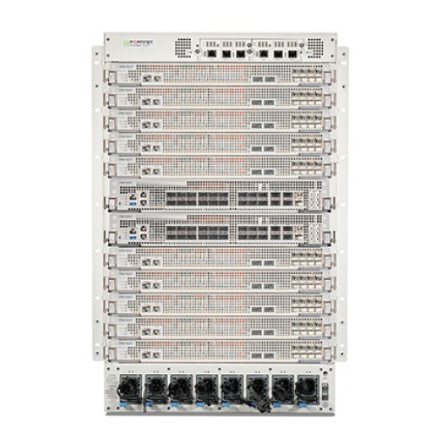
FortiGate 7121F
Data Sheet & Installtion Guide
520 Gbps
FortiGate 7081F
312 Gbps
FortiGate 6500F
100 Gbps
FortiGate 6001F
30-100 Gbps (licensable)
FortiGate 6300F
60 Gbps
FortiGate 4800F
70 Gbps
FortiGate 4400F
75 Gbps
FortiGate 4200F
45 Gbps
FortiGate 3700F
75 Gbps
FortiGate 3500F
63 Gbps
FortiGate 3200F
45 Gbps
FortiGate 3000F
33 Gbps
FortiGate 2600F
25 Gbps
FortiGate 1800F
15 Gbps
FortiGate 1000F
13 Gbps

Fortinet Firewall Course Topic
Firewall Administrator: As a Firewall Administrator, you can expect a salary package ranging from INR 4-8 lakhs per annum.
Network Security Engineer: As a Network Security Engineer, you can expect a salary package ranging from INR 4-12 lakhs per annum.
Cyber Security Analyst: As a Cyber Security Analyst, you can expect a salary package ranging from INR 5-15 lakhs per annum
Security Consultant: As a Security Consultant, you can expect a salary package ranging from INR 6-20 lakhs per annum.
Next-Generation Security Platform and Architecture
Basic-Terminology
Identify Malware
Firewall Technologies
About Fortinet
Install FortiGate on VMware
Workstation
Install FortiGate in GNS3
Install FortiGate on EVE
Introduction and Initial Configuration
FortiGate Dashboard
Initial Working Lab
Interfaces
Zone
Virtual Wire Pair
Administrative Access
DNS Server
Routing on Fortinet firewall
Addresses Objects
Services Objects
Static-Policy-Route
RIP
OSPF
Routing Protocols
Redistribution
BGP Border Gateway Protocol
Firewall Policies
Policies
Policy-Labs-MAC
Policy-Labs-LocalUser
Network Address Translation (NAT)
NAT-Basic Network Address Translation
SNAT Lab
DNAT Lab
Policy, Source, Overload NAT Lab
Policy, Source, One-To-One NAT Lab
Policy, Source, Fixed Port Range NAT Lab
Security Profile-Intro
AV-Security Profiles
Web Filter Profiles
DNS Filter Profiles
Application Control Profiles
Intrusion Prevention System Profiles
Inspection Mode
NGFW Modes
FortiGateAD
Passive Authentication AD
Layer 2 firewall
Transparent Mode
Virtual Wire Pairing
Software Switch
Logging and Monitoring
SNMP Access-Lab
Backup and Restore
Configure Syslog in FortiGate Firewall
IPsec VPN
VPN Concept
Site2Site-Policy-Based-VPN
Site-to-Site IPSec Route-Based VPN
Site-to-Site IPSec VPN Template Lab
SSL VPN
Remote Access VPN
Remote Access SSL VPN Web Portal Theory & Lab
High Availability (HA)
What is HA
Active-Passive Lab
Active-Active Lab

Eligibility
Graduation
Basic understanding of the IT industry
Basic understanding of IP and Routers
Fundamental knowledge of Network Security Concepts
Enterprise Firewall
1. NSE 7 (Advanced course) Course Curriculum:
Security Fabric
FortiOS Architecture
Traffic and Session Monitoring
Routing
FortiGuard
High Availability
Central Management
2. Routing Protocols
Open Shortest Pathway First (OSPF)
Border Gateway Protocol (BGP)
3. Web Filtering
Intrusion Prevention System (IPS)
IPsec
Auto-discovery VPN (ADVPN)
Advanced Threat Protection
1. NSE 7 (Advanced course) Course Curriculum:
Attack Methodologies
Attack Methodologies
The ATP Framework
FortiSandBox Key Components
High Availability
Maintenance and Troubleshooting
2. Protecting the Edge
Protecting the Edge
Protecting Email Networks
Protecting End Users
Protecting Third-Party Appliances
Result Analysis
OT Security
NSE 7 (Advanced course) Course Curriculum:
OT Infrastructure
Learn about the fundamentals of an OT infrastructure
Secure an OT infrastructure
Use segmentation and micro segmentation in an OT
network
Authentic users
Secure OT network traffic using a FortiGate device
2. FortiSIEM
Use FortiGate and FortiNAC to manage and identify
devices
Use FortiAnalyzer for logging and reporting
Use FortiSIEM to centralize security information
Produce real-time analysis of security events with
FortiSIEM
Secure Access
NSE 7 (Advanced course) Course Curriculum:
Authentication and Authorization
Configure advanced user authentication and authorization with RADIUS and LDAP
Troubleshoot user authorization and authentication
Implement two-factor authentication
Implement and troubleshoot RADIUS
Configure Layer 2 authentication
Configuration and Security
Provision, configure and manage FortiSwitch using FortiManager
Deploy complex wireless networks
Secure wired and wireless networks
Provide secure access to guest users
FortiGate SD-WAN:
1. Deploy SD-WAN using Fortinet Secure SD-WAN solutions
2. Introduction to SD-WAN
3. Routing, Sessions and Performance SLAs
Basic routing
Routing changes
Session tables
Performance SLAs
SD-WAN rules
Routing
Diagnostics
Traffic Shaping
Integration
Advanced IPSec
Auto-Discovery VPN
What is the FortiGate Firewall certification?
The FortiGate Firewall, known as NSE (Network Security Engineer), got developed for IT technical professionals to apply their proficiency for the Fortinet security fabric. Designed by Fortinet, one of the leading companies for providing concrete cybersecurity solutions, the FortiGate Firewall training induces all the skillsets required to elevate an IT personnel credential to stand qualified for critical cybersecurity issues in an MNC or a business organization.
What are the exam details of the FortiGate Firewall certification?
The exam details of NSE-4 are as follows-
Exam Code: FORTINET NSE-4
Exam Level: Associate
Exam Cost: USD 400
Exam Duration: 105 Minutes
Exam Format: Multiple Choice Questions & Multiple Response
Total Questions: 60 Questions
Passing Score: 60%
The exam details of NSE-7 are as follows-
Exam Name: Fortinet NSE 7—Enterprise Firewall 7.0
Exam Series: NSE7_EFW-7.0
Exam Duration: 60 minutes
Exam Format: Multiple-choice Questions
Total Questions: 35
Scoring: Pass or fail, a score report is available from your Pearson VUE account
Language: English and Japanese
Version: FortiOS 7.0.1, FortiManager 7.0.1, FortiAnalyzer 7.0.1
The exam details of NSE 7-SD-WAN are as follows-
Exam Name: Fortinet NSE 7—SD-WAN 7.0
Exam Series: NSE7_SDW-7.0
Time Allowed: 60 minutes
Exam Questions: 35 multiple-choice questions
Scoring: Pass or fail, a score report is available from your Pearson VUE account
Language: English
Product Version: FortiOS 7.0.3, FortiManager 7.0.2, FortiAnalyzer 7.0.2
What are the benefits of the Fortinet NSE certification?
One can enjoy tons of advantages of such a high in-demand job profile in the IT industry by qualifying for the FortiGate firewall course. The benefits are listed below:
Work in world-class companies as a security engineer
Gain threat landscape experience
Elevate your cybersecurity skills
Become proficient in handling Fortinet products
Learn security solutions
Earn status and prestige at work
Earn a handsome salary
Possess advanced design and configuration skills.
FortiGate online training is one of the most trending courses in IT cybersecurity. Cybersecurity job roles are highly in demand as businesses are increasing daily.
What are the job roles after the FortiGate Firewall course training?
The job roles after the FortiGate Firewall course training are as follows-
Network Security Engineer
Firewall Engineer
Security Analyst
Security Consultant
Security Architect
Information Security Specialist
Cybersecurity Analyst
Cybersecurity Consultant
Security Operations Center (SOC) Analyst
Network Administrator
Network Engineer
IT Security Manager
Penetration Tester
Vulnerability Analyst
Security Compliance Analyst
Information Assurance Specialist
IT Risk Management Specialist
Cybersecurity Trainer
Firewall Administrator
Security Systems Administrator
What are the salary prospects for a candidate after completing the FortiGate Firewall training?
The salary prospects for a candidate after completing the FortiGate Firewall training in different countries are as follows-
United States – USD 90,000 to USD 150,000 per year
Canada – CAD 80,000 to CAD 120,000 per year
United Kingdom – £35,000 to £70,000 per year
Germany – €50,000 to €100,000 per year
France – €45,000 to €80,000 per year
Spain – €30,000 to €60,000 per year
Italy – €30,000 to €60,000 per year
Australia – AUD 90,000 to AUD 140,000 per year
India – INR 500,000 to INR 1,200,000 per year
New Zealand – NZD 80,000 to NZD 120,000 per year
Japan – ¥6,000,000 to ¥12,000,000 per year
Singapore – SGD 80,000 to SGD 120,000 per year
South Korea – KRW 40,000,000 to KRW 100,000,000 per year
United Arab Emirates – AED 150,000 to AED 300,000 per year
Saudi Arabia – SAR 120,000 to SAR 240,000 per year