
Types of Fiber Optic Connectors
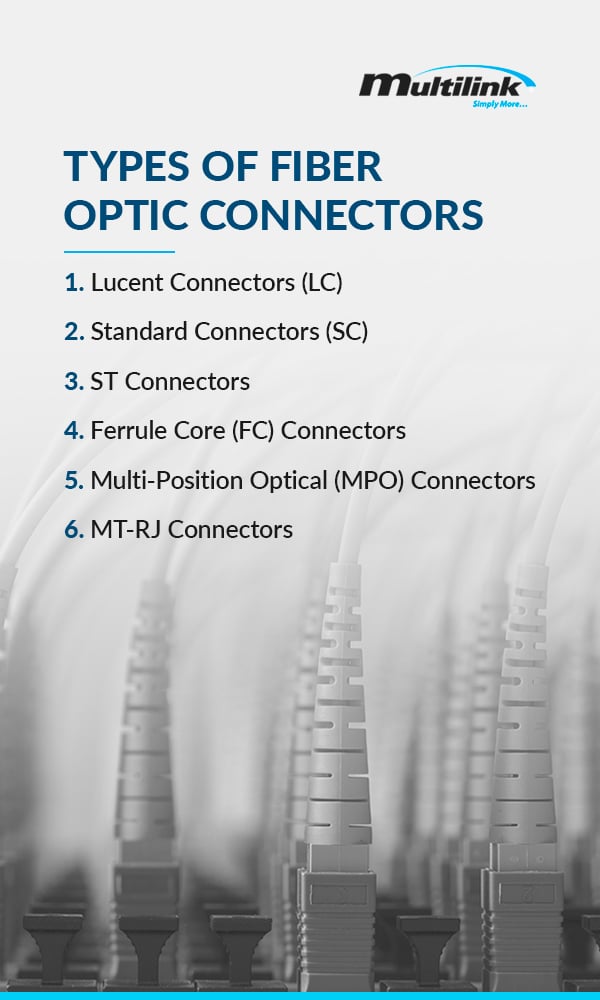
Fiber connectors differ based on what types of cables they connect. For example, single-mode fiber connectors and multimode fiber connectors each pair with the cable with the same mode compatibility.
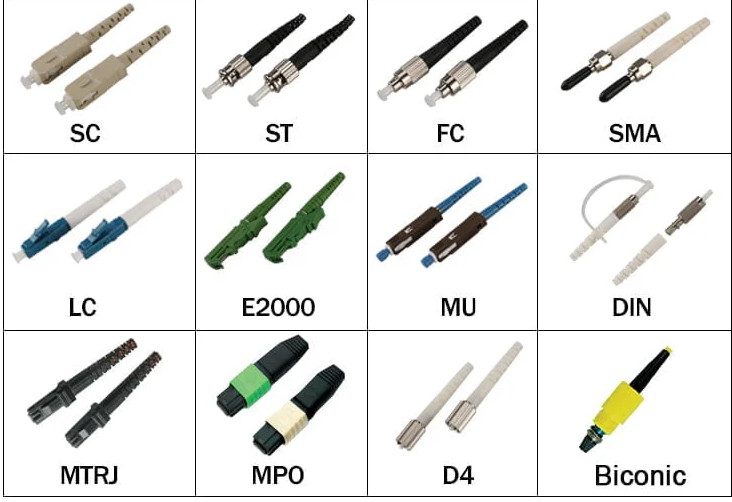
With many electronics that require fiber optic connections, several types of terminations exist. The most common fiber connectors are LC and SC. SC and LC connector types are so common that many systems have designs to accommodate them. What are the different types of fiber connectors? They are as follows:
1. Lucent Connectors (LC)
LC connectors have some of the smallest ferrules, measuring 1 1/4 mm, which is approximately half the size of an ST connector. Their tiny size puts them into the small form factor category of terminations. These connectors work well for multimode transceivers and single-mode cables.
2. Standard Connectors (SC)
SC connectors have a 2 1/2 mm ferrule that snaps cleanly into place. Using a push and pull motion secures the connector. These types of terminations have high levels of performance, which along with a price drop since their introduction, has contributed to their vast popularity in multiple applications. In fact, many formerly ST connectors applications now use SC connectors instead, since SC was invented to supplant ST in both telecommunications and data communications.
3. ST Connectors
ST connectors are among the oldest of fiber cable connector types. Until 2005, this proprietary AT&T brand of connector ranked as one of the most popular fiber terminations. While solutions that solve some issues ST connectors present have replaced these connectors, they still remain popular. Today, their cost is low due to their age, making them a choice for budget-mindful projects.
The design of ST connectors is a 2 1/2 mm ferrule that has a bayonet-style connection between the fibers through an adapter. These ferrules use a spring-load design that can make installation difficult unless the parts have precise seating, though a keyed slot assists with aligning the ferrules for connection.
4. Ferrule Core (FC) Connectors
FC connectors rank as some of the most popular for use with single-mode connections before the introduction of LC and SC connectors. These use a keyed, screw-in type ferrule. However, the process of screwing in the ferrule requires extra time and effort compared to snap-in SC connectors.
The screw-in design prevents the connection from interruptions, even when someone pulls the cable or the system has applications in areas with a lot of movement. Video over fiber is one use for these types of connectors due to the constant flow of data through the cable and the security of the connector.
Like ST and SC connectors, FC terminations use a 2 1/2 mm ferrule. With a hybrid adapter, anyone can create a bridge between these connector types.
5. Multi-Position Optical (MPO) Connectors
MTP is the commercial brand of MPO connectors. MTP and MPO connectors are the same, except the MTP brand has a specific use for high-performance applications, whereas MPO works on more mechanical situations. These two connectors usually connect ribbon cables with multiple fibers.
These connectors have two to six rows of 12 or 16 fibers. MPO connectors with 12 fibers per row can have two to six rows, with two the most common number. Connectors that have 16 fibers per row do not have more than two rows. Connections between ferrules use pins and holes to mate the ends of the fiber with another cable or an electronic device. Most often, this type of connector has applications in either high-speed links that use multimode or for pre-terminated cable groupings.
6. MT-RJ Connectors
Today, MT-RJ connectors have disappeared from use. However, some systems may still require these connectors for repairs. MT-RJ only works for multimode cables with duplex fibers. Both fibers go into the ferrule that connects to its mated half with pins and holes, similar to MPO terminations. Some plug-and-jack variations on this type of connector also exist.



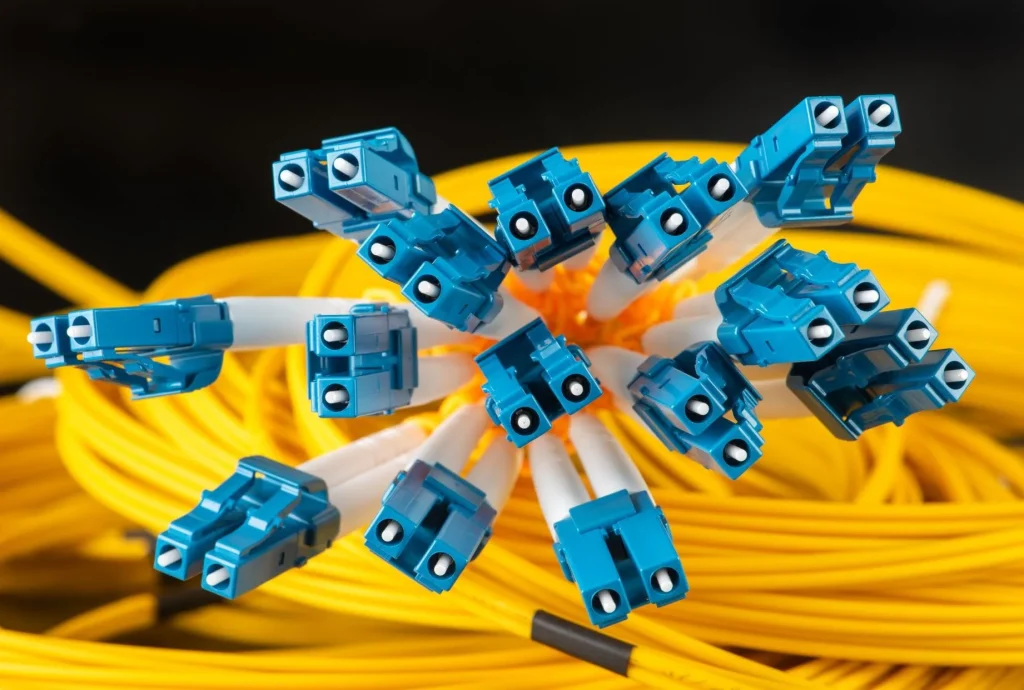

What are the different kind of fiber optic patch cords
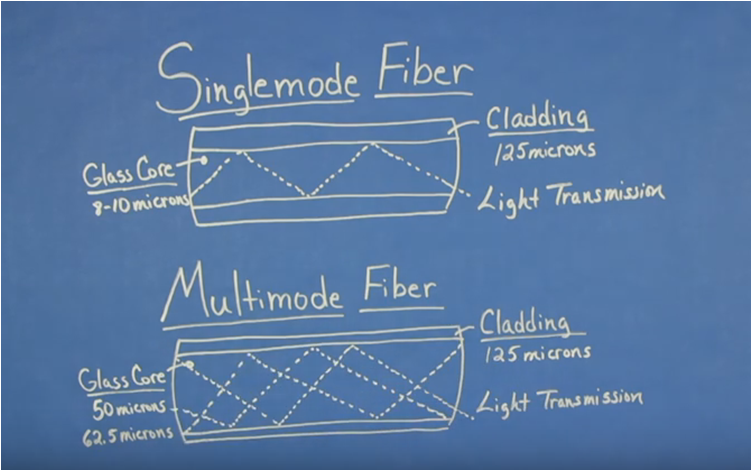
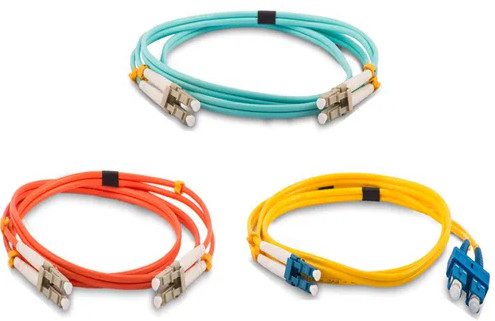
Single mode fiber patch
- Use 9/125 micron bulk single mode fiber cable
- Fiber optic connectors at both ends.
- Fiber optic cable jacket color is usually yellow.

Multimode fiber patch cord

- use 62.5/125 micron or 50/125 micron bulk multimode fiber cable
- terminated with multimode fiber optic connectors at both ends.
- fiber optic cable jacket color is usually orange
Simplex fiber optic patch cords
Simplex fiber patch cable has one fiber and one connector on each end.

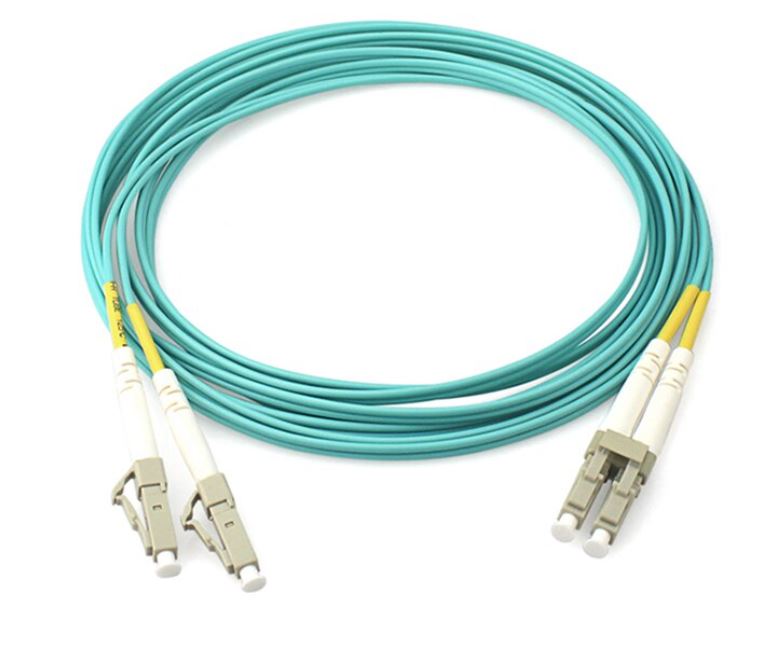
Duplex fiber optic patchcord
Duplex fiber patch cable has two fibers and two connectors on each end. Each fiber is marked “A” or “B” or different colored connector boots are used to mark polarity.

1. Fiber Type in Patch Cords:
Fiber optic patch cords can either be single-mode or multi-mode, and this depends on the type of fiber used inside the cable.
a. Single-Mode Fiber (SMF) Patch Cords:
- Core Diameter: Typically 8-10 microns.
- Wavelength: Typically designed for 1310 nm or 1550 nm transmission.
- Applications: Used in long-distance communication, telecom networks, high-speed internet backbones, and long-haul data connections.
- Performance: Lower loss, higher bandwidth, and better performance over long distances compared to multi-mode fiber.
- Use Case: Ideal for telecom applications and long-range networking in data centers, telecom exchanges, and fiber optic backbone infrastructures.
b. Multi-Mode Fiber (MMF) Patch Cords:
- Core Diameter: Typically 50 µm or 62.5 µm.
- Wavelength: Typically operates at 850 nm or 1310 nm.
- Applications: Used for short to medium-distance connections in data centers, LANs, and campus networks.
- Performance: Higher signal dispersion than single-mode, making it suitable for shorter distances (up to a few hundred meters for higher-speed networks).
- Use Case: Perfect for data center interconnects, short-distance Ethernet links, and local area networks (LANs).
2. Connector Type in Patch Cords:
The type of connector used on both ends of the fiber optic patch cord is crucial for determining the compatibility and application of the patch cord. Here are the most common fiber optic connectors used in patch cords:
a. SC (Subscriber Connector)
- Design: Square, push-pull design, which is easy to use.
- Applications: Common in telecom and datacom applications.
- Features: Low-cost, high-performance, and widely used in fiber-to-the-home (FTTH) installations, network equipment, and in data centers.
b. LC (Lucent Connector)
- Design: Smaller than SC connectors (1.25 mm ferrule) and typically used in high-density installations.
- Applications: Data centers, network switches, and high-performance computing (HPC) environments.
- Features: Smaller form factor, often used in duplex (two fibers in one cable) configurations.
c. ST (Straight Tip)
- Design: Bayonet-style connector.
- Applications: Used in older telecom systems and high-frequency applications.
- Features: Relatively easy to install, but being replaced in modern networks by LC and SC connectors.
d. MTP/MPO (Multi-fiber Push On/Pull Off)
- Design: High-density connectors for multi-fiber cables (typically 12 or 24 fibers in a single connector).
- Applications: Common in high-density data centers and backbone networks.
- Features: Allows multiple fibers to be connected in one action, saving space and time for large-scale networks.
e. FC (Ferrule Connector)
- Design: Threaded connector with a metal ferrule, often used for precision applications.
- Applications: Used in telecom and high-precision instrumentation.
- Features: Provides a secure connection with high performance and low insertion loss.
f. E2000 Connector
- Design: Push-pull locking mechanism similar to SC but with better performance.
- Applications: High-end telecom networks and fiber optic communication systems.
- Features: Provides high return loss, often used in environments where high performance is required.
3. Patch Cord Construction:
Fiber optic patch cords are typically made of a fiber optic cable with connectors at each end. They are available in simplex or duplex configurations:
a. Simplex Patch Cord:
- Configuration: One fiber for one-way communication.
- Use Case: Single-channel connections where data is transmitted in one direction at a time.
- Common Applications: Point-to-point connections, single-channel communications.
b. Duplex Patch Cord:
- Configuration: Two fibers, one for transmitting and one for receiving data, enabling bidirectional communication.
- Use Case: Most common type of patch cord in networking, supporting bi-directional traffic.
- Common Applications: Ethernet, Fibre Channel, telecom systems, and data center interconnections.
c. Simplex vs. Duplex:
- Simplex is used for single-direction data transmission, while Duplex allows for two-way data transmission.
- Duplex patch cords are used for most applications in modern networking.