Site To Site VPN
Table of Contents
What is Site-to-Site VPN?
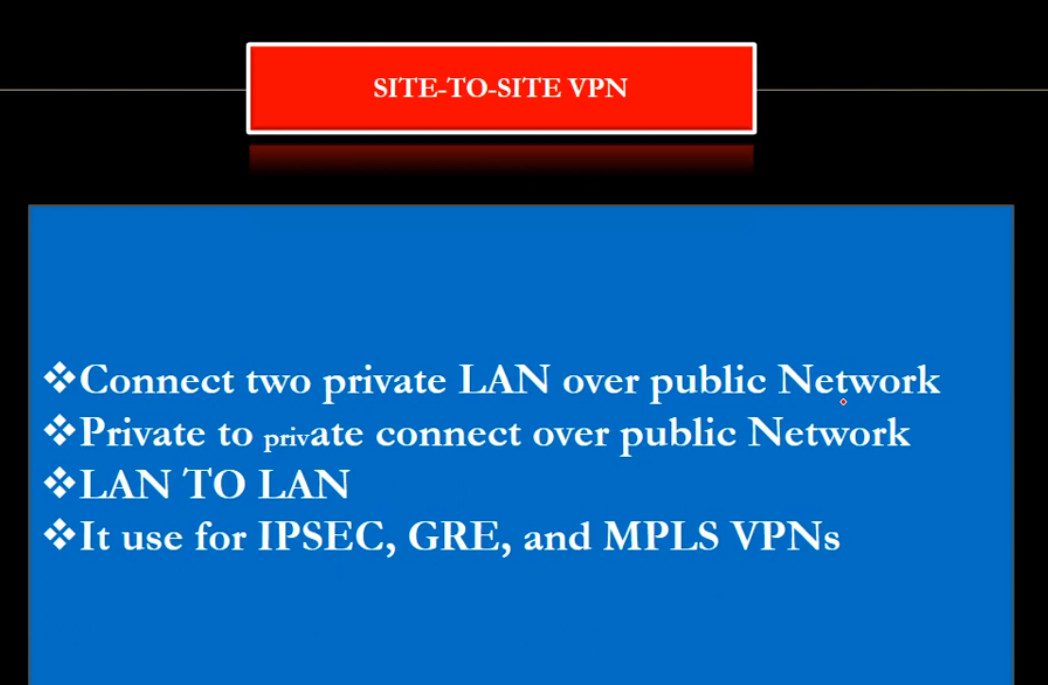
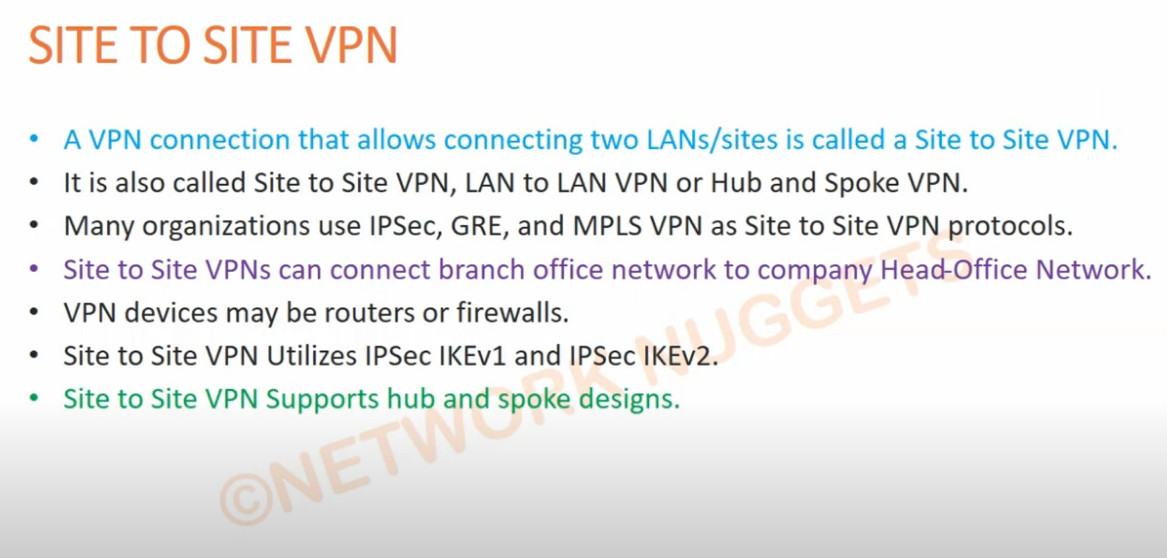
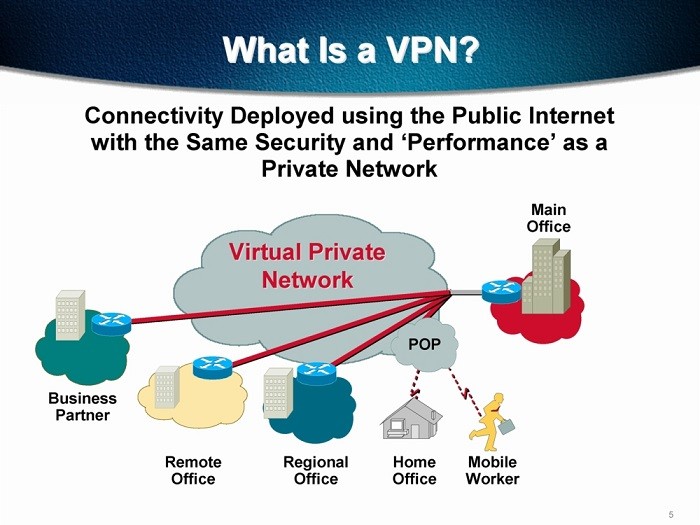
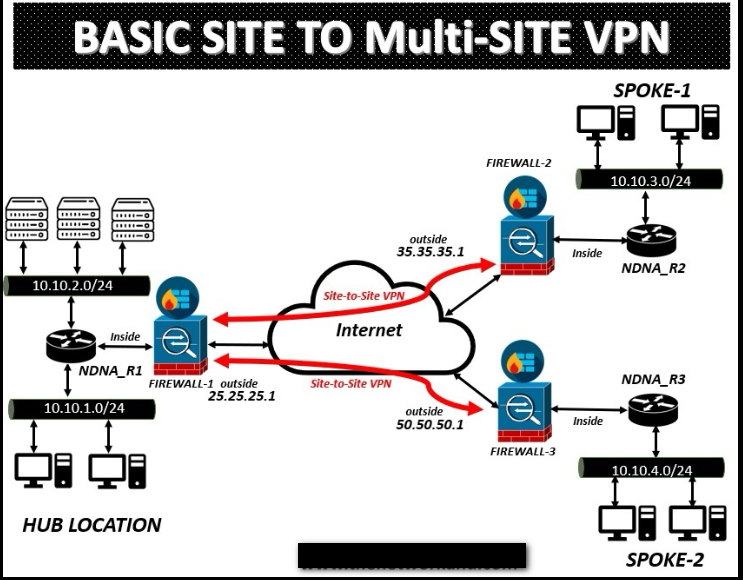
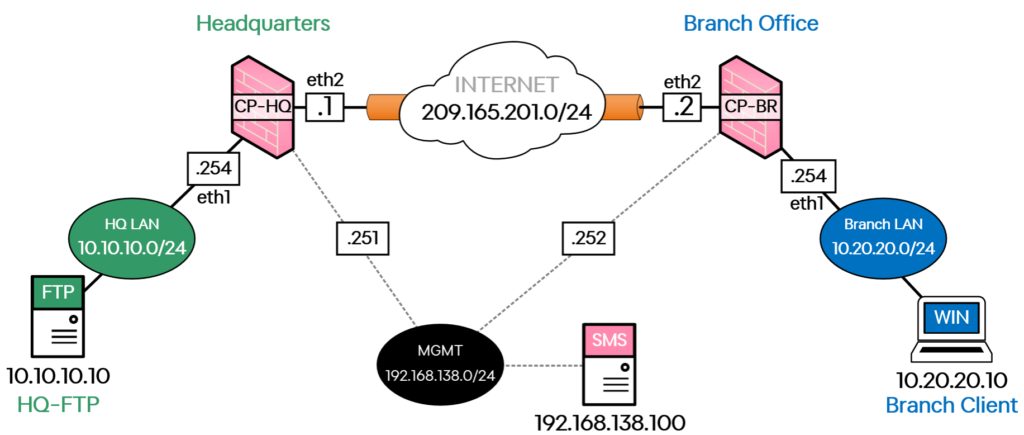
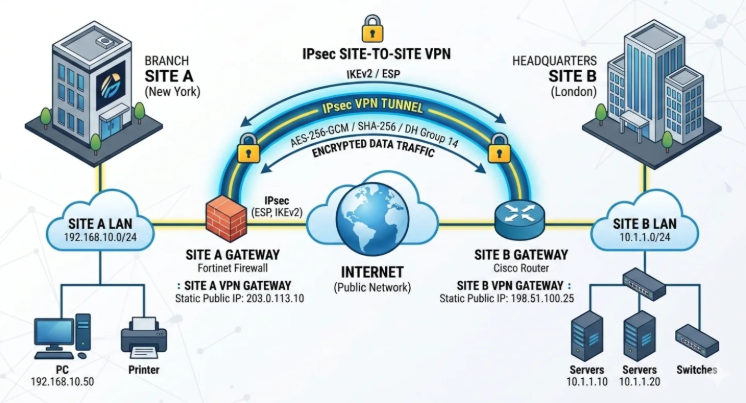
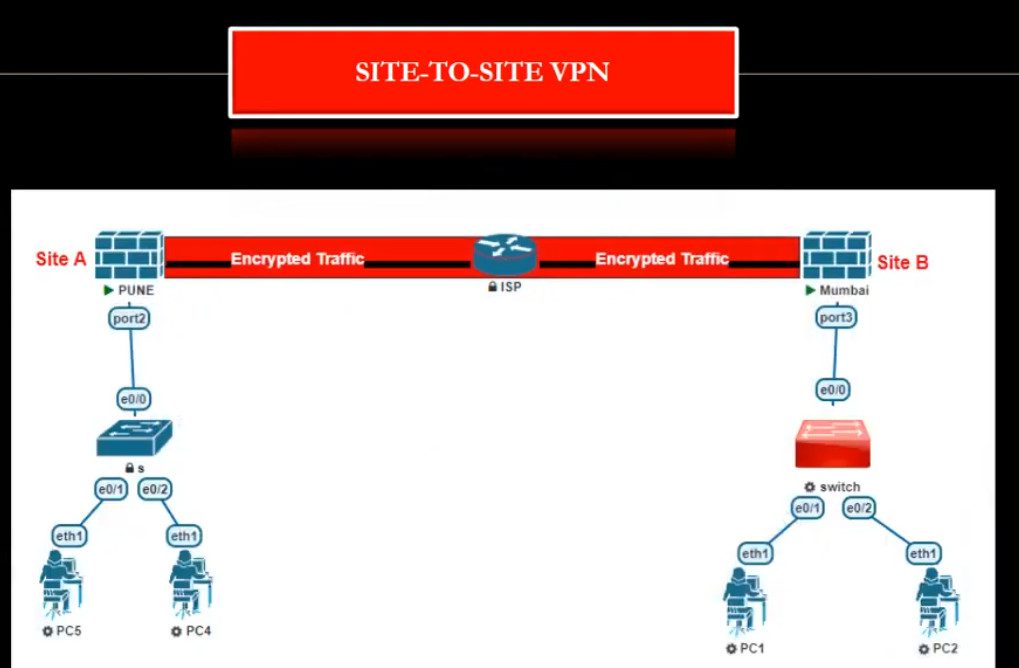
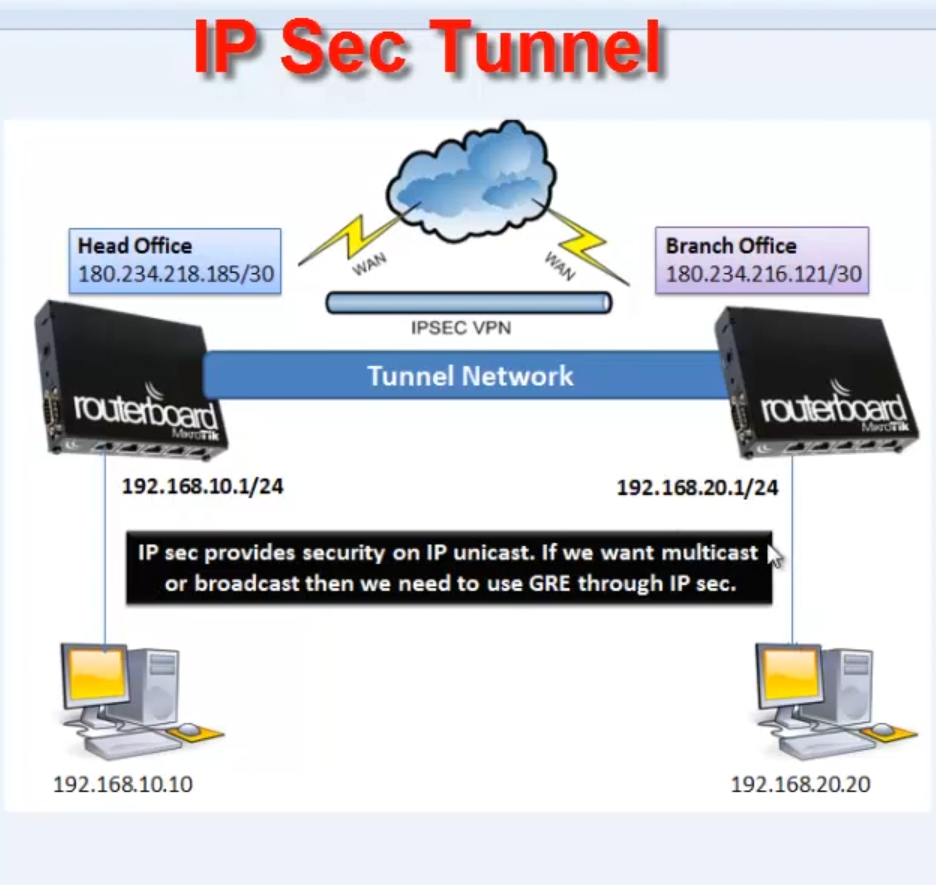
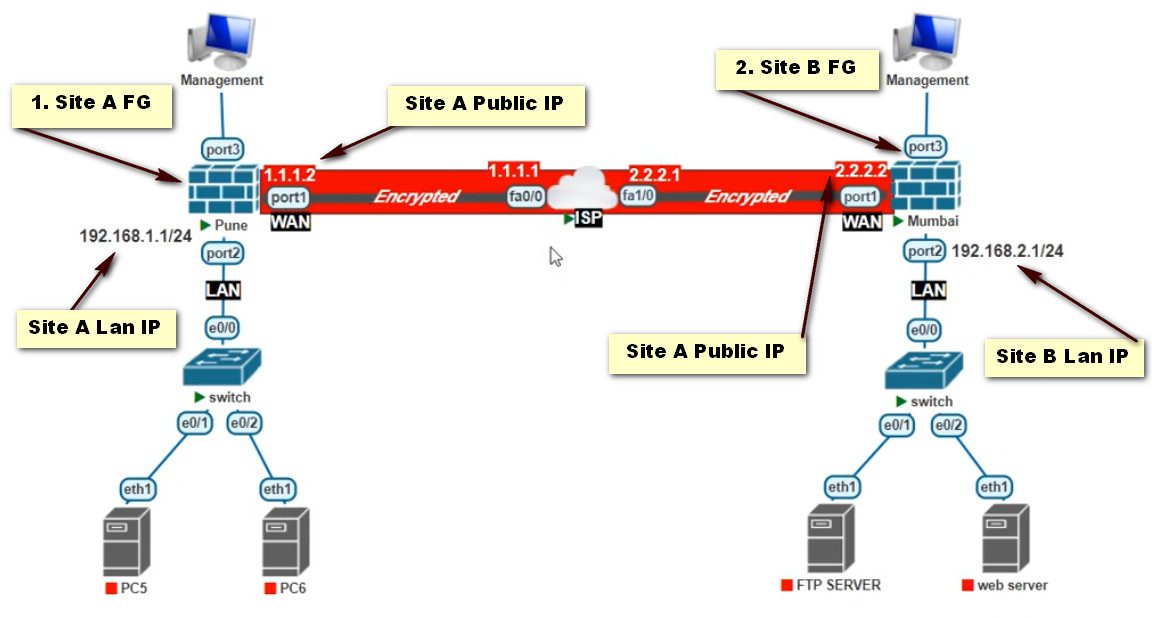
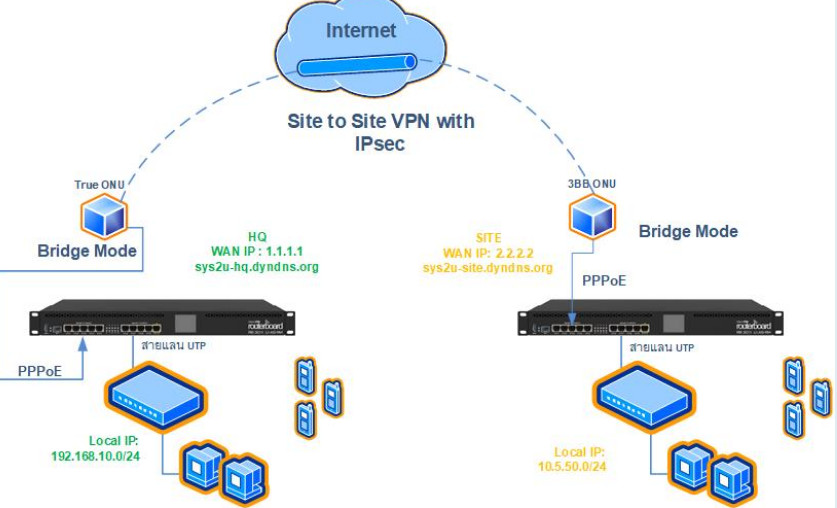
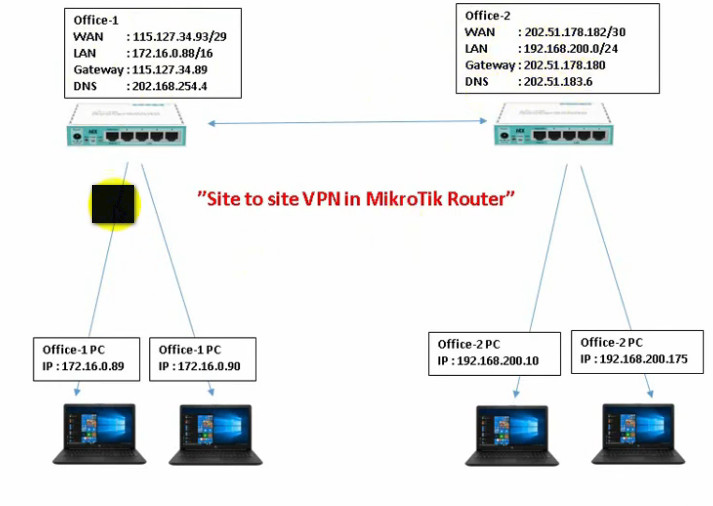
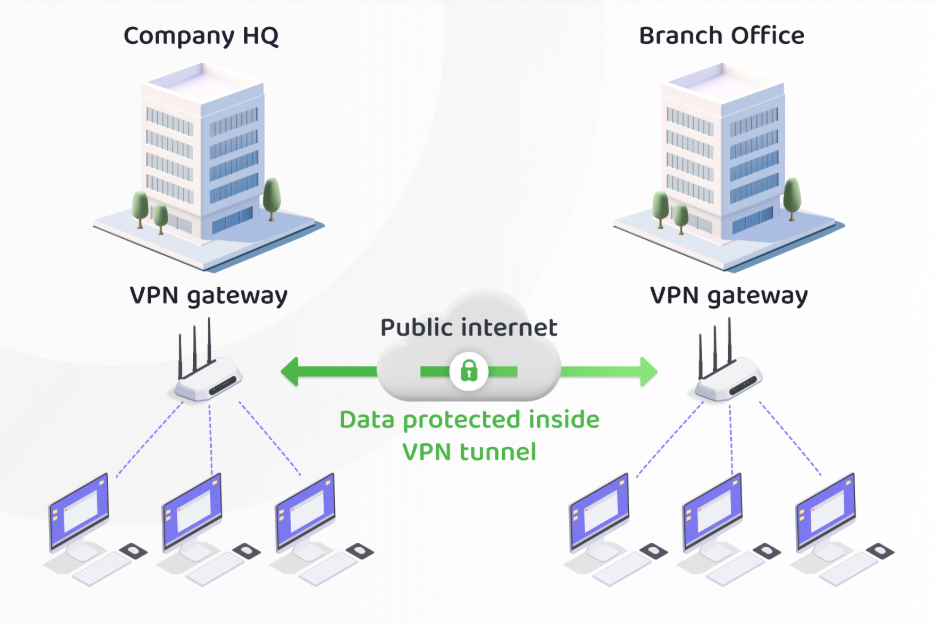
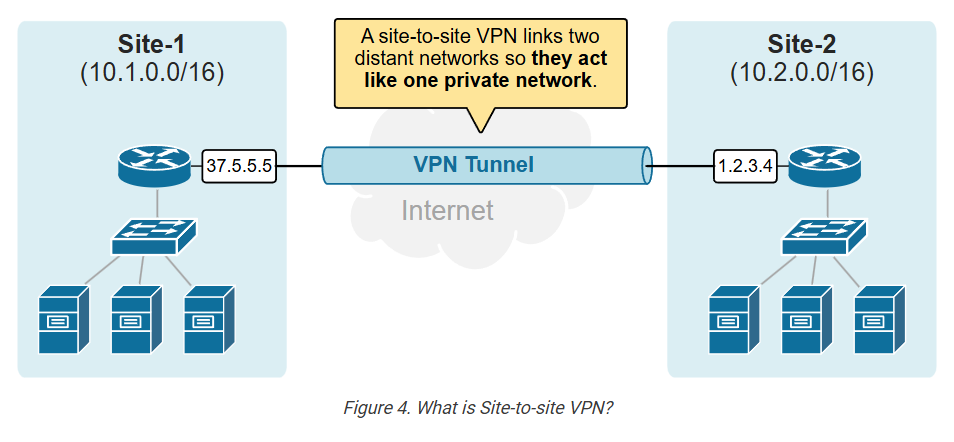
A Site-to-Site VPN is a VPN connection that securely connects two or more office networks over the Internet, allowing users at different locations to communicate as if they are on the same private network.
Site-to-Site VPN Example:
Suppose Infosys has a head office in Bengaluru and a branch office in Kolkata. The company needs both offices to share data, applications, and internal resources in a secure way over the Internet.
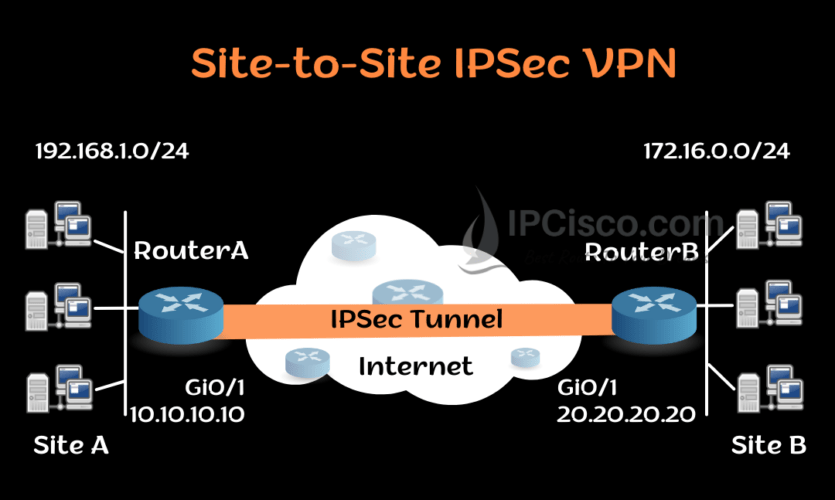
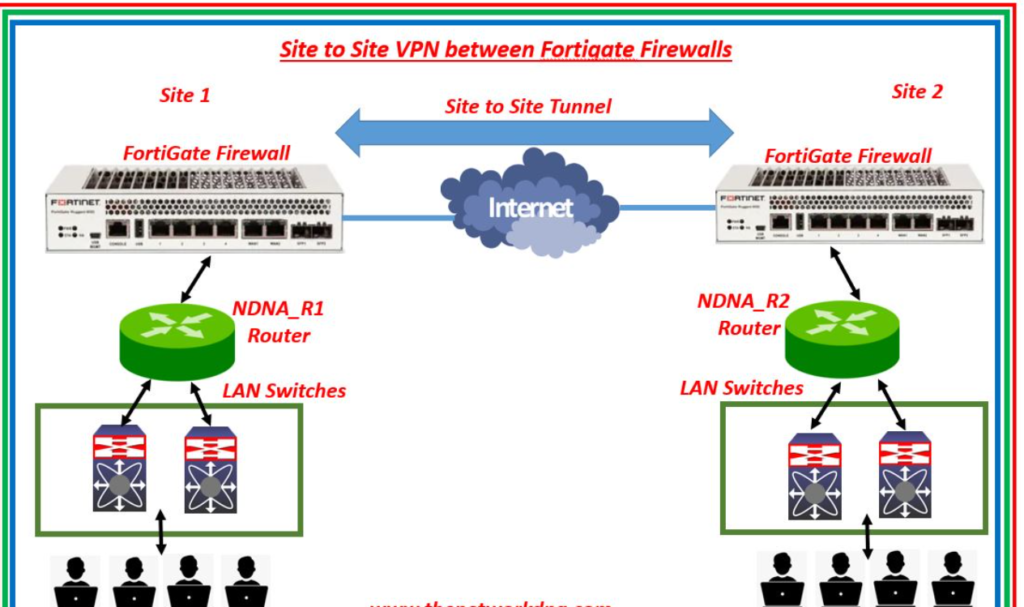
To achieve this, a Site-to-Site VPN is configured between the two office networks. VPN routers or firewalls installed at each location create a secure encrypted tunnel through the Internet. All communication between the two offices passes through this tunnel.
When an employee in the Kolkata office accesses a server located in Bengaluru, the data travels through the encrypted VPN tunnel instead of the public Internet. This ensures that sensitive business information remains protected from unauthorized users.
As a result, both offices function like a single connected private network. Employees can securely access shared files, applications, and internal systems without any additional VPN setup on their individual devices.
Site-to-Site VPN Example:
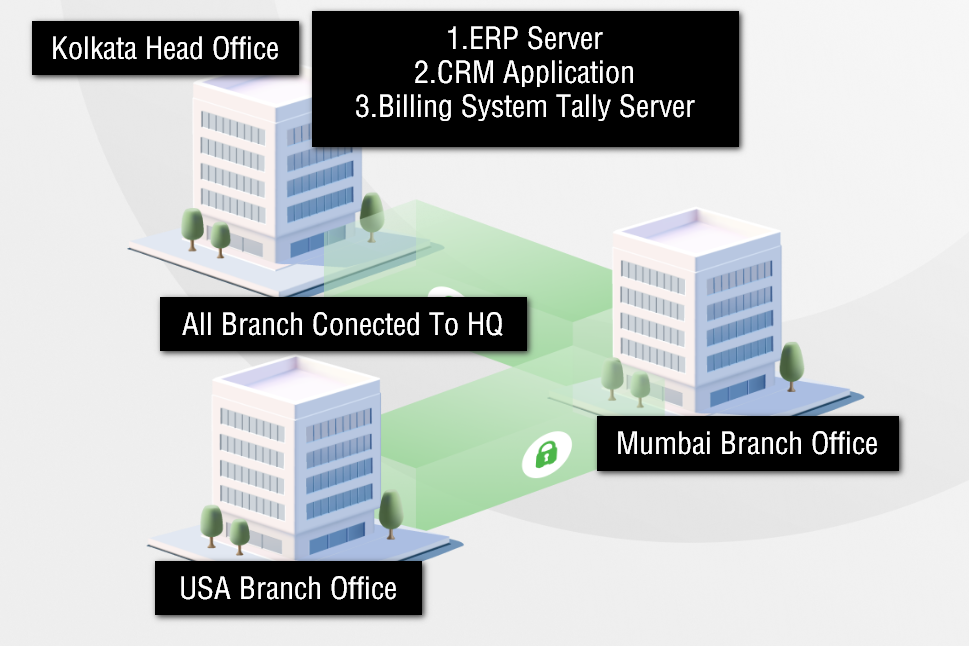
A company has a Head Office and a Branch Office connected through a Site-to-Site VPN. The Head Office hosts a Database Server (192.168.1.10), a File Server (192.168.1.20), and a CCTV NVR (192.168.1.30).
The Branch Office connects to the Head Office through the VPN tunnel. Employees at the branch can securely access the database, shared files, and CCTV system as if both offices were on the same local network. All data transmitted between the two offices is encrypted, ensuring secure communication over the internet.
Advantages of Site-to-Site VPN :
- Secure Office Connectivity – Provides encrypted communication between different branch offices over the Internet.
- Cost Saving – Reduces the need for expensive leased lines between locations.
- Centralized Network Access – Allows all offices to access shared servers and resources.
- High Security – Uses encryption (commonly IPsec) to protect data during transmission.
- No User Setup Needed – Employees do not need to install VPN software on their devices.
- Easy Branch Communication – Enables smooth communication between different office locations.
- Scalable Solution – New branches can be easily added to the VPN network.
- Improved Productivity – Employees can access data quickly from any connected office.
- Reliable Connection – Provides stable and continuous network connectivity between sites.
- Supports Business Growth – Ideal for companies expanding across multiple cities or countries.
Why Need Site To Site VPN?
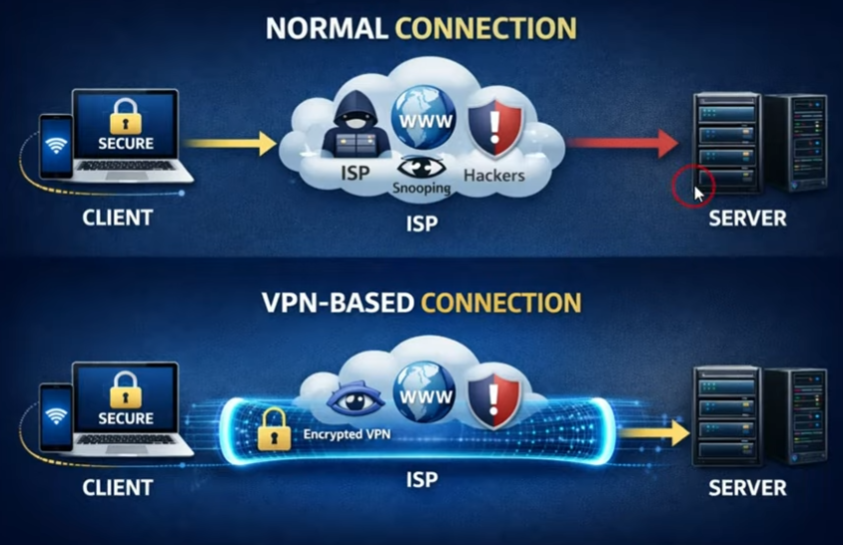
Companies need a Site-to-Site VPN to secure communication between offices. When data travels over the public internet without protection, it can be intercepted by attackers. A VPN encrypts this data, ensuring confidentiality and safety.
It is also required for resource sharing. For example, a head office and branch office can share servers, databases, printers, and applications. Employees in different locations can work on the same systems without physically being in one place.
Another reason is cost reduction. Instead of using expensive leased lines or MPLS connections, companies can use the internet with a VPN, which significantly lowers operational costs while still maintaining security.
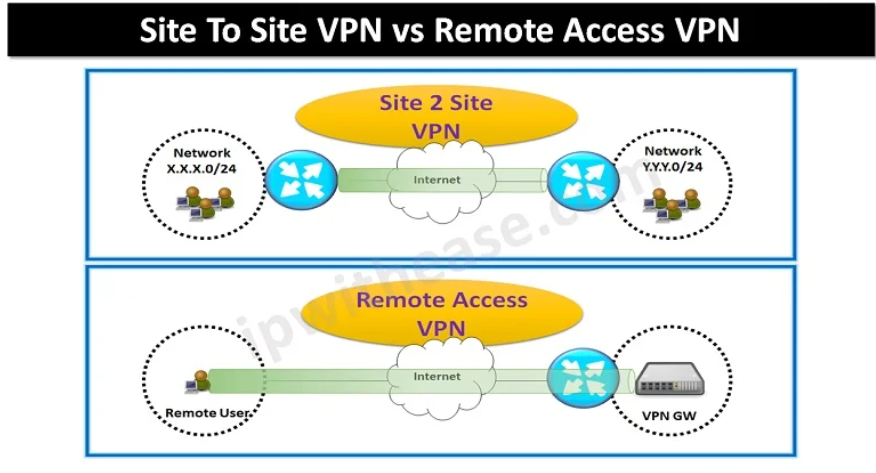
Site-to-Site VPN provides an always-on connection. Unlike Remote Access VPN, users do not need to log in manually. The connection between offices remains active, making communication seamless and automatic.
It also helps in centralized management. Companies can manage servers, security policies, backups, and applications from a central office while branch offices access them remotely.
What is Site-to-Site VPN?
- A Site-to-Site VPN is a type of Virtual Private Network that securely connects two or more office networks over the Internet. Instead of connecting individual users, it connects entire networks located at different geographic locations, allowing them to communicate as if they were part of the same private network.
- In a Site-to-Site VPN, VPN-enabled routers or firewalls at each location create an encrypted tunnel between the offices. All data transmitted between the sites travels through this secure tunnel, protecting sensitive business information from unauthorized access.
- For example, if a company has offices in Kolkata and Delhi, a Site-to-Site VPN can connect both office networks securely. Employees in either office can access shared servers, files, printers, and applications without needing a separate VPN connection on each computer.
- Site-to-Site VPNs are widely used by businesses to connect branch offices, reduce communication costs, improve security, and enable seamless resource sharing across multiple locations. Most Site-to-Site VPN implementations use IPsec technology to provide encryption, authentication, and secure data transmission between networks.
Problem Without Site-to-Site VPN?
Without a Site-to-Site VPN, companies face security risks. Data sent between offices over the internet is not encrypted, making it vulnerable to hacking, data theft, and cyber attacks.
There will be limited resource access. Employees in branch offices cannot easily access head office servers or applications, which reduces productivity and efficiency.
Companies may need to rely on manual data transfer methods such as email, USB drives, or cloud uploads, which are slower, less secure, and harder to manage.
Another problem is higher operational cost. Without VPN, companies might need to invest in costly private connections like leased lines or MPLS networks.
There is also a lack of real-time communication between offices. Systems cannot directly communicate, which affects collaboration, file sharing, and business operations.
Finally, network management becomes difficult. IT teams cannot centrally control or monitor all branches efficiently, leading to inconsistent security policies and higher chances of errors.
Problems in Company Without Site-to-Site VPN?
When a company does not use a Site-to-Site VPN, its branch offices are not securely connected over a protected network. Each office operates independently over the public Internet, which creates several security, performance, and management issues.
One of the major problems is lack of security. Without a VPN tunnel, data shared between offices travels over the public Internet without encryption. This makes sensitive business information such as customer data, financial records, and internal documents vulnerable to hackers, interception, and data theft.
Another important issue is poor communication between branches. Since there is no secure private connection, employees in different offices may face difficulties accessing shared servers, applications, and databases. This reduces collaboration and slows down business operations.
Companies also face high infrastructure costs. In the absence of a Site-to-Site VPN, organizations often rely on leased lines or dedicated private circuits to connect offices. These solutions are expensive compared to VPN-based connectivity over the Internet.
Network management becomes more complex as well. IT teams must manage multiple separate connections for different branches instead of maintaining a single unified secure network. This increases administrative workload and troubleshooting difficulty.
Scalability is another challenge. Adding new branch offices requires additional configuration and possibly new physical connections, which increases both cost and setup time. This makes business expansion slower and less flexible.
There is also a higher risk of performance and reliability issues. Public Internet connections can be unstable, leading to packet loss, latency, and inconsistent communication between offices. This affects productivity and user experience.
Finally, without encryption between sites, companies face compliance and regulatory risks, especially in industries like banking, healthcare, and finance where data protection is critical.
In summary, without a Site-to-Site VPN, companies face security risks, higher costs, poor connectivity, management complexity, and limited scalability, which can negatively impact overall business efficiency and data protection.
- No Secure Connection Between Offices – Data between branches travels over the public Internet without strong protection.
- High Risk of Data Theft – Sensitive business information can be intercepted by attackers.
- No Central Network Access – Each office cannot easily access shared servers or internal resources.
- Increased Communication Cost – Companies may need expensive leased lines or private connections.
- Difficulty in Data Sharing – File transfer between offices becomes slow and insecure.
- Poor Network Integration – Branch offices work like separate networks instead of one unified system.
- Security Vulnerabilities – Higher chance of hacking, spoofing, and unauthorized access.
- Management Complexity – IT teams must manage separate connections for each office.
- Limited Scalability – Adding new branches becomes difficult and costly.
- No Encryption Between Sites – Data is exposed while traveling across the Internet.
- Reduced Productivity – Employees face delays in accessing shared resources.
- Reliability Issues – Public Internet connections may cause instability in communication.
Company With Site-to-Site VPN?
When a company uses a Site-to-Site VPN, all branch offices are securely connected through an encrypted tunnel over the Internet. This creates a single unified private network where different office locations can communicate safely and efficiently.
One of the main benefits is strong security. Data traveling between offices is encrypted using protocols like IPsec, which protects sensitive information such as customer records, financial data, and internal documents from hackers and unauthorized access.
Another advantage is smooth communication between branches. Employees in different locations can easily access shared servers, databases, applications, and files as if they were working on the same local network. This improves collaboration and reduces delays in business operations.
Site-to-Site VPN also helps reduce costs. Instead of using expensive leased lines or private WAN circuits, companies can use the public Internet with encryption, which is much more affordable while still maintaining security.
It also simplifies network management. IT teams can manage all branch connectivity through VPN gateways or routers instead of handling separate point-to-point connections. This makes monitoring, troubleshooting, and maintenance easier.
Scalability is another key benefit. New branch offices can be added quickly by configuring VPN connections without major changes to the existing infrastructure. This supports business expansion and flexibility.
Additionally, Site-to-Site VPN improves reliability and performance when properly configured. Many organizations also combine it with backup links to ensure continuous connectivity between offices.
In summary, with Site-to-Site VPN, companies get secure communication, lower costs, better scalability, easier management, and reliable connectivity between multiple office locations, making it an essential solution for modern enterprise networks.
Site-to-Site VPN Concept in Banking?
In the banking sector, a Site-to-Site VPN is used to securely connect the Head Office (HQ) with multiple branch offices so that all locations operate as a single, unified network. This is critical for handling sensitive financial data, real-time transactions, and centralized control of banking systems.
Concept in Banking :
In a bank, the Head Office (HQ) hosts core systems such as the Core Banking System (CBS), databases, authentication servers, and monitoring tools. Branch offices depend on these systems for daily operations like account access, cash transactions, and customer services.
A Site-to-Site VPN is established between HQ and branch firewalls/routers. These devices create an encrypted tunnel using protocols like IPsec. This ensures that all banking data traveling between HQ and branches is secure and protected from cyber threats.
Why Banks Need Site-to-Site VPN?
Banks rely heavily on continuous, secure communication between their Head Office (HQ), data centers, and branch offices. A Site-to-Site VPN is essential because it creates a protected tunnel over the internet, typically using encryption like IPsec, so sensitive financial data can move safely between locations.
One major reason banks need a Site-to-Site VPN is secure transaction processing. Every deposit, withdrawal, or fund transfer initiated at a branch must communicate with central systems. The VPN ensures that this data is encrypted and protected from interception or tampering.
Banks also require centralized core banking systems (CBS). Instead of maintaining separate systems at each branch, all branches connect to centralized servers at HQ or a data center. The VPN allows branches to access these systems in real time, ensuring consistent and up-to-date account information.
Another key need is real-time connectivity. Banking operations such as ATM withdrawals, online banking, NEFT/RTGS transfers, and balance inquiries must be processed instantly. A Site-to-Site VPN enables fast and continuous communication between all banking locations.
It also supports data privacy and regulatory compliance. Banks must follow strict security standards to protect customer data. Using encrypted VPN tunnels helps meet these compliance requirements and reduces the risk of data breaches.
Cost efficiency is another important factor. Instead of relying only on expensive leased lines or private WANs, banks can use the public internet securely through a VPN, reducing infrastructure costs while maintaining high security.
Finally, a Site-to-Site VPN enables centralized management and monitoring. IT teams at HQ can control branch systems, apply security policies, perform updates, and monitor network activity from a single location, improving operational efficiency.
In summary, banks need a Site-to-Site VPN to ensure secure, real-time, and cost-effective connectivity between HQ and branches, which is critical for safe and efficient banking operations.
Benefits of Site-to-Site VPN?
1. Secure Communication
A Site-to-Site VPN encrypts all data using protocols like IPsec, protecting sensitive information from hackers and unauthorized access.
2. Cost Savings
It reduces the need for expensive leased lines or MPLS networks by using the public internet securely.
3. Always-On Connection
Once configured, the VPN tunnel remains active continuously. Users do not need to manually connect, ensuring smooth communication between offices.
4. Easy Resource Sharing
Employees in different locations can access servers, databases, applications, and printers as if they are on the same local network.
5. Centralized Management
IT administrators can control, monitor, and manage all branch networks from the head office, improving efficiency.
6. Scalability
New branch offices can be easily added by creating additional VPN tunnels without major infrastructure changes.
7. Data Integrity
The VPN ensures that data is not modified during transmission, maintaining accuracy and reliability.
8. Improved Productivity
Employees can work efficiently across multiple locations with real-time access to shared resources.
9. Business Continuity
Even if offices are in different cities or regions, they remain connected and operational at all times.
10. Short Summary
Site-to-Site VPN provides secure, cost-effective, and reliable connectivity between multiple office networks, making it essential for modern organizations.
Site-to-Site VPN Slide