Network Engineer Roadmap
What is a Network Engineer
What is a Network Engineer
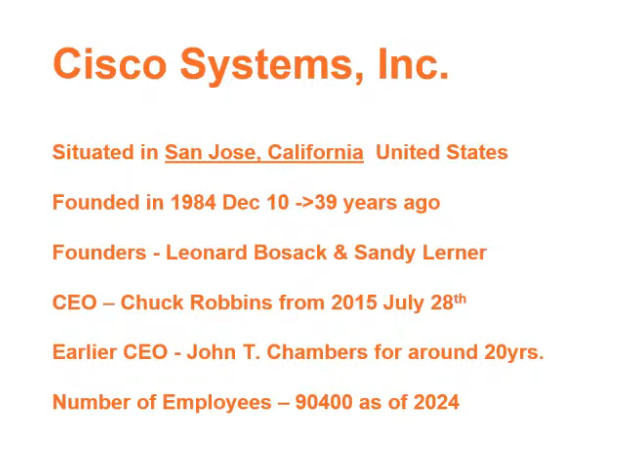
A Network Engineer is an IT professional who designs, builds, manages, and maintains computer networks so that devices such as computers, servers, and mobile devices can communicate with each other and access the internet. Network engineers work with networking equipment like routers, switches, and firewalls to ensure that data travels securely and efficiently across networks. Many organizations use networking equipment from companies such as Cisco, Juniper Networks, and Huawei to build their network infrastructure.
Work of a Network Engineer
Work of a Network Engineer
1. Network Design
One of the main responsibilities of a network engineer is designing network architecture for organizations. This includes planning how routers, switches, and servers will connect and ensuring that the network can support business applications and users efficiently.
2. Network Installation and Configuration
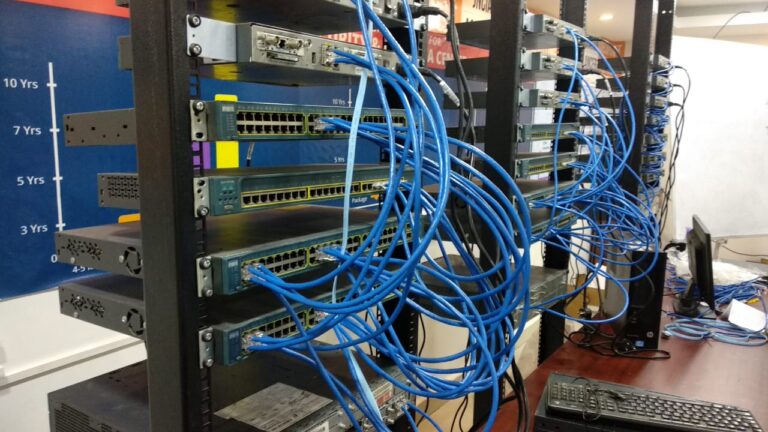
Network engineers install and configure networking devices such as routers, switches, and firewalls. They configure IP addresses, VLANs, routing protocols, and security settings to make sure the network operates properly.
3. Network Monitoring
Engineers continuously monitor network performance to ensure stability and reliability. They use monitoring tools to check bandwidth usage, latency, and device health to prevent network failures.
4. Troubleshooting Network Problems
If users cannot access the internet or company servers, the network engineer investigates and fixes the problem. They analyze network traffic using tools such as Wireshark to identify issues like packet loss, routing errors, or hardware failures.
5. Network Security
Network engineers also protect the network from cyber threats. They configure firewalls, VPN connections, and access control rules. Security solutions from companies like Palo Alto Networks and Fortinet are commonly used to secure enterprise networks.
6. Network Maintenance and Upgrades
Networks need regular updates and improvements. Engineers upgrade hardware, update firmware, and expand network capacity when organizations grow.
Future of a Network Engineer
The future of a Network Engineer is very strong because almost every business today depends on computer networks, internet connectivity, and cloud infrastructure. As companies continue to expand their digital services, the demand for skilled network engineers will continue to grow in industries such as IT companies, telecom providers, data centers, and cloud service providers. Organizations that use technologies from companies like Cisco and Juniper Networks require experienced engineers to design, manage, and secure their networks.
One important future area for network engineers is cloud networking. Many companies are moving their applications and infrastructure to cloud platforms such as Amazon Web Services, Microsoft Azure, and Google Cloud. Because of this, network engineers must learn how to design and manage hybrid networks that connect on-premise infrastructure with cloud environments.
Another major future trend is network automation and software-defined networking (SDN). Modern networks are becoming larger and more complex, so engineers increasingly use automation tools to manage them. Technologies like Ansible and Terraform help automate configuration and deployment of network devices, making network operations faster and more efficient.
The future also includes growth in cybersecurity and network protection. As cyber threats increase, companies need skilled engineers who can secure networks using firewalls, VPNs, and monitoring systems. Security platforms from companies like Palo Alto Networks and Fortinet are widely used to protect enterprise and cloud networks.
In summary, the future for network engineers includes cloud networking, automation, cybersecurity, and large-scale data center networking. Professionals who continuously learn new technologies and certifications from organizations such as Cisco will have strong career opportunities in the global IT industry.
Network Engineer Cisco Certification Course
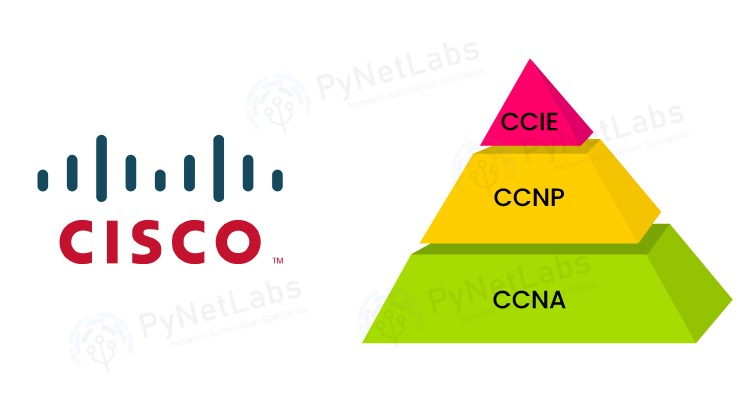
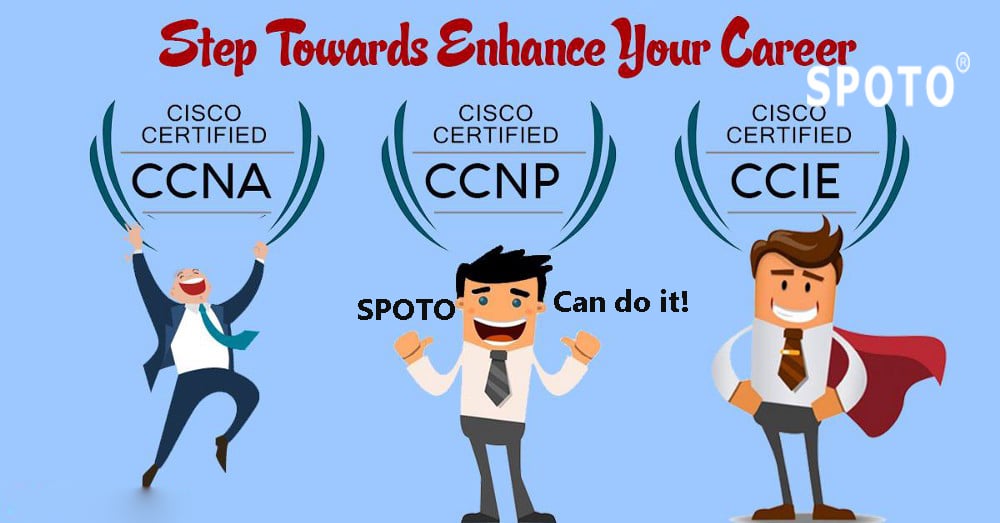
CCNA, CCNP, and CCIE are professional networking certifications offered by Cisco that validate a network engineer’s knowledge and skills at different levels of expertise. These certifications are widely recognized in the IT and networking industry and help professionals build careers in network administration, network engineering, and network architecture.
CCNA (Cisco Certified Network Associate) is the entry-level certification designed for beginners who want to start a career in networking. It teaches the fundamental concepts of computer networking such as IP addressing, subnetting, routing and switching basics, network security, wireless networking, and network troubleshooting. By studying CCNA, a person learns how to configure basic network devices like routers and switches and understands how data travels across networks. This certification prepares individuals for roles such as network technician or junior network engineer.
CCNP (Cisco Certified Network Professional) is the professional-level certification that comes after CCNA. It focuses on more advanced networking concepts used in enterprise environments. CCNP training includes advanced routing protocols like OSPF and BGP, advanced switching technologies, network security implementation, VPN configuration, and complex troubleshooting. Engineers with CCNP knowledge can design, manage, and maintain large enterprise networks and are usually responsible for solving complex network problems.
CCIE (Cisco Certified Internetwork Expert) is the highest-level certification offered by Cisco and is considered one of the most advanced certifications in the networking field. It demonstrates expert-level knowledge in designing, implementing, and troubleshooting large-scale networks such as enterprise data centers and service provider infrastructures. Professionals with CCIE certification are capable of handling highly complex network architectures and often work as senior network engineers, network architects, or infrastructure architects.
In summary, these certifications represent a career progression path in networking where CCNA provides foundational knowledge, CCNP develops professional-level skills, and CCIE represents expert-level mastery of networking technologies.
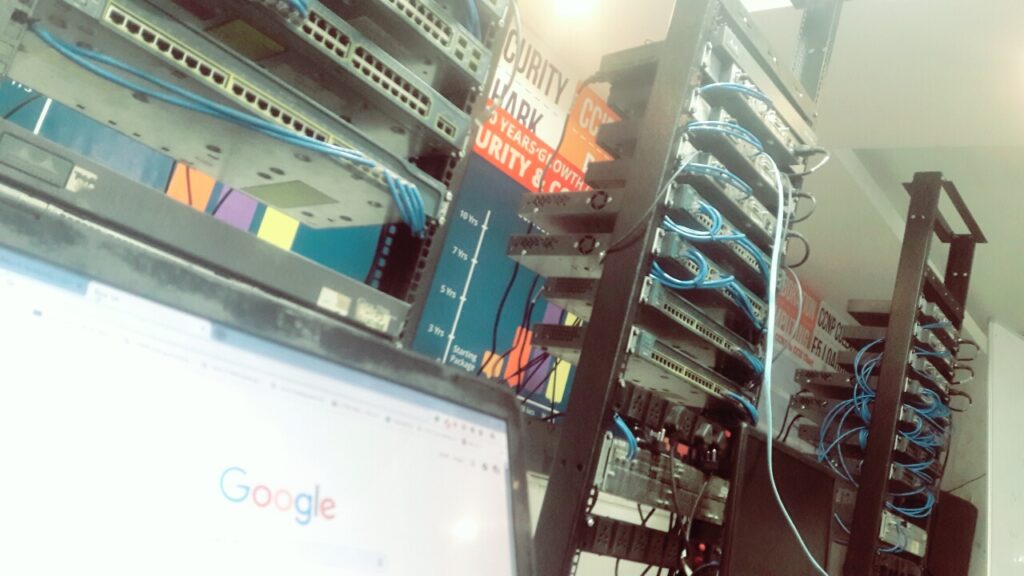
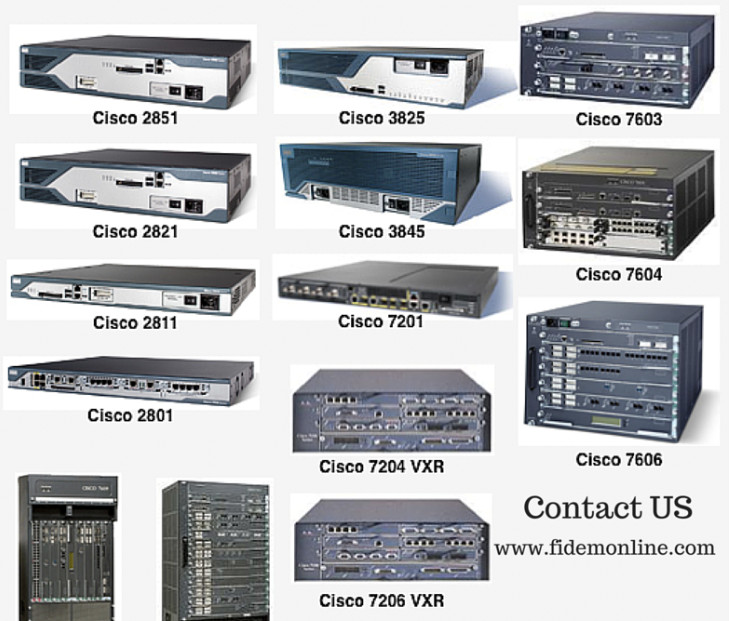
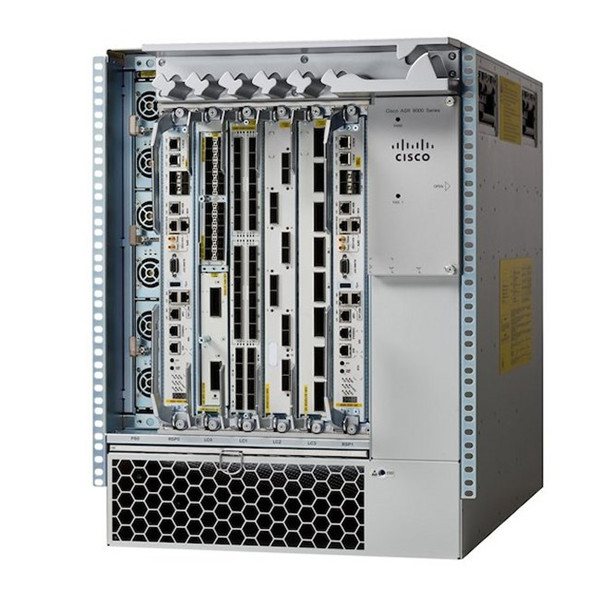



Difference between Cisco ENCOR (350-401) and Cisco ENARSI (300-410)
1. ENCOR (350-401) – Core Exam
ENCOR stands for Enterprise Core.
It is the main core exam for CCNP Enterprise certification.
This exam covers broad enterprise networking technologies including:
- Enterprise network architecture
- Layer 2 technologies (VLAN, STP, EtherChannel)
- Layer 3 routing (OSPF, EIGRP, BGP basics)
- Wireless networking basics
- Network virtualization
- Infrastructure security
- Network automation and programmability
📌 Purpose:
ENCOR gives general knowledge of enterprise networking.
📌 Important:
Passing ENCOR also gives you the Cisco Certified Specialist – Enterprise Core certification.
2. ENARSI (300-410) – Advanced Routing
ENARSI stands for Enterprise Advanced Routing and Services.
This exam focuses mainly on advanced routing configuration and troubleshooting.
Topics include:
- Advanced OSPF configuration
- BGP configuration and troubleshooting
- Route redistribution
- VPN technologies (DMVPN, MPLS Layer 3 VPN)
- Infrastructure security features
- Network troubleshooting
📌 Purpose:
ENARSI teaches deep routing and network troubleshooting skills.
Job Roles After Networking Certifications
job roles after completing networking certifications like Cisco Certified Network Associate (CCNA), Cisco Certified Network Professional (CCNP), and Cisco Certified Internetwork Expert (CCIE)
After CCNA – Entry Level Job Roles
1. Network Support Engineer
After CCNA, many engineers start as Network Support Engineers. In this role, the engineer monitors network devices such as routers and switches, checks connectivity issues, and performs basic troubleshooting. They also configure VLANs, IP addressing, and basic routing protocols. This role helps build strong practical networking skills.
2. NOC Engineer (Network Operations Center Engineer)
A NOC Engineer works in a monitoring center that manages large networks. The engineer monitors routers, switches, firewalls, and servers using network monitoring tools. If any network failure occurs, the NOC engineer identifies the problem and escalates it to senior engineers.
3. Network Technician
Network technicians install and maintain network hardware such as routers, switches, cables, and wireless devices. They configure basic network settings and ensure connectivity between computers, servers, and internet services.
After CCNP – Professional Level Job Roles
1. Network Engineer
After CCNP, engineers can work as Network Engineers. In this role they design and manage enterprise networks, configure advanced routing protocols like OSPF, EIGRP, and BGP, and handle VLANs, inter-VLAN routing, and WAN connectivity.
2. Network Security Engineer
With CCNP knowledge and firewall skills, engineers can become Network Security Engineers. They configure security policies, VPNs, firewalls, intrusion prevention systems, and secure enterprise networks from cyber threats.
3. System / Infrastructure Engineer
Infrastructure engineers manage complete IT infrastructure including network devices, servers, and virtualization systems. They ensure network performance, reliability, and security for company operations.
After CCIE – Expert Level Job Roles
1. Senior Network Engineer
CCIE is one of the highest networking certifications. Engineers with this certification manage complex enterprise and service provider networks. They design large routing architectures, troubleshoot advanced network problems, and manage high-traffic networks.
2. Network Architect
A Network Architect designs the complete network infrastructure for large companies or data centers. They decide which routers, switches, firewalls, and technologies should be used to create secure and scalable networks.
3. Service Provider / ISP Network Engineer
Engineers with CCIE often work with telecom companies and ISPs. They manage internet backbone networks, configure BGP routing, MPLS networks, and ensure reliable internet connectivity between different networks.
Summary Career Path
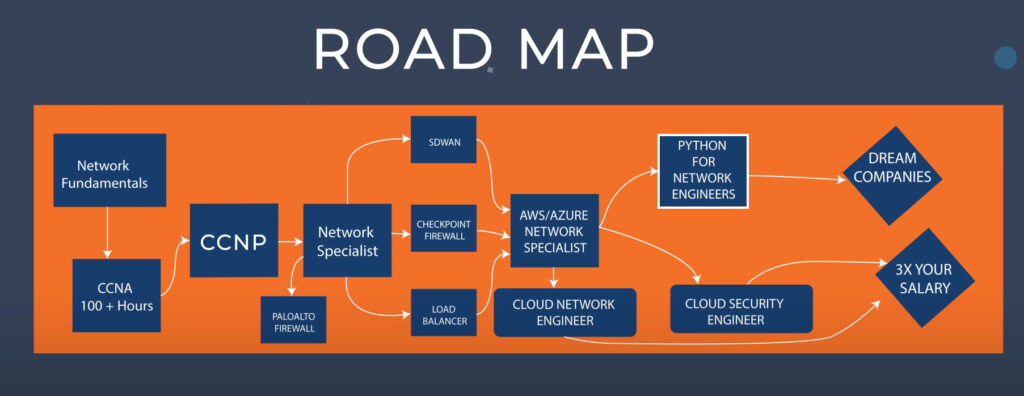
CCNA → Entry level roles (NOC Engineer, Network Support Engineer)
CCNP → Professional roles (Network Engineer, Security Engineer)
CCIE → Expert roles (Senior Network Engineer, Network Architect)
- Network Administrator
- Network Engineer
- Network Analyst
- Network Security Analyst
- Network Support Engineer
- Systems Administrator
- Systems Engineer
- Technical Support Engineer
- IT Manager
- IT Project Manager
- IT Consultant
- Network Consultant
- Information Security Analyst
- Cybersecurity Analyst
- Network Architect
- Wireless Network Engineer
- VoIP Engineer
- Cloud Network Engineer
- Network Operations Center (NOC) Technician
- Technical Trainer
Network Engineer Salary in INDIA
1. Junior Network Engineer Salary (0–2 years experience)
A Junior Network Engineer usually works in network support, monitoring, and basic configuration of routers, switches, and firewalls.
Monthly Salary in India
- ₹15,000 – ₹35,000 per month (average range)
- Average around ₹20,000/month according to salary data.
Industry Example
- Enterprise IT company: ₹20k – ₹35k
- Data Center operations: ₹25k – ₹40k
- ISP / Service Provider: ₹18k – ₹30k
2. Network Engineer Salary (2–5 years experience)
At this level engineers manage routing, switching, VLAN, VPN, and troubleshooting.
Monthly Salary
₹30,000 – ₹70,000 per month
Average network engineer salary in India is about ₹19k–₹25k/month, but experienced engineers earn more depending on skills and city.
Industry Example
- Enterprise Network Engineer: ₹40k – ₹70k
- Data Center Network Engineer: ₹45k – ₹80k
- Service Provider / ISP Engineer: ₹40k – ₹75k
3. Senior Network Engineer Salary (5–10+ years experience)
Senior engineers design networks, manage large infrastructures, and lead projects.
Monthly Salary
₹70,000 – ₹1,50,000 per month
Average ₹8.2 lakh per year (~₹68k/month) in India, but experienced engineers may earn ₹1 lakh/month or more.
Some companies offer around ₹9.3L–₹19.7L per year, which is roughly ₹77k–₹1.6L per month.
4. Data Center Network Engineer Salary
Data center engineers manage high-speed switching, spine-leaf architecture, and virtualization networks.
Monthly Salary
- Junior: ₹25k – ₹40k
- Mid-level: ₹50k – ₹90k
- Senior: ₹1L – ₹2L per month
5. Service Provider (ISP) Network Engineer Salary
ISP engineers work with BGP, MPLS, and backbone routing.
Monthly Salary
- Junior ISP Engineer: ₹25k – ₹40k
- Mid-level ISP Engineer: ₹50k – ₹90k
- Senior ISP Engineer: ₹1L – ₹2L per month
6. Enterprise Network Engineer Salary
Enterprise engineers manage corporate networks.
Monthly Salary
- Junior: ₹20k – ₹35k
- Mid-level: ₹40k – ₹80k
- Senior: ₹80k – ₹1.5L+
Network Security Engineer Course
A Network Security Engineer course teaches how to protect computer networks from cyber threats, attacks, and unauthorized access. In this course, students learn networking fundamentals, security technologies, firewall configuration, monitoring tools, and secure network design. The goal is to develop the skills required to secure enterprise networks, data centers, and cloud environments.
1. Networking Fundamentals
Before learning security, a student must understand how networks operate. This includes basic networking concepts such as IP addressing, subnetting, routing, switching, and network protocols. Students also learn how routers and switches work and how data travels through networks. Many networking courses begin with the fundamentals taught in certifications from Cisco.
Topics
- OSI model and TCP/IP model
- IPv4 and IPv6 addressing
- VLAN and routing basics
- DNS, DHCP, HTTP protocols
2. Operating Systems and System Security
Network security engineers must understand operating systems because many network services and security tools run on them. Students learn system administration basics for platforms such as Linux and Windows Server.
Topics
- User and permission management
- Server configuration
- System hardening and security policies
3. Network Security Fundamentals
This module explains the core principles of cybersecurity and how attacks affect networks. Students learn about common cyber threats and how security mechanisms protect data.
Topics
- CIA triad (Confidentiality, Integrity, Availability)
- Malware, phishing, and DDoS attacks
- Encryption and authentication methods
Many beginners study these topics through certifications from CompTIA such as Security+.
4. Firewall Technologies
Firewalls are one of the most important network security devices. Students learn how to configure firewall rules, control network traffic, and block unauthorized access.
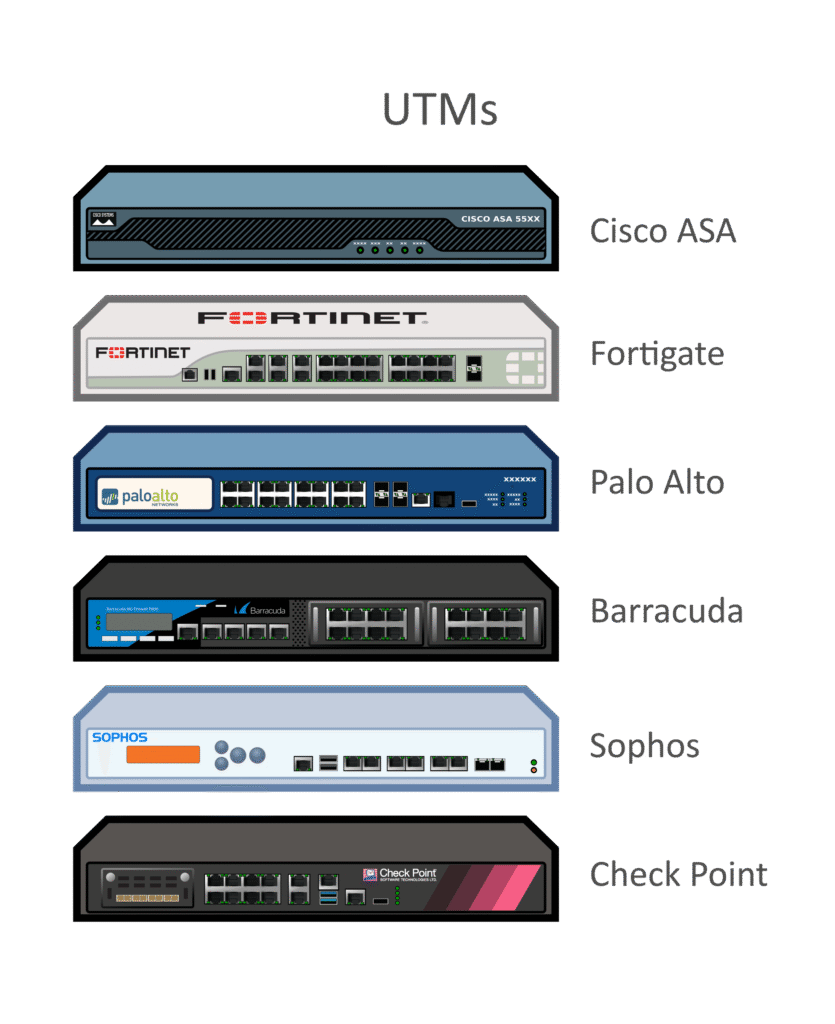
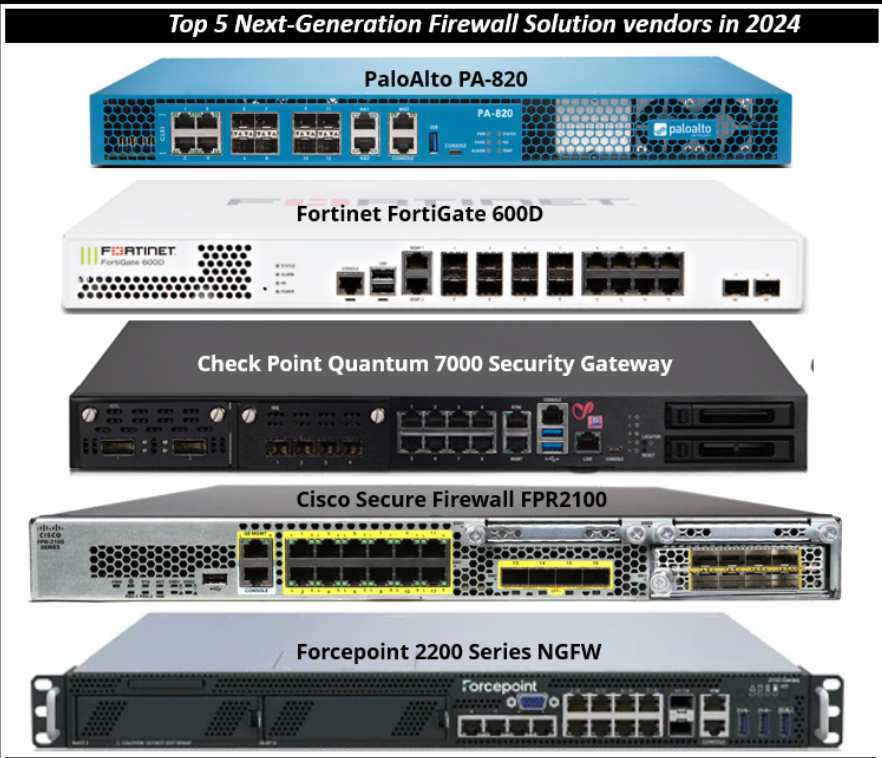
Popular firewall platforms Vendor
- Palo Alto Networks firewall
- Fortinet FortiGate
- Cisco ASA / Firepower
- Check Point Software Technologies firewall
5. VPN and Secure Remote Access
This module teaches how to create secure connections between networks using Virtual Private Networks (VPN).
Topics
- IPsec VPN
- SSL VPN
- Remote access security
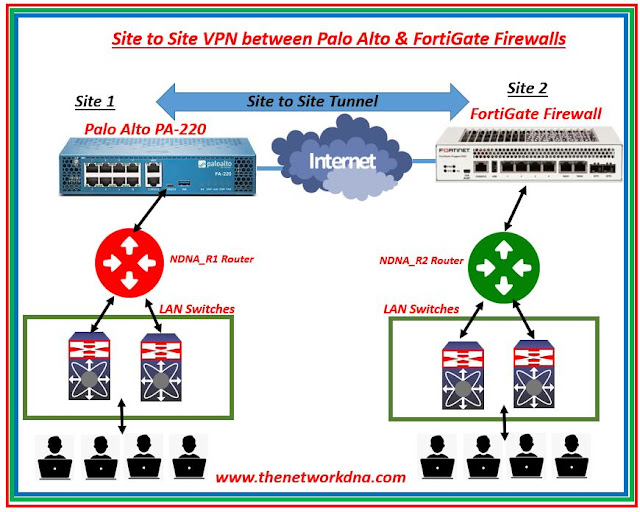
- Site-to-site VPN
VPN technologies allow secure communication over public networks like the internet.
6. Intrusion Detection and Threat Protection
Students learn how to detect cyber attacks and monitor suspicious network activity.
Topics
- IDS / IPS (Intrusion Detection & Prevention)
- Malware detection
- Network monitoring tools
- Traffic analysis
7. Web Filtering and Application Security
Firewalls can also filter web traffic and block malicious applications.
Topics
- URL filtering
- Application control
- Content filtering
- Anti-spam and anti-virus gateways
8. Security Monitoring and Analysis
This module teaches how to analyze network logs and detect attacks using security tools.
Tools commonly used
- Wireshark
- Nmap
- Nessus
- Security monitoring platforms
These tools help detect network vulnerabilities and analyze traffic patterns.

Top Firewall Certifications Course
1. Palo Alto Networks – PCNSE (Palo Alto Networks Certified Network Security Engineer)
PCNSE is one of the most respected firewall certifications in the cybersecurity industry. It focuses on configuring and managing Next-Generation Firewalls (NGFW) such as security policies, NAT, VPN, threat prevention, and application control. Many large enterprises and data centers use Palo Alto firewalls because they provide advanced security features. This certification is usually pursued by experienced network or security engineers and proves the ability to design, deploy, and troubleshoot Palo Alto firewall solutions in enterprise networks.
2. Fortinet – FCP / FCSS Network Security (FortiGate Firewall)
Fortinet firewall certifications focus on the FortiGate security platform, which is widely used by companies and service providers. The certification path includes different levels such as FCP (Fortinet Certified Professional) and FCSS (Fortinet Certified Solution Specialist). These certifications teach firewall policy creation, VPN configuration, intrusion prevention systems (IPS), antivirus filtering, and secure SD-WAN. Fortinet firewalls are popular because they provide strong security at a relatively lower cost compared to other enterprise firewalls.
3. Cisco – CCNP Security
CCNP Security is a professional-level certification focused on network security technologies including Cisco ASA and Firepower firewalls. It teaches secure network design, firewall configuration, VPN technologies, intrusion detection, and identity-based security policies. Cisco certifications are globally recognized and widely used in enterprise networks, service providers, and government organizations. Engineers with CCNP Security certification can design and manage complex security infrastructures.
4. Check Point Software Technologies – CCSA / CCSE
Check Point offers two major firewall certifications: CCSA (Check Point Certified Security Administrator) and CCSE (Check Point Certified Security Expert). These certifications focus on managing Check Point firewall systems, configuring security policies, threat prevention, and monitoring network security. Check Point firewalls are widely used in large enterprises and financial institutions because of their strong security architecture and centralized management.
5. Juniper Networks – JNCIS-SEC
JNCIS-SEC is a security certification focused on Juniper SRX series firewalls. It teaches network security fundamentals, security zones, firewall policies, NAT, and IPsec VPN configuration. Juniper security devices are commonly used by internet service providers (ISPs), telecom companies, and large networks. This certification helps engineers manage and secure networks using Juniper security technologies.
Summary:
The most popular firewall certifications in the industry come from Palo Alto, Fortinet, Cisco, Check Point, and Juniper. These certifications help network engineers develop skills in firewall configuration, network protection, threat prevention, and secure enterprise network design.
Job Roles After Firewall Certifications
After completing a firewall course such as certifications from Fortinet, Palo Alto Networks, Cisco, or Check Point Software Technologies, you can work in several network security and firewall-related job roles.
1. Firewall Engineer
A Firewall Engineer is responsible for configuring, managing, and troubleshooting firewall devices. The engineer creates security policies, NAT rules, VPN configurations, and access control rules to protect the network from cyber threats. They also monitor firewall logs and ensure that only authorized traffic enters the network.
2. Network Security Engineer
A Network Security Engineer protects the organization’s network infrastructure. They deploy firewalls, intrusion prevention systems (IPS), VPN gateways, and web filtering systems. Their job is to design secure network architecture and prevent cyberattacks such as malware, phishing, and unauthorized access.
3. Security Operations Center (SOC) Engineer
SOC engineers work in a Security Operations Center where they monitor security alerts and network activity. They analyze firewall logs, detect suspicious traffic, and respond to security incidents. Firewall knowledge helps them identify attacks and block malicious connections quickly.
4. Cybersecurity Analyst
Cybersecurity Analysts analyze security risks and vulnerabilities in networks and systems. They use firewall tools, threat detection systems, and security monitoring platforms to protect company data. They also perform security assessments and recommend improvements to the network security infrastructure.
5. Security Consultant
Security consultants provide expert advice to companies on how to secure their networks. They design firewall architectures, recommend security tools, and implement best practices for protecting enterprise systems.
6. Cloud Security Engineer
Cloud security engineers manage firewall and security policies in cloud platforms like Amazon Web Services, Microsoft Azure, or **Google Cloud. They configure cloud firewalls, network security groups, and VPN connections to secure cloud infrastructure.
Firewall Engineer salary in India (per month) depends on experience, certifications (like Fortinet FortiGate or Palo Alto Networks firewall), and company type.
1. Fresher Firewall Engineer (0–2 years)
Salary: ₹25,000 – ₹60,000 per month
Usually works as:
- Firewall support engineer
- NOC security engineer
- Junior network security engineer
Freshers monitor firewall logs, configure basic rules, and support senior engineers.
2. Mid-Level Firewall Engineer (3–5 years)
Salary: ₹70,000 – ₹1.5 lakh per month
Engineers at this level:
- Configure firewall policies
- Manage VPN and NAT
- Troubleshoot network security issues
- Work on enterprise security systems.
3. Senior Firewall Engineer (6–10 years)
Salary: ₹1.5 lakh – ₹3 lakh per month
Senior engineers:
- Design firewall architecture
- Manage enterprise security networks
- Handle advanced threat prevention and security policies.
4. Firewall Security Architect (10+ years)
Salary: ₹3 lakh – ₹5+ lakh per month
This is a high-level role responsible for:
- Designing complete security architecture
- Implementing Zero-Trust networks
- Managing large enterprise or data-center security.
Average Firewall Engineer salary in India:
- About ₹77,000 per month on average (around ₹9.2 lakh per year).
Overall salary range in India:
Around ₹3 LPA to ₹25 LPA depending on experience and company.
Career in Networking
A career in Networking holds great promise as the backbone of digital communication and data exchange. As businesses and individuals increasingly rely on interconnected systems, the demand for skilled networking professionals continues to rise. Whether you’re passionate about designing robust network architectures, optimizing network performance, or securing data transmission, there’s a diverse range of career paths awaiting you.
With the right guidance and knowledge, you can excel in the Networking field. From managing complex networks to innovating with cutting-edge technologies, your expertise will be vital in ensuring seamless and secure connectivity.
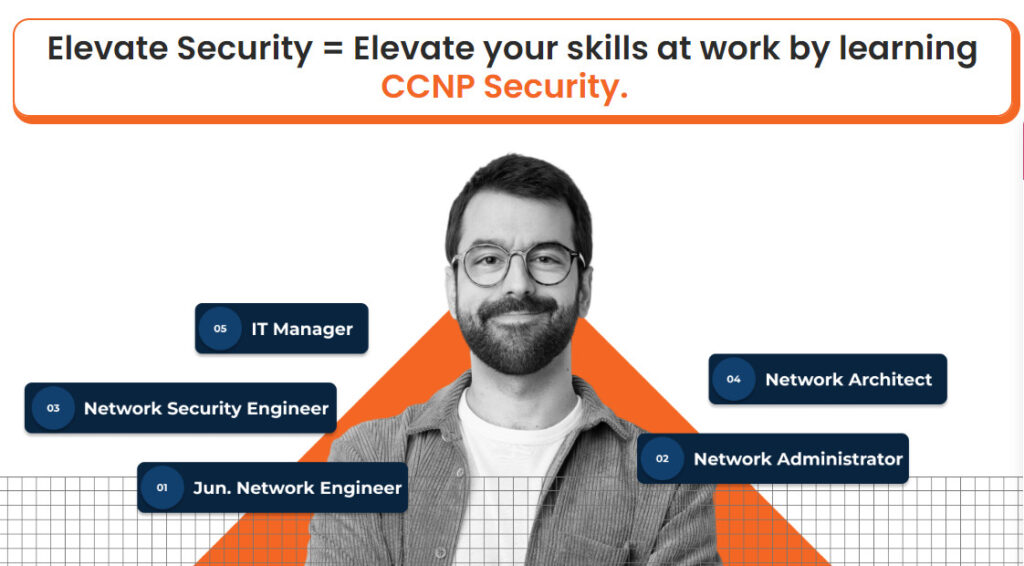
If you are trying to get into the networking domain, opt for basic networking course such as CCNA or CompTIA Network+ to boost your networking career in the long run.
One of the best IT networking courses for beginners is definitely Cisco Certified Network Associate (CCNA).
CCNA consists of two advanced technologies exams. Each and every attempt of these exams cost $300. CCNA Security, Industrial, Wireless costs for $465.
Since everything is shifting to virtualization, Artificial Intelligence (AI) and cloud, the top two most in-demand careers of the future are:
- Cloud computing
- DevOps
- Cyber Security
- AI and Machine Learning
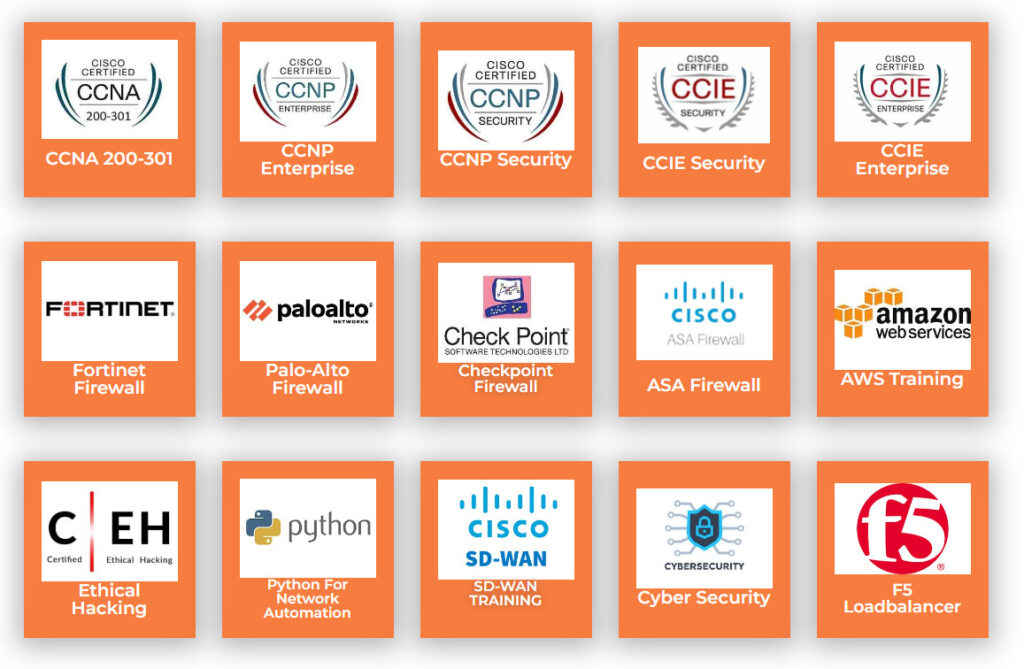
- Cisco CCNA
- networking course
- Cisco CCNP
- Enterprise- ENARSI
- Cisco SD-WAN Solutions
- CCNP Security
- Certified Ethical
- Hacker (CEH v11)
- CompTIA Network+
- Cisco DevNet Associate
- Cisco CCIE Security
One of the best IT networking courses for beginners is definitely Cisco Certified Network Associate (CCNA).
No one networking course is better than the other. You can do any one of them of your own choice. You can do both of them too, only if you want so since both of them are IT Networking Fundamental courses.
Cisco CCNA networking course covers the basics of routing and switching. However, you can definitely go for CCNP for advanced routing and switching concepts.
Network Engineers are always going to be in demand. The employment rate in the networking field is very high.
A Network Solutions Architect gets the highest salary followed up by Network Administrator and Systems Engineer.
Yes, Network Engineers have a promising future scope as businesses continue to expand their networks and invest in technology infrastructure.
To become a Network Engineer in India, you can start by pursuing relevant education (such as a degree in computer science or information technology) and obtaining certifications like CCNA, CCNP, and more. Gaining hands-on experience through internships or entry-level positions is also beneficial.
To become a NOC (Network Operations Center) Engineer, you typically need a strong background in IT networking, experience with network monitoring tools, and the ability to troubleshoot network issues efficiently.
You can get started in IT networking by learning the basics of networking concepts, obtaining entry-level certifications like CompTIA Network+, and CCNA, and gaining hands-on experience through internships or junior networking roles.
The CCNA and CompTIA Network+ certifications cater to different skill levels and career goals. CCNA is generally considered more advanced and specialized compared to Network+, which is an entry-level certification.
No, the CCNA certification is not free. There are costs associated with preparing for the exam, such as study materials, training courses, and exam fees.
While CCNA certification demonstrates foundational knowledge in networking, many employers may require additional certifications, experience, or specialized skills for Network Engineer positions.
Having a CCNA certification can enhance your job prospects in the field of networking; however, securing a job may also depend on factors such as experience, skills, and the specific requirements of the employer.
Networking is considered a promising career path in IT due to the constant demand for skilled professionals who can design, secure, and troubleshoot complex networks for businesses.
The three levels of Network Engineers typically include entry-level positions (such as Network Technician or Junior Network Engineer), mid-level roles (Network Engineer or Network Administrator), and senior positions (Network Architect or Network Manager).
A professional Network Engineer is an individual with specialized training, certifications, and experience in designing, implementing, securing, and managing computer networks for organizations.
The best certification for a Network Engineer may vary depending on your career goals and specialization within networking. Popular certifications include CCNA, CCNP, JNCIA, and CompTIA Network+.
To become a Network Engineer, you typically need to complete relevant education (such as a degree or certification program), gain hands-on experience through internships or entry-level positions, and continuously update your skills through training and professional development opportunities.
The best certification for a Network Engineer depends on your career goals, specialization within networking (e.g., Cisco vs. Juniper), and the specific requirements of employers in your region. Popular choices include CCNA, CCNP, JNCIA, and CompTIA Network+.
Several companies in India offer opportunities for Network Engineers, including multinational corporations like Cisco Systems, IBM, TCS, Wipro, HCL Technologies, and Tech Mahindra. The best company for you will depend on factors such as your expertise, career goals, and work preferences.
Courses that lead to industry-recognized certifications like CCNA, CCNP, JNCIA, or CompTIA Network+ are often beneficial for aspiring Network Engineers. Choose courses that align with your career goals and offer hands-on practice with networking technologies.
The best networking certification depends on your career goals, specialization within networking (e.g., Cisco vs. Juniper), and industry demand. Popular certifications include CCNA (Cisco), JNCIA (Juniper), CompTIA Network+, and CCNP (Cisco).
The passing score for CCNA certification is 800 out of 1000.
For beginners looking to start a career in IT networking, courses that cover fundamental concepts like TCP/IP protocols, routing and switching basics, network security principles, and wireless technologies are recommended. Consider certifications like CompTIA Network+ or Cisco CCNA.
Data Center Networking Course
Data Center Networking Course teaches how large data centers connect servers, storage, switches, and security systems to provide services like cloud, banking systems, and websites. Below is the course syllabus explained
1. Introduction to Data Center Networking
In this module students learn the basic concept of data centers. A data center is a facility where many servers, storage devices, networking equipment, and security systems are installed to run applications and store data. Companies like cloud providers, banks, and telecom operators use data centers to host their services. Students learn the difference between enterprise networks and data center networks and understand the architecture used to support high traffic and high availability.
2. Data Center Architecture
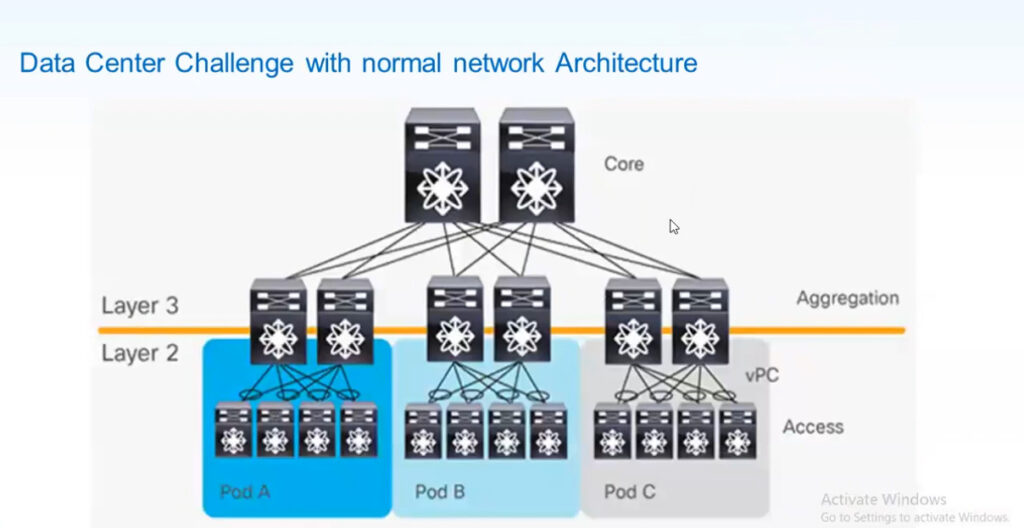
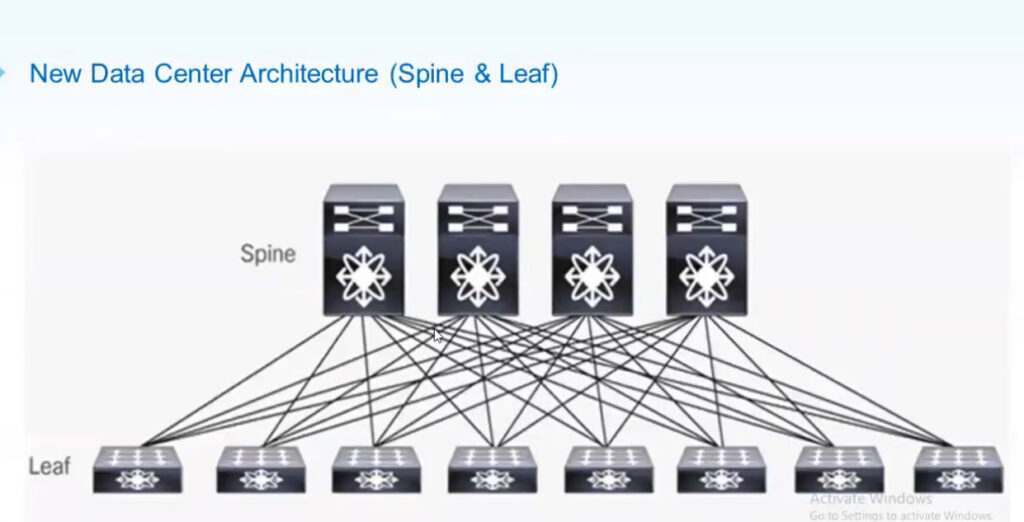
This section explains how data centers are designed. Traditional data centers use three-tier architecture (Core, Aggregation, Access layers). Modern data centers use spine-leaf architecture which provides high speed and low latency connectivity. Students learn how network devices are connected to support thousands of servers and ensure redundancy.
Common devices used:
- Core switches
- Aggregation switches
- Access switches
- Load balancers
- Firewalls
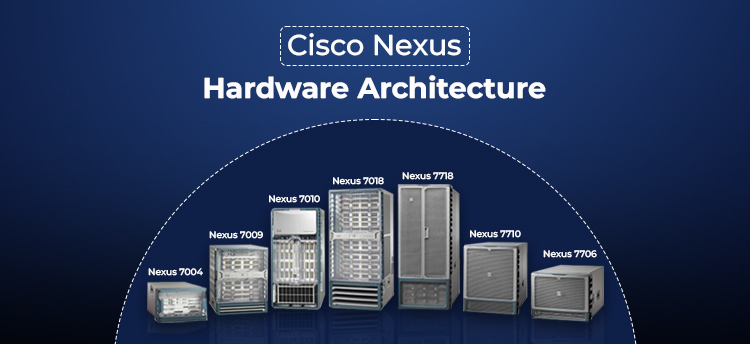
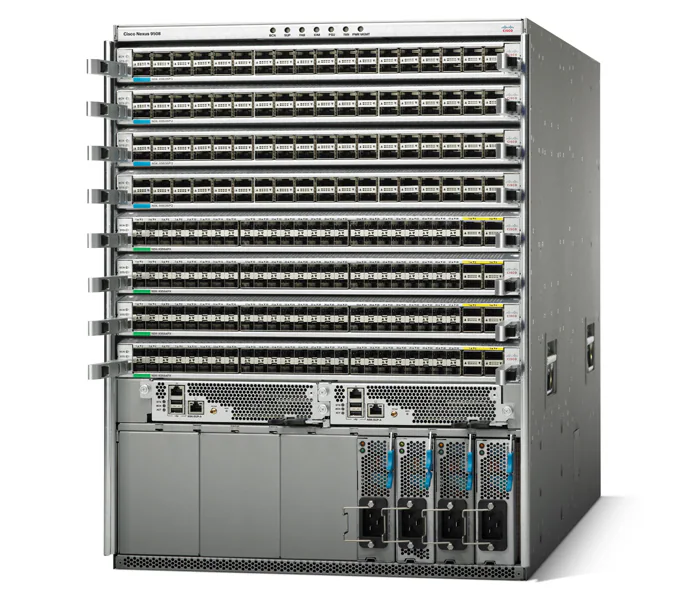
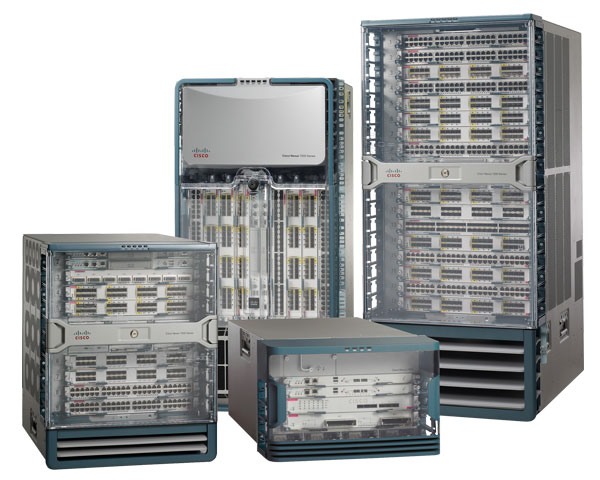
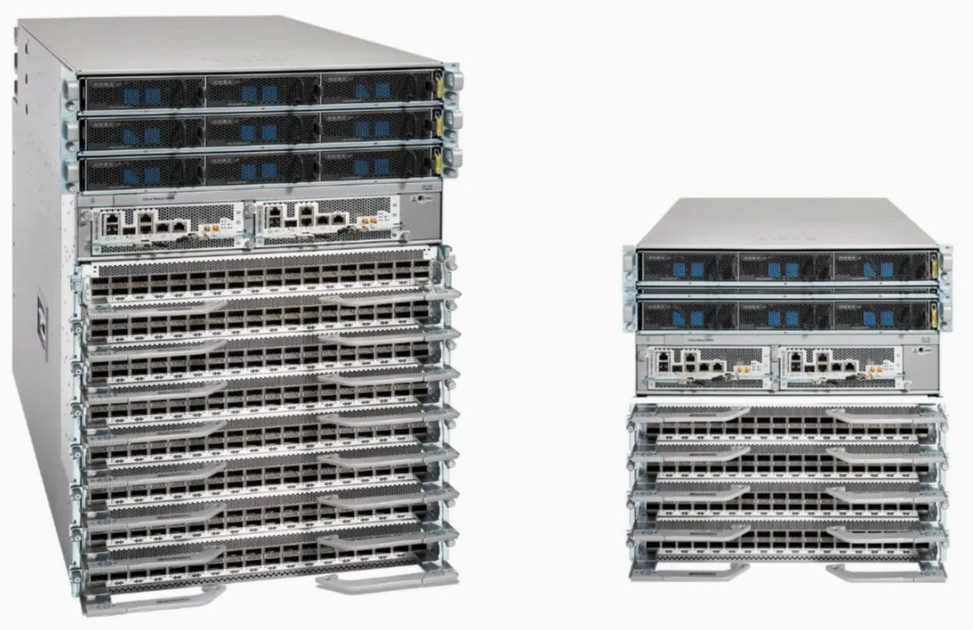
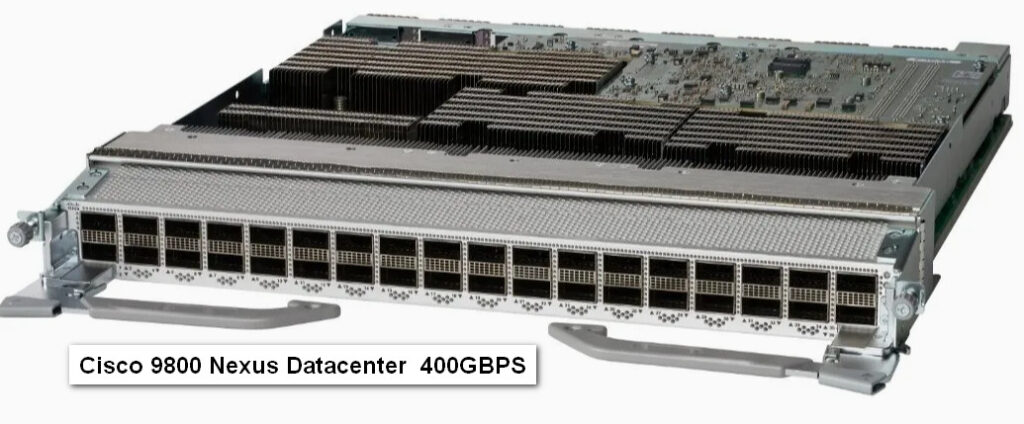
Many data centers use switches from Cisco like the Cisco Nexus Series for high-performance networking.
3. Data Center Switching Technologies
In this module students learn advanced switching used in data centers. Topics include VLAN, trunking, VPC (Virtual Port Channel), and high-speed Ethernet. Data center switches are designed to support 10G, 25G, 40G, and 100G network speeds. The course also explains Layer-2 and Layer-3 switching inside the data center.
4. Data Center Virtualization
Virtualization allows multiple virtual servers to run on one physical server. Students learn about hypervisors and virtual machines used in data centers. Popular virtualization platforms include VMware vSphere and Microsoft Hyper-V. This module explains how networking works inside virtual environments and how virtual switches connect to physical networks.
5. Storage Networking
Data centers store huge amounts of data using storage networks. This module teaches technologies such as SAN (Storage Area Network) and NAS (Network Attached Storage). Students learn about Fibre Channel, iSCSI, and storage protocols used to connect servers with storage devices.
6. Data Center SDN (Software Defined Networking)
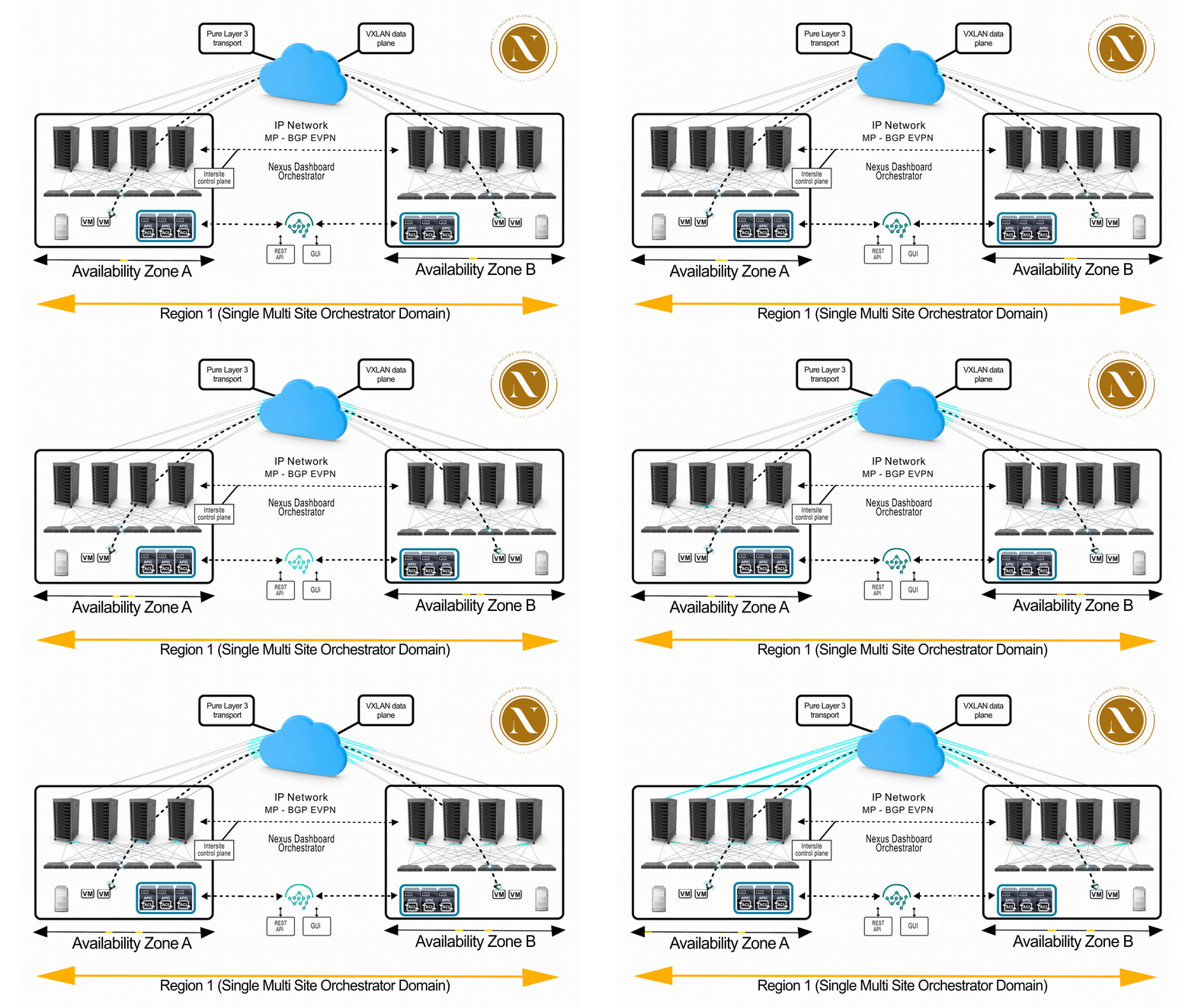
Modern data centers use software to manage networking automatically. This module explains SDN technologies such as Cisco Application Centric Infrastructure and overlay networking like VXLAN. Students learn how controllers manage the entire network from one central dashboard.
7. Data Center Security
Security is very important in data centers. This module explains firewall deployment, segmentation, access control, and monitoring. Data centers use advanced firewalls like Palo Alto Networks firewalls and Fortinet security devices to protect applications and data.
8. Data Center Automation
Automation helps manage large networks easily. Students learn scripting and automation tools such as Python and REST APIs. Automation platforms help configure hundreds of devices automatically instead of manual configuration.
9. Data Center Monitoring and Troubleshooting
This module teaches how engineers monitor network performance and troubleshoot issues. Tools are used to check traffic, latency, hardware health, and service availability. Students also learn log analysis and network troubleshooting methods.
10. Cloud and Hybrid Data Centers
Modern data centers integrate with cloud platforms. This module explains how on-premise data centers connect with public cloud platforms such as Amazon Web Services, Microsoft Azure, and Google Cloud. Students learn hybrid cloud networking and workload migration.
Cisco Data Center Networking Course
The Cisco Data Center course teaches how modern data centers are designed, deployed, and managed using Cisco technologies. It covers networking, compute servers, storage networks, virtualization, automation, and security used in enterprise and cloud data centers.
1. Data Center Fundamentals
This module introduces the basic concept of a data center. Students learn what a data center is, why companies use it, and what components are inside it. A data center typically includes servers, switches, storage systems, firewalls, and power infrastructure. The module also explains high availability, redundancy, scalability, and the difference between enterprise data centers and cloud data centers.
2. Data Center Architecture
This topic explains how data centers are designed. Traditional data centers use a three-tier architecture consisting of core, aggregation, and access layers. Modern data centers often use spine-leaf architecture, which provides high-speed communication and low latency between servers. Students learn how traffic flows inside the data center and how redundancy ensures continuous service even if a device fails.
3. Data Center Switching
In this module students learn advanced switching technologies used in data centers. It focuses on high-performance switches such as Cisco Nexus Series. Topics include VLAN configuration, trunking, Layer-2 and Layer-3 switching, Virtual Port Channel (vPC), and high-speed Ethernet technologies like 10G, 25G, 40G, and 100G networks used to connect servers and storage systems.
4. Overlay Networking and VXLAN
Modern data centers use overlay networks to scale large environments. This module explains technologies such as VXLAN and EVPN that allow network virtualization across multiple switches. Students learn how overlay networks run on top of physical infrastructure and how they help connect thousands of virtual machines across different racks and servers.
5. Cisco UCS Compute Systems
This module focuses on Cisco’s server platform called Cisco Unified Computing System. Students learn about blade servers, rack servers, and centralized server management. The module explains service profiles, server provisioning, and how networking, compute, and storage resources are integrated into a unified system.
6. Storage Networking
Data centers store massive amounts of data. This module teaches storage technologies such as SAN (Storage Area Network) and NAS (Network Attached Storage). Students learn protocols like Fibre Channel, iSCSI, and FCoE that allow servers to access centralized storage systems efficiently.
7. Cisco ACI (Software Defined Networking)
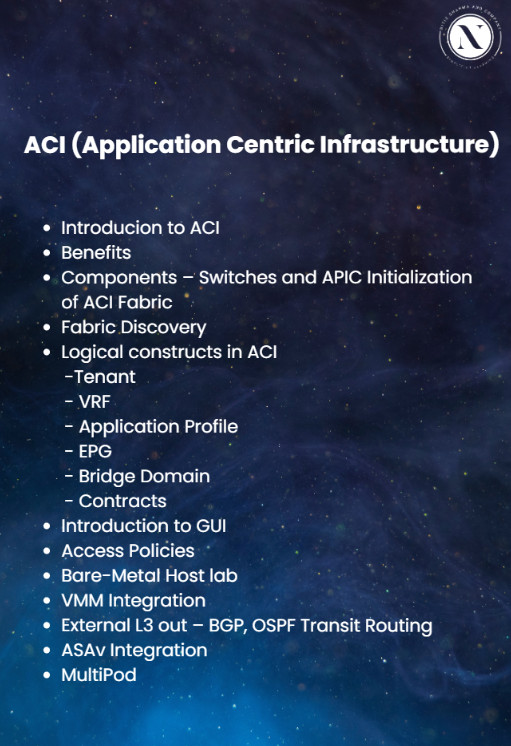
Modern Cisco data centers use SDN technology called Cisco Application Centric Infrastructure. This module explains how the APIC controller centrally manages the entire network. Students learn policy-based networking, tenants, endpoint groups, and automated network provisioning.
8. Virtualization Technologies
Virtualization allows multiple virtual machines to run on a single physical server. In this module students learn hypervisors and virtual networking using platforms like VMware vSphere. The course explains how virtual switches connect virtual machines to the physical data center network.
9. Data Center Security
This module explains how data centers protect applications and data. Topics include network segmentation, access control policies, firewall integration, and monitoring systems. Engineers learn how to secure communication between servers and protect infrastructure from cyber threats.
10. Automation and Programmability
Modern data centers use automation to manage large networks. This module introduces Python scripting, REST APIs, and automation tools that allow engineers to configure and monitor network devices automatically instead of manual configuration.
11. Monitoring and Troubleshooting
This section teaches how engineers monitor data center performance and identify network problems. Students learn troubleshooting techniques, log analysis, network monitoring tools, and methods to detect hardware or connectivity issues quickly.
12. Cloud and Hybrid Data Center Integration
The final module explains how on-premise data centers integrate with cloud platforms such as Amazon Web Services, Microsoft Azure, and Google Cloud. Students learn hybrid cloud networking, workload migration, and cloud connectivity models.
Short Summary:
The Cisco Data Center course covers data center architecture, Nexus switching, UCS servers, storage networking, VXLAN overlays, ACI SDN, virtualization, security, automation, monitoring, and cloud integration—all required skills to become a Data Center Network Engineer.
Cisco Data Center syllabus
The Cisco Data Center syllabus mainly follows the topics from Cisco CCNP Data Center and prepares engineers to work with data center networks, servers, storage, automation, and SDN tech
Cisco Data Center Syllabus
1. Data Center Fundamentals
- Introduction to Data Center
- Data Center infrastructure components
- Enterprise vs Cloud Data Center
- High availability and redundancy
- Data Center traffic types (East-West / North-South)
2. Data Center Network Architecture
- Three-tier architecture (Core, Aggregation, Access)
- Spine-leaf architecture
- Fabric design
- Data center scalability concepts
- Redundant network design
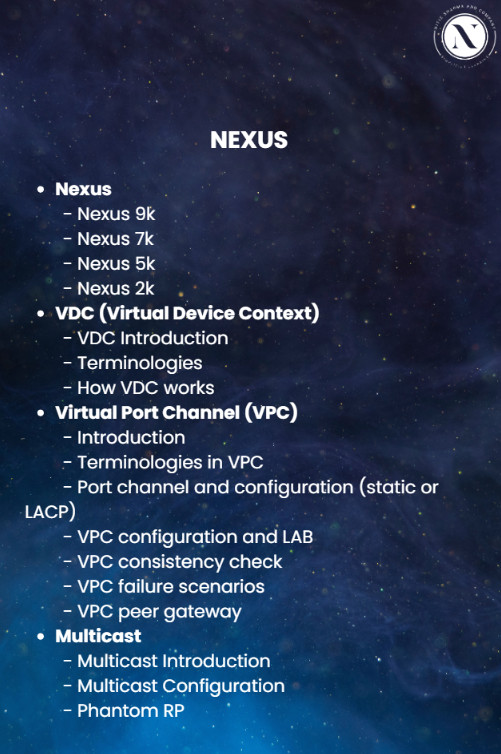
3. Cisco Nexus Switching
Data centers use high-performance switches such as Cisco Nexus Series.
Topics include:
- NX-OS operating system
- VLAN and trunk configuration
- Layer-2 switching
- Layer-3 routing
- Virtual Port Channel (vPC)
- Multicast in data centers
- High-speed Ethernet (10G / 40G / 100G)
4. Data Center Overlay Networking
- VXLAN fundamentals
- EVPN control plane
- Overlay and underlay networks
- Network virtualization in data centers
5. Cisco UCS Compute
Server infrastructure using Cisco Unified Computing System.
Topics include:
- UCS architecture
- Blade servers
- Rack servers
- UCS Manager
- Service profiles
- Server provisioning and management
6. Storage Networking
- SAN (Storage Area Network)
- NAS (Network Attached Storage)
- Fibre Channel protocol
- FCoE (Fibre Channel over Ethernet)
- iSCSI storage technology
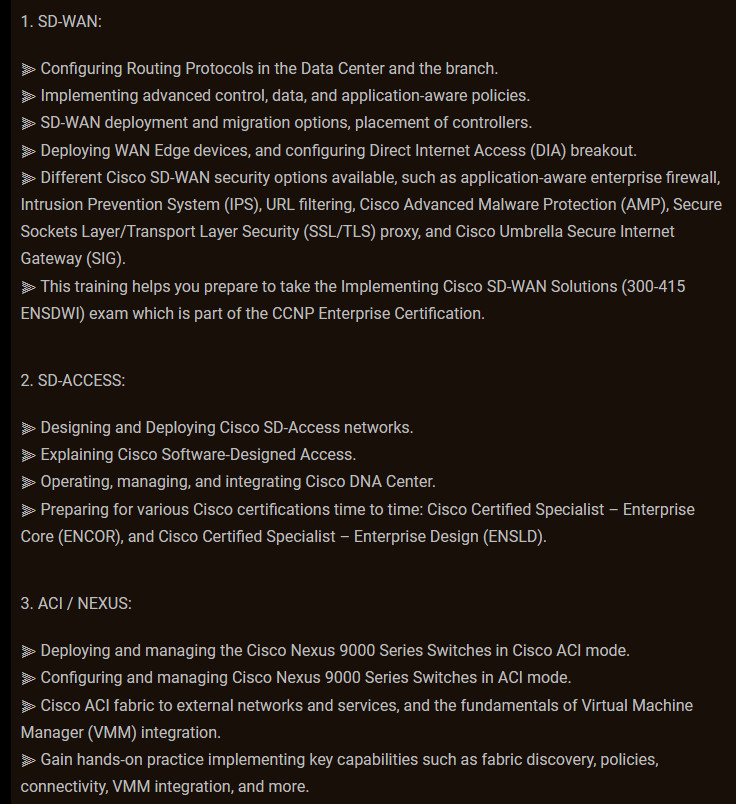
7. Cisco ACI (SDN)
Software-defined networking in Cisco data centers using Cisco Application Centric Infrastructure.
Topics:
- ACI architecture
- APIC controller
- Tenant and VRF
- Endpoint groups (EPG)
- Policy-based networking
- Network automation
8. Virtualization
- Hypervisor concepts
- Virtual machines
- Virtual switches
- Integration with VMware vSphere
9. Data Center Security
- Network segmentation
- Access control
- Micro-segmentation
- Firewall integration
- Threat monitoring
10. Automation and Programmability
- Python basics for networking
- REST APIs
- Automation tools (Ansible)
- Infrastructure automation
11. Monitoring and Troubleshooting
- Network monitoring tools
- Performance monitoring
- Log analysis
- Troubleshooting techniques
12. Cloud and Hybrid Data Center
- Hybrid cloud architecture
- Cloud connectivity
- Integration with cloud platforms like Amazon Web Services, Microsoft Azure
Simple summary
- ENCOR = Enterprise networking core knowledge
- ENARSI = Advanced routing and troubleshooting specialization
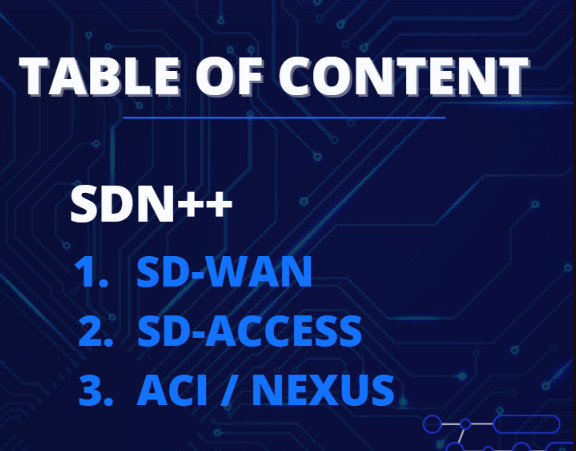
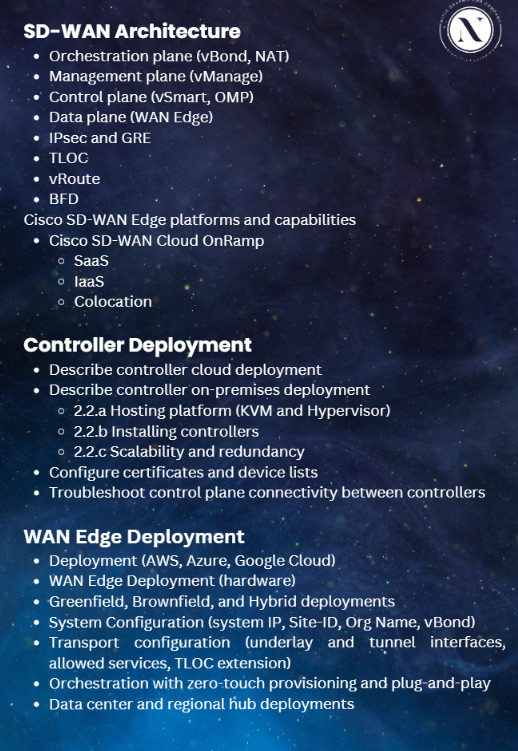
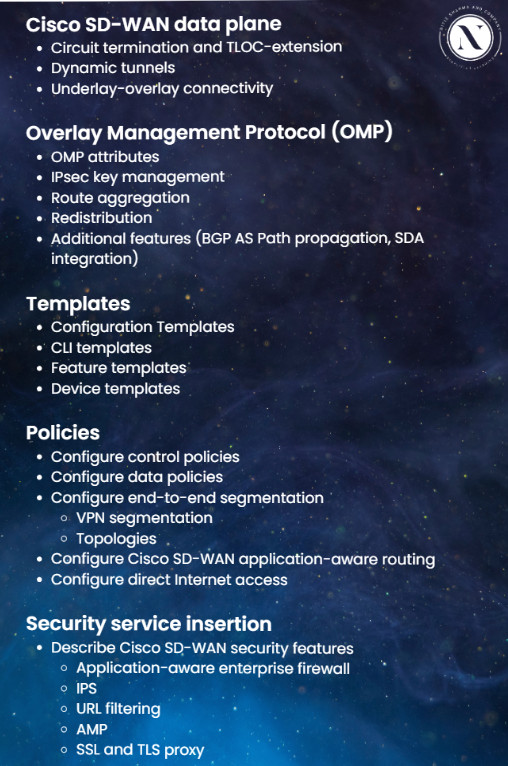
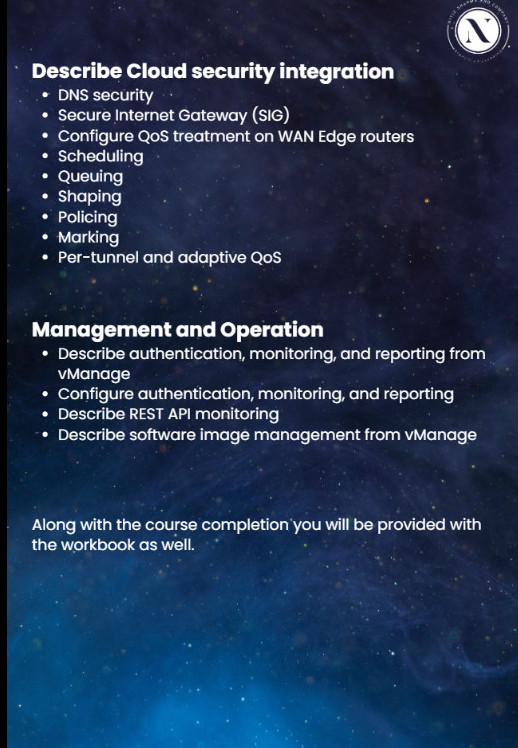
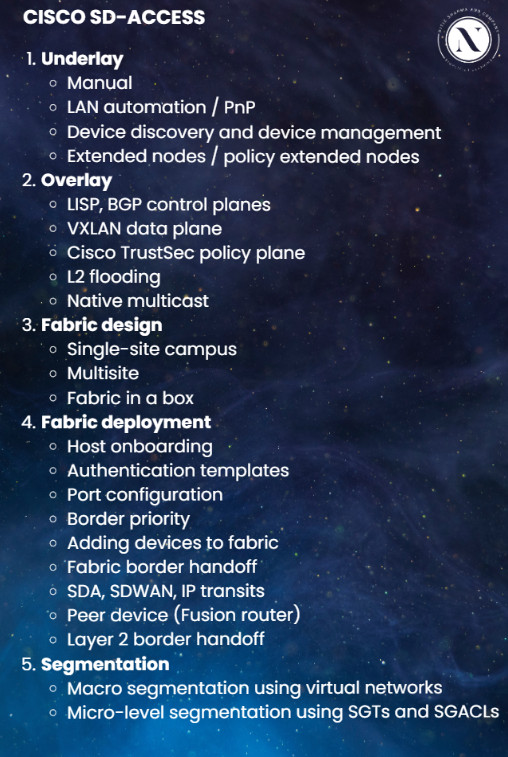
Cisco SDN Certification