
IT Courses
What is CompTIA+
What is CompTIA+
CompTIA+ refers to a group of IT certifications offered by CompTIA. These certifications are vendor-neutral, meaning they are not limited to one company like Cisco or Microsoft. They are designed to build foundational IT skills for beginners and intermediate professionals.
Purpose of CompTIA+
The main purpose of CompTIA+ certifications is to help beginners start a career in IT. They cover essential topics like hardware, networking, security, and troubleshooting. These certifications are widely recognized across the IT industry.
Types of CompTIA+ Certifications
CompTIA offers multiple “+” certifications, each focused on a specific area:
- A+ → Basic computer hardware and troubleshooting
- Network+ → Networking fundamentals (similar to beginner CCNA level)
- Security+ → Cybersecurity basics
- Server+ → Server management
- Linux+ → Linux operating system
- Cloud+ → Cloud computing basics
CompTIA A+
CompTIA A+ is the most basic certification. It teaches how computers work, how to fix hardware/software issues, and how to support users. It is ideal for helpdesk or IT support jobs.
CompTIA Network+
Network+ focuses on networking concepts like IP addressing, routing, switching, and troubleshooting. It is a good starting point before advanced networking certifications.
CompTIA Security+
Security+ is focused on cybersecurity. It includes topics like threats, vulnerabilities, encryption, and network security. It is widely accepted for security-related jobs.
Difficulty Level
CompTIA+ certifications are beginner to intermediate level. They are easier than advanced certifications like CCNP or CCIE but still require proper study and practice.
Job Roles After CompTIA+
After completing CompTIA+, you can get roles like:
- IT Support Engineer
- Helpdesk Technician
- Network Support Engineer
- Junior Security Analyst
Salary in India
- Fresher: ₹20,000 – ₹40,000 per month
- With experience: ₹40,000 – ₹80,000 per month
CompTIA vs Cisco (Simple Idea)
- CompTIA+ → Beginner, vendor-neutral
- Cisco (CCNA, CCNP) → More advanced, networking-focused
Final Conclusion
CompTIA+ certifications are best for beginners who want to enter the IT field. They build strong basics and help you move to advanced certifications later.
Cisco History


Cisco is one of the world’s leading networking and cybersecurity companies. It was founded in 1984 in the United States and became famous for developing technologies that allow computers and networks to communicate with each other. Today, Cisco plays a major role in internet infrastructure, enterprise networking, and security solutions.
Founding and Early Years (1984–1990)
Cisco was founded by Leonard Bosack and Sandy Lerner, who were computer scientists at Stanford University. They wanted to solve a problem: different computer systems at Stanford could not communicate with each other. To fix this, they developed a multi-protocol router that allowed networks to connect seamlessly.
The company’s name “Cisco” comes from “San Francisco,” and its logo is inspired by the Golden Gate Bridge. In its early years, Cisco focused on selling routers and networking hardware.
Growth and Expansion (1990–2000)
In 1990, Cisco went public (IPO), which helped it grow rapidly. During the 1990s internet boom, Cisco became a dominant force in networking equipment. It expanded its product range to include switches, routers, and network management tools.
Cisco also began acquiring other companies to expand its technology. By the late 1990s, it became one of the most valuable companies in the world due to the rapid growth of the internet.
Diversification and Innovation (2005–2015)
Cisco started expanding beyond traditional networking. It entered new markets such as:
- Cybersecurity
- Data centers
- Voice over IP (VoIP)
- Cloud computing
The company introduced solutions for businesses, governments, and telecom providers. It also focused on software and services rather than just hardware.
Modern Era and Digital Transformation (2015–Present)
In recent years, Cisco has transformed into a software-driven company. It now focuses on:
- Cloud networking
- Cybersecurity solutions
- Artificial intelligence in networking
- Internet of Things (IoT)
Cisco also introduced subscription-based services and platforms, adapting to modern IT trends. It continues to be a leader in enterprise networking and security.
Cisco’s Impact on Technology
Cisco has played a key role in shaping the modern internet. Its routers and switches form the backbone of many global networks. Organizations worldwide rely on Cisco technologies for secure and efficient communication.
Conclusion
From a small startup at Stanford to a global tech giant, Cisco’s journey shows continuous innovation and adaptation. Its contributions to networking and cybersecurity have made it one of the most important companies in the digital world.
Cisco Systems has Acquired Many Companies
Cisco Systems has acquired many companies over the years. In fact, acquisitions are a major reason Cisco grew so fast in networking, cybersecurity, and cloud technologies. Instead of building everything from scratch, Cisco often buys innovative companies and integrates their technology.
Early Acquisitions (1990s – Building Networking Strength)
In the 1990s, Cisco started acquiring small networking companies to improve its core products like routers and switches. One of the first major acquisitions was Crescendo Communications in 1993. This helped Cisco enter the Ethernet switching market, which later became a huge part of its business.
Expansion into Internet and Security (2000–2010)
During the internet boom, Cisco acquired companies to expand into new technologies. A key acquisition was Linksys in 2003, which helped Cisco enter the home and small business networking market.
Another important acquisition was IronPort in 2007, which strengthened Cisco’s cybersecurity portfolio, especially in email security and spam filtering.
Entering Collaboration and Video (2010–2015)
Cisco expanded into communication and collaboration tools by acquiring Tandberg in 2010. This helped Cisco build strong video conferencing solutions like Webex.
Cisco also bought NDS Group in 2012 to improve its video and media services.
Cloud and Data Center Focus (2015–2020)
To compete in cloud computing and data centers, Cisco made strategic acquisitions. One of the biggest was AppDynamics in 2017. This helped Cisco monitor and manage application performance in real time.
Another major deal was Viptela, which improved Cisco’s software-defined networking solutions.
Cybersecurity and AI Era (2020–Present)
Cisco continues to invest heavily in cybersecurity and modern technologies. It acquired Duo Security to strengthen identity security.
More recently, Cisco announced the acquisition of Splunk in 2023, one of its largest deals ever. This helps Cisco enhance data analytics, monitoring, and security capabilities.
Conclusion
Cisco has acquired more than 200 companies over time. These acquisitions helped it grow from a router company into a global leader in networking, cybersecurity, cloud, and enterprise IT solutions.
Why Cisco Acquires Companies
1. To Get New Technology Quickly
Technology changes very fast, especially in networking and cybersecurity. By acquiring companies, Cisco can instantly gain advanced technologies instead of spending years developing them. For example, when Cisco acquired AppDynamics, it quickly entered the application monitoring space.
2. To Expand into New Markets
Cisco originally focused on routers and switches, but through acquisitions, it expanded into areas like cloud computing, cybersecurity, and collaboration tools. Buying companies allows Cisco to enter new markets without starting from zero.
3. To Strengthen Cybersecurity
Cyber threats are increasing, so Cisco invests heavily in security. By acquiring firms like Duo Security, Cisco enhances its security solutions, especially in identity protection and zero-trust security.
4. To Stay Competitive
Cisco faces strong competition from companies like Microsoft, Amazon, and Google. Acquisitions help Cisco keep up with innovation and maintain its market position.
5. To Improve Existing Products
Sometimes Cisco acquires companies to enhance its current products. For example, technologies from acquired companies are often integrated into Cisco routers, firewalls, and cloud platforms to make them more powerful and feature-rich.
6. To Gain Talent and Expertise
Acquisitions also bring skilled engineers, researchers, and innovators into Cisco. This helps the company improve its research and development capabilities.
7. To Increase Revenue and Business Growth
By adding new products and services, Cisco can reach more customers and generate more revenue. Large acquisitions like Splunk help Cisco expand its business in data analytics and enterprise solutions.
Conclusion
Cisco acquires companies to grow faster, adopt new technologies, improve security, and stay ahead in the competitive IT industry. This strategy has helped Cisco evolve from a networking hardware company into a global leader in cloud, cybersecurity, and digital transformation.
Cisco Systems Grow only by Buying other Company?
What you said is partially true, but not completely correct. Cisco Systems did not grow only by buying other companies—it became successful through a combination of its own innovation and strategic acquisitions.
First, Cisco built its own core technology. In the early days, its founders developed Router technology at Stanford University to connect different computer networks. This innovation became the foundation of Cisco’s business. Even today, Cisco develops its own networking software, hardware, and security solutions.
Second, Cisco has acquired many companies, and that is true. But the purpose is to quickly adopt new technologies. For example, by acquiring AppDynamics and Duo Security, Cisco strengthened its capabilities in application monitoring and cybersecurity.
Third, acquisition alone is not enough to succeed. Cisco’s strength lies in how it integrates these acquired technologies into its own products and scales them globally. This requires strong engineering and innovation capabilities.
Also, this strategy is common in the tech industry. Companies like Google, Microsoft, and Amazon also grow through acquisitions along with internal development.
In conclusion, it is not correct to say Cisco has “nothing of its own.” Instead, Cisco has:
- Built strong core technologies
- Acquired companies to expand faster
- Combined both to create powerful solutions
This balanced strategy is why Cisco is a global leader in networking and cybersecurity.
Cisco Systems Product in Market
Cisco’s core market is networking, where it provides routers, switches, and wireless solutions. Routers like ISR and ASR connect different networks, while switches such as the Catalyst and Nexus series help devices communicate within a network. Cisco also offers wireless access points and controllers to enable Wi-Fi connectivity in offices, campuses, and large enterprises.
Security Products (Cybersecurity)
In cybersecurity, Cisco provides advanced protection solutions for networks and data. Its firewalls, such as ASA and Firepower, protect organizations from cyber threats. It also offers security platforms like Duo Security for multi-factor authentication and Cisco Umbrella for DNS-level protection. These tools help businesses secure users, devices, and applications.
Collaboration Products (Communication)
Cisco also has a strong presence in collaboration and communication tools. Products like Webex allow users to conduct online meetings, video conferencing, and team collaboration. Cisco IP phones and TelePresence systems are widely used in organizations for communication and remote work.
Data Center & Cloud Products
In the data center and cloud segment, Cisco provides solutions like UCS (servers), HyperFlex (hyperconverged infrastructure), and ACI (software-defined networking). These products help companies manage large-scale IT infrastructure and cloud environments efficiently.
Software & Network Management
Cisco is increasingly focusing on software and automation. Tools like Cisco DNA Center and SD-WAN (developed through Viptela) allow organizations to automate and manage networks more intelligently. These solutions improve performance and reduce manual work.
Meraki (Cloud-Managed Products)
The company also offers cloud-managed networking through its Meraki platform, which provides easy-to-use solutions for switches, security, and wireless networks. This is especially popular among small and medium-sized businesses.
Observability & Analytics
In addition, Cisco has expanded into analytics and monitoring. With acquisitions like AppDynamics and Splunk, Cisco provides tools for application performance monitoring, data analysis, and full-stack observability.
Conclusion
Overall, Cisco’s market includes a complete range of IT products, from hardware like routers and switches to advanced software, cloud, and security solutions. This broad portfolio makes Cisco one of the leading companies in global networking and enterprise technology.
Cisco Certification Track
Cisco Certification Tracks
Enterprise Track
👉 Networking (Routing & Switching, Wireless, SD-WAN)
The Enterprise track is the most popular and widely used Cisco certification path. It focuses on core networking technologies such as routing, switching, wireless, and SD-WAN. Certifications include CCNA (entry level), CCNP Enterprise, and CCIE Enterprise Infrastructure or Wireless. This track is ideal for network engineers and system administrators.
2. Security Track
👉 Firewall, VPN, Cybersecurity
The Security track is designed for cybersecurity professionals. It covers firewalls, VPNs, intrusion prevention, and zero-trust security. Certifications include CCNP Security and CCIE Security. This track is useful for roles like security engineer and network security analyst.
3. Data Center Track
👉 Servers, Storage, Virtualization
This track focuses on data center technologies such as virtualization, storage networking, and cloud infrastructure. Certifications include CCNP Data Center and CCIE Data Center. It is ideal for professionals working with large enterprise data centers.
4. Service Provider (ISP Track)
👉 Internet Service Provider networks (MPLS, BGP) This is the ISP track
The Service Provider track is designed for telecom and ISP environments. It covers advanced routing, MPLS, BGP,IS-IS and service provider technologies. Certifications include CCNP Service Provider and CCIE Service Provider.
5. DevNet (Automation) Track
👉 Network Automation, Python, APIs
The DevNet track is for automation and programming in networking. It covers APIs, Python, and network automation tools. Certifications include DevNet Associate, DevNet Professional, and DevNet Expert. This track is important for modern network engineers who need coding skills.
6. CyberOps Track
👉 Security Operations Center (SOC)
The CyberOps track is focused on security operations. It includes certifications like Cisco Certified CyberOps Associate and CyberOps Professional. This track prepares you for roles in Security Operations Centers (SOC), including threat monitoring and incident response.
7. Collaboration Track
👉 Voice, Video, IP Telephony (VoIP) This is the Collaboration track
This track focuses on communication technologies like voice, video, and messaging systems. It includes tools such as Cisco Webex and IP telephony. Certifications include CCNP Collaboration and CCIE Collaboration.
8. Architect
👉 High-level network design (CCAr – top level)
The CCAr track in Cisco Systems stands for Cisco Certified Architect (CCAr), which is the highest-level certification offered by Cisco.
CCAr is above even the expert-level certifications like CCIE. It is designed for senior professionals and architects who design large, complex, enterprise-level network infrastructures. Unlike other Cisco certifications, CCAr does not focus on configuration or troubleshooting—it focuses on design, strategy, and business-level decision making.
In the CCAr track, candidates must have deep knowledge of networking, security, data centers, and business requirements. The certification process is very unique. Instead of a written exam, candidates must present and defend a network architecture solution in front of a panel of Cisco experts. This makes it one of the toughest IT certifications in the world.
CCAr is mainly intended for roles like:
- Network Architect
- Enterprise Architect
- IT Infrastructure Architect
Professionals at this level design solutions for large organizations such as multinational companies, telecom providers, and government networks.
It is important to know that CCAr is not for beginners. Typically, candidates already hold certifications like CCIE and have many years of real-world experience before attempting CCAr.
In summary, the CCAr track is the top of the Cisco certification pyramid, focusing on architecture, design, and high-level decision-making rather than technical implementation.
Conclusion
Cisco certification tracks include Enterprise, Security, Data Center, Service Provider, Collaboration, CyberOps, DevNet, and IoT. Each track offers a clear career path from beginner to expert level, helping professionals specialize in specific IT domains.
Full forms of the Main Cisco Certifications
Cisco certifications
- CCNA – Cisco Certified Network Associate
- CCNP – Cisco Certified Network Professional
- CCIE – Cisco Certified Internetwork Expert
👉 All these certifications are offered by Cisco and represent different skill levels:
- CCNA → Beginner / Associate level
- CCNP → Advanced / Professional level
- CCIE → Expert level (highest technical certification)
CCNA 200-3001
- The CCNA course provides a strong foundation in networking concepts. It teaches how devices like routers, switches, and computers communicate with each other. Students learn basic topics such as IP addressing, networking models (like TCP/IP), and how data travels across networks.
- One of the main parts of the CCNA course is routing and switching. You will learn how to configure routers and switches, create networks, and manage traffic between devices. This is important for building and maintaining small to medium-sized networks.
- The course also includes basic security concepts. It teaches how to protect networks from unauthorized access, configure secure passwords, and understand common cyber threats. This is important because security is a key part of modern networking.
- Another important area in CCNA is automation and programmability. The course introduces basic concepts of network automation, APIs, and software-defined networking (SDN), which are becoming essential skills for network engineers.
CCNA is suitable for students, beginners, and IT professionals who want to start a career in networking. After completing CCNA, you can apply for roles like network technician, network support engineer, or system administrator.
In summary, CCNA is the first step in the Cisco certification path. It builds your basic networking knowledge and prepares you for advanced certifications like CCNP and CCIE.
6. Job Roles After CCNA
After CCNA, you can apply for jobs like:
- Network Engineer (Junior)
- Network Support Engineer
- IT Support Engineer
- System Administrator
7. Why CCNA is Important
- It builds a strong networking foundation
- It is globally recognized
- It helps you get entry-level IT jobs
- It is the first step toward advanced certifications like CCNP and CCIE
8. Real-Life Example
In a company network, if PCs cannot connect to the internet, a CCNA-certified engineer can check IP settings, routing, and switch configuration to fix the issue.
What are CCNA Course lessons
- Network Components
- Network Topologies
- Network Cabling
- TCP and UDP
- IPv4 Addressing and Subnetting
- IPv6 Addressing
- Wireless Principles
- Virtualization Fundamentals
- Switching Concepts
- VLANs
- Interswitch Connectivity
- Neighbor Discovery
- EtherChannel
- Spanning Tree Protocols
- Wireless Architectureand Components
- Routing Basics
- Static Routing
- OSPFv2
- First Hop Redundancy Protocols
- DHCP and DNS
- NAT
- SNMP
- Syslog
- Quality of Service
- SSH, FTP, TFTP
- Key Security Concepts
- Basic Device Security
- VPN Types
- Access Lists
- Layer 2 Security Features
- Authentication, Authorization, Accounting
- Wireless Security Protocols
- Network Automation
- Network Programmability
- Software Defined Architectures
- Cisco DNA Center
- Generative AI (Artificial Intelligence)
- Cloud Network Management
CCNP Enterprise 350-401 ENCOR
- ENCOR (350-401) is a core certification exam offered by Cisco Systems under the CCNP Enterprise track. ENCOR stands for Enterprise Core, and it is the main exam required to achieve the CCNP Enterprise certification. It focuses on advanced networking knowledge used in real enterprise environments.
- ENCOR is important because it acts as the foundation of professional-level Cisco certifications. To earn the CCNP Enterprise certification, a candidate must first pass the ENCOR exam and then pass one additional concentration exam (such as ENARSI, SD-WAN, or Wireless). Without ENCOR, you cannot complete the CCNP Enterprise track.
- The ENCOR (350-401) exam covers a wide range of topics related to modern networking. These include network architecture, virtualization, infrastructure (routing and switching), network assurance (monitoring and troubleshooting), security concepts, and automation. It also introduces technologies like software-defined networking (SDN) and APIs, which are important in today’s networks.
- This exam is designed for professionals who already have basic networking knowledge, typically at the CCNA level. It tests both theoretical understanding and practical skills, making it suitable for network engineers who want to work in enterprise environments.
- In terms of exam details, ENCOR (350-401) is a professional-level exam with a duration of about 120 minutes. It includes multiple-choice questions, simulations, and scenario-based questions. The difficulty level is considered medium to advanced.
- Overall, ENCOR (350-401) is a key step for anyone who wants to build a career in networking. It provides deep knowledge of enterprise networking technologies and prepares candidates for higher-level roles such as network engineer, system engineer, and infrastructure specialist.
What are CCNP ENCOR lessons
- Enterprise Network Design Principles,
- WLAN Design Principles,
- Cisco SD-WAN Solution,
- Cisco SD-Access solution,
- Quality of Service,
- Switching Mechanisms,
- Device Virtualization Technologies,
- Data Path Virtualization Technologies,
- Network Virtualization Concepts,
- Layer 2, EtherChannels, VLANs, Spanning Tree
- Layer 3, OSPF, EIGRP, BGP
- Wireless Infrastructure,
- IP Services,
- Diagnostic Tools for Network Problems,
- Syslog, Netflow, SPAN, IPSLA,
- Cisco DNA Center,
- NETCONF, RESTCONF,
- Network Access Security,
- Infrastructure Security Features,
- Wireless Security Features,
- Network Security Design,
- Basic Python Scripting,
- Principles of Data Modeling,
- APIs for Cisco DNA Center and vManage,
- Other Network Automation Features.
CCNP 300-410 ENARSI
ENARSI (300-410) is a concentration-level certification exam from Cisco Systems under the CCNP Enterprise track.
- ENARSI stands for Implementing Cisco Enterprise Advanced Routing and Services. It is an advanced exam that focuses mainly on routing technologies and network services used in enterprise environments.
- ENARSI is important because it is one of the concentration exams required to complete the CCNP Enterprise certification. After passing the core exam (ENCOR 350-401), you can choose ENARSI as your specialization to earn CCNP Enterprise.
- The ENARSI exam covers advanced routing topics such as OSPF, EIGRP, and BGP in detail. It also includes concepts like route redistribution, VPN technologies (like MPLS and DMVPN), infrastructure security, and network services. These topics are used in real-world enterprise networks.
- This certification is designed for network engineers who want to specialize in routing and troubleshooting. It focuses more on practical implementation and problem-solving compared to basic certifications like CCNA.
- In terms of exam details, ENARSI (300-410) is a professional-level exam with a duration of around 90 minutes. It includes multiple-choice questions and scenario-based problems that test real networking skills.
- Overall, ENARSI is a key certification for those who want to become advanced network engineers. It builds deep knowledge of routing and services and helps in roles like network engineer, network administrator, and infrastructure specialist.
5. Skills You Gain
After ENARSI, you can:
- Configure and troubleshoot advanced routing protocols
- Design WAN connectivity using VPNs
- Secure network infrastructure
- Solve real enterprise network problems
6. Exam Details
- Exam code: 300-410 ENARSI
- Duration: ~90 minutes
- Question types: MCQ, simulations, labs
- Level: Professional
7. Certification Path
To achieve CCNP Enterprise:
- Pass CCNP Enterprise 350-401 ENCOR (Core exam)
- Pass ENARSI (Concentration exam)
8. Job Roles After ENARSI
- Network Engineer
- Senior Network Engineer
- Routing & Switching Engineer
- Network Support Specialist
9. Why ENARSI is Important
- Deep focus on routing (very important in real networks)
- High demand skill in ISPs and enterprise companies
- Helps in CCIE Enterprise preparation
10. Real-Life Example
In a multi-branch company, if one branch cannot reach another, an ENARSI-certified engineer can troubleshoot OSPF or BGP routes, fix NAT or VPN issues, and restore connectivity.
What Will You Learn in CCNP ENARSI
- Routing Protocols,
- Route Maps,
- Loop Preventation,
- Route Redistribution,
- Route Summarization,
- Policy Based Routing,
- VRF-Lite,
- BFD,
- Troubleshoot EIGRP,
- Troubleshoot OSPF,
- Troubleshoot BGP,
- MPLS Operations,
- MPLS Layer 3 VPN,
- DMVPN,
- AAA Troubleshooting,
- Troubleshooting Router Security Features,
- Troubleshoot control plane policing,
- IPv6 First Hop security features,
- Troubleshoot device management,
- Troubleshoot SNMP,
- Troubleshoot network problems using logging,
- Troubleshoot IPv4 and IPv6 DHCP,
- Troubleshoot NetFlow ,
- Cisco DNA Center assurance
What is CCIE Certification
CCIE (Cisco Certified Internetwork Expert) is an expert-level networking certification offered by Cisco Systems. It is one of the most respected and difficult certifications in the IT networking field, designed for professionals who want to master advanced networking skills.
CCIE certification proves that a person has deep knowledge in designing, implementing, managing, and troubleshooting complex enterprise networks. It focuses on real-world practical skills rather than only theoretical knowledge, which makes it highly valuable in the industry.
This certification is the highest level in Cisco’s certification path. After completing entry-level (CCNA) and professional-level (CCNP) certifications, CCIE is considered the final and most advanced stage. It represents expert-level capability in handling large-scale networks.
There are different CCIE tracks based on specialization, such as Enterprise Infrastructure, Security, Data Center, Service Provider, and Collaboration. Each track focuses on a specific area of networking and allows engineers to become experts in that domain.
To achieve CCIE, candidates must pass two exams: a written exam and a lab exam. The written exam tests theoretical understanding, while the lab exam is an 8-hour hands-on test where candidates configure and troubleshoot real network scenarios. The lab exam is known to be very challenging.
CCIE requires strong knowledge of networking technologies such as routing protocols (OSPF, BGP), switching concepts (VLAN, STP), network security, and automation. Candidates must also have strong troubleshooting skills and practical lab experience.
The difficulty level of CCIE is very high because it requires both deep theoretical knowledge and extensive hands-on practice. Many candidates spend months or even years preparing for the lab exam.
After achieving CCIE, professionals can work in high-level roles such as Senior Network Engineer, Network Architect, or Network Consultant. These roles involve designing and managing large enterprise or service provider networks.
In terms of salary, CCIE-certified professionals are among the highest-paid in the networking field, especially in countries like India, where experienced CCIE engineers can earn very high monthly salaries.
Overall, CCIE is a globally recognized certification that demonstrates expert-level networking skills and opens the door to advanced career opportunities in the IT industry.
All of them focus on a different area.
- CCIE Routing & Switching
- CCIE Wireless
- CCIE Service Provider
- CCIE Security
- CCIE Data Center
- CCIE Collaboration
- CCDE (Cisco Certified Design Expert)
All Cisco Course And Exam Code
- At the associate level, the most important certification is CCNA. The exam code for this is 200-301 CCNA, which covers basic networking, security, and automation concepts. It is the starting point for most Cisco learners.
- At the professional level (CCNP), each track starts with a core exam. For the Enterprise track, the core exam is 350-401 ENCOR. In the Security track, it is 350-701 SCOR. For Data Center, the code is 350-601 DCCOR. In the Service Provider track, the core exam is 350-501 SPCOR, and for Collaboration, it is 350-801 CLCOR. These core exams are mandatory before choosing a specialization.
- After passing a core exam, candidates must take a concentration exam (300-level codes). In the Enterprise track, popular exams include 300-410 ENARSI (advanced routing), 300-415 ENSDWI (SD-WAN), and 300-435 ENAUTO (automation). In the Security track, examples include 300-710 SNCF, 300-715 SISE, and 300-730 SVPN. In the Data Center track, exams like 300-610 DCID and 300-620 DCACI are available.
- For the CyberOps professional level, Cisco provides 350-201 CBRCOR as the core exam and 300-215 CBRFIR for incident response specialization. These certifications are focused on security monitoring and threat analysis roles.
- In the DevNet (automation) track, the professional-level core exam is 350-901 DEVCOR, which focuses on APIs, automation, and software development for networks. This track is important for modern network engineers who need programming skills.
Associate Level (Beginner)
The most important entry-level certification is:
- 200-301 CCNA (Cisco Certified Network Associate)
This is the starting point for networking careers and covers basic networking, security, and automation.
Security Track:
- 300-710 SNCF – Firepower
- 300-715 SISE – Identity Services
- 300-720 SESA – Email Security
- 300-725 SWSA – Web Security
- 300-730 SVPN – VPN
DevNet (Automation & Programming)
For network automation and coding:
- 200-901 DEVASC – DevNet Associate
- 350-901 DEVCOR – DevNet Professional Core
- 300-435 ENAUTO – Automation (also Enterprise track)
Professional Level – Core Exams (CCNP)
Each CCNP track has a core exam:
- 350-401 ENCOR – Enterprise Core
- 350-701 SCOR – Security Core
- 350-601 DCCOR – Data Center Core
- 350-501 SPCOR – Service Provider Core
- 350-801 CLCOR – Collaboration Core
Data Center Track:
- 300-610 DCID – Design
- 300-615 DCIT – Troubleshooting
- 300-620 DCACI – ACI
- 300-630 DCACIA – Automation
Enterprise Track:
- 300-410 ENARSI – Advanced Routing
- 300-415 ENSDWI – SD-WAN
- 300-420 ENSLD – Design
- 300-425 ENWLSD – Wireless Design
- 300-430 ENWLSI – Wireless Implementation
- 300-435 ENAUTO – Automation
CyberOps Certifications
Focused on security operations:
- 200-201 CBROPS – CyberOps Associate
- 350-201 CBRCOR – CyberOps Professional Core
- 300-215 CBRFIR – Incident Response
CCNA, CCNP, and CCIE Salary in India
CCNA is an entry-level certification, so the starting salary is usually lower. Freshers with CCNA can expect around ₹15,000 to ₹25,000 per month. As they gain 2–3 years of experience, the salary can increase to around ₹40,000 to ₹80,000 per month depending on skills and company.
CCNP is a professional-level certification, so it offers better salary opportunities. Candidates with CCNP typically earn around ₹50,000 to ₹1,00,000 per month. With more experience and strong practical knowledge, salaries can go up to ₹1.5 lakh or even ₹2 lakh per month in good companies.
CCIE is the expert-level certification and one of the highest-paying in networking. A CCIE-certified professional can earn around ₹1.5 lakh to ₹2 lakh per month at the starting level. With 5–10 years of experience, salaries can increase to ₹3 lakh to ₹5 lakh or more per month, especially in large companies or international roles.
Overall, the salary increases step by step from CCNA to CCNP to CCIE. However, real growth depends on hands-on skills, experience, and job role, not just certification alone.
Top-Level (Highly Experienced) Network Security Engineer
A Top-Level (Highly Experienced) Network Security Engineer is a senior cybersecurity professional responsible for designing, securing, and managing complex enterprise networks. These professionals typically have 8–15+ years of experience and often hold advanced certifications from companies like Cisco Systems.
At this level, the role is not just about configuring devices—it is about architecting secure network infrastructures. They design large-scale secure environments, implement zero-trust security models, and ensure protection against advanced cyber threats such as ransomware, DDoS attacks, and data breaches.
A highly experienced network security engineer works with advanced technologies such as next-generation firewalls, intrusion prevention systems (IPS), VPNs, and SIEM tools. They often use solutions like Palo Alto Networks firewalls, Cisco Fire Power Secure Firewall, and platforms like Splunk for monitoring and threat analysis.
Their responsibilities include designing secure network architecture, performing risk assessments, handling incident response, and ensuring compliance with security standards. They also lead security audits, monitor network traffic for suspicious activity, and respond to cyber incidents in real time.
In terms of certifications, professionals at this level often hold CCNP Security or CCIE Security from Cisco Systems, along with other certifications like CISSP or CEH. These certifications validate deep knowledge in network security and threat management.
The salary for a top-level network security engineer in India is typically very high. It ranges from around ₹2 lakh to ₹5 lakh or more per month, depending on experience, company, and location. Senior roles in multinational companies or cloud-focused organizations can offer even higher packages.
In summary, a top-level network security engineer is an expert who combines deep technical skills, strategic thinking, and real-world experience to protect large-scale networks from modern cyber threats. This role is one of the most respected and high-paying careers in the IT security field.
Top Firewall Certifications Course
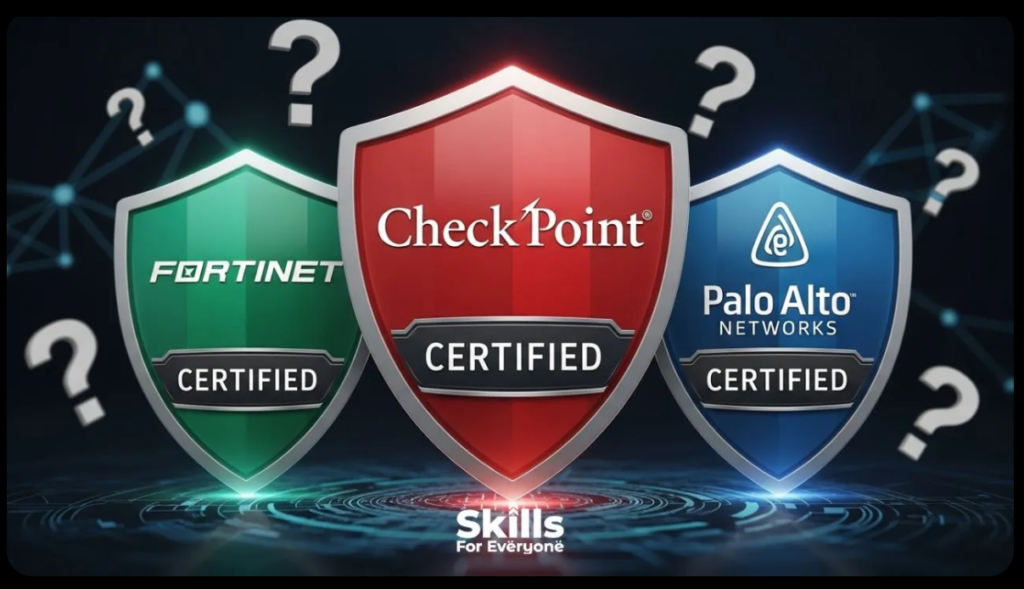
Certification courses for major firewall vendors: Palo Alto Networks, Fortinet, Check Point Software Technologies, and Cisco Systems (Firepower).
Palo Alto Certification
Palo Alto offers certifications focused on next-generation firewall and cloud security. The main certification is PCCET (entry level) and PCNSA (Palo Alto Networks Certified Network Security Administrator). The advanced level is PCNSE (Palo Alto Networks Certified Network Security Engineer). These courses teach firewall configuration, security policies, NAT, VPN, threat prevention, and cloud security. PCNSE is highly valued for firewall jobs.
Fortinet Certification
Fortinet provides a structured certification path called NSE (now updated to FCP/FCSS). Entry-level is FCA (Fortinet Certified Associate), mid-level is FCP (Fortinet Certified Professional), and advanced levels include FCSS and FCX. These courses focus on FortiGate firewall, VPN, IPS, antivirus, web filtering, and security fabric. Fortinet certifications are widely used in real-world firewall environments.
Check Point Certification
Check Point certifications are well-known in enterprise security. The basic certification is CCSA (Check Point Certified Security Administrator), followed by CCSE (Check Point Certified Security Expert). There is also a higher level called CCSM (Master). These courses cover firewall configuration, VPN, threat prevention, and advanced security management.
Cisco Firepower Certification
Cisco firewall certifications come under the security track of Cisco. The main certifications include CCNA (basic networking + security), CCNP Security, and specialization exams like 300-710 SNCF (Secure Firewall). These courses focus on Cisco ASA, Firepower NGFW, VPN, IPS, and network security concepts.
If your goal is a Firewall Security Engineer job, I can suggest:
✅ Which certification to start first (based on your level)
✅ Best combination (e.g., CCNA + Fortinet + Palo Alto) for high salary
Sophos Certification
Sophos offers certifications focused on its firewall and endpoint security products. The main certification path includes Sophos Certified Engineer and Sophos Certified Architect. The Engineer level covers installation, configuration, firewall rules, NAT, VPN, web filtering, and basic troubleshooting. The Architect level is more advanced and focuses on designing secure network environments and handling complex deployments. Sophos firewalls are widely used in small to medium businesses, so these certifications are useful for practical, real-world jobs.
SonicWall Certification
SonicWall provides certifications for network security professionals working with its firewall solutions. The most popular certification is SonicWall Network Security Administrator (SNSA), followed by SonicWall Network Security Professional (SNSP). These courses cover firewall configuration, VPN setup, intrusion prevention, content filtering, and security policies. SonicWall certifications are valued in companies that use SonicWall appliances, especially in SMB and enterprise branch networks.
Practical Value in Industry
Both Sophos and SonicWall are widely used in small and medium-sized businesses. Their certifications are practical and job-oriented, especially for roles like firewall engineer, network security engineer, and IT support engineer. They are generally easier compared to high-end certifications from Palo Alto Networks or Cisco Systems, making them a good starting point.
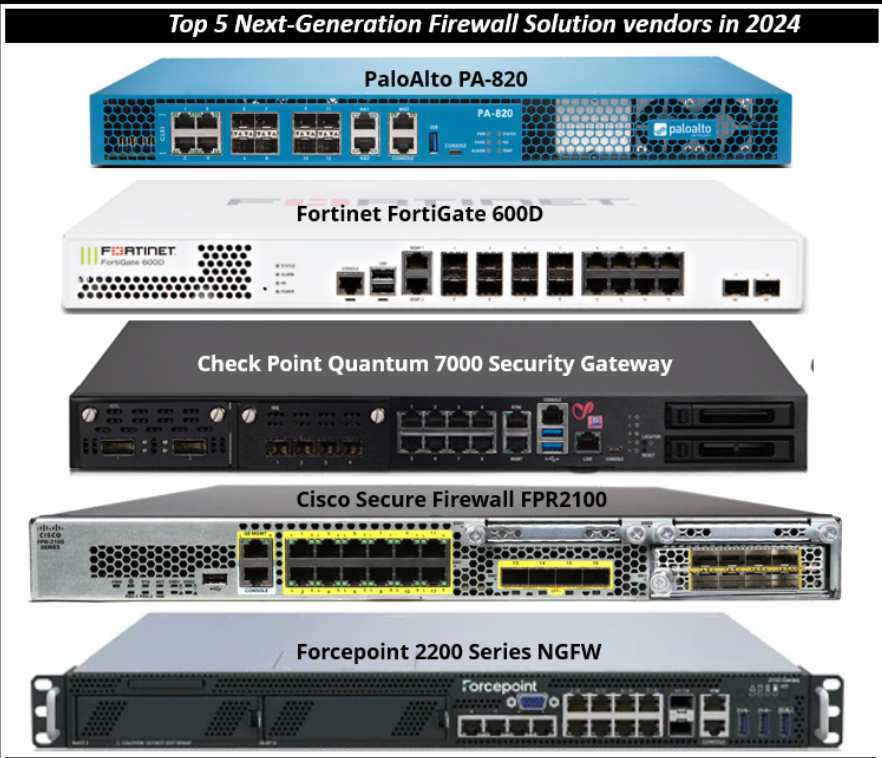
A Network Security Engineer course teaches how to protect computer networks from cyber threats, attacks, and unauthorized access. In this course, students learn networking fundamentals, security technologies, firewall configuration, monitoring tools, and secure network design. The goal is to develop the skills required to secure enterprise networks, data centers, and cloud environments.
1. Networking Fundamentals
Before learning security, a student must understand how networks operate. This includes basic networking concepts such as IP addressing, subnetting, routing, switching, and network protocols. Students also learn how routers and switches work and how data travels through networks. Many networking courses begin with the fundamentals taught in certifications from Cisco.
Topics
- OSI model and TCP/IP model
- IPv4 and IPv6 addressing
- VLAN and routing basics
- DNS, DHCP, HTTP protocols
2. Operating Systems and System Security
Network security engineers must understand operating systems because many network services and security tools run on them. Students learn system administration basics for platforms such as Linux and Windows Server.
Topics
- User and permission management
- Server configuration
- System hardening and security policies
3. Network Security Fundamentals
This module explains the core principles of cybersecurity and how attacks affect networks. Students learn about common cyber threats and how security mechanisms protect data.
Topics
- CIA triad (Confidentiality, Integrity, Availability)
- Malware, phishing, and DDoS attacks
- Encryption and authentication methods
Many beginners study these topics through certifications from CompTIA such as Security+.
4. Firewall Technologies
Firewalls are one of the most important network security devices. Students learn how to configure firewall rules, control network traffic, and block unauthorized access.
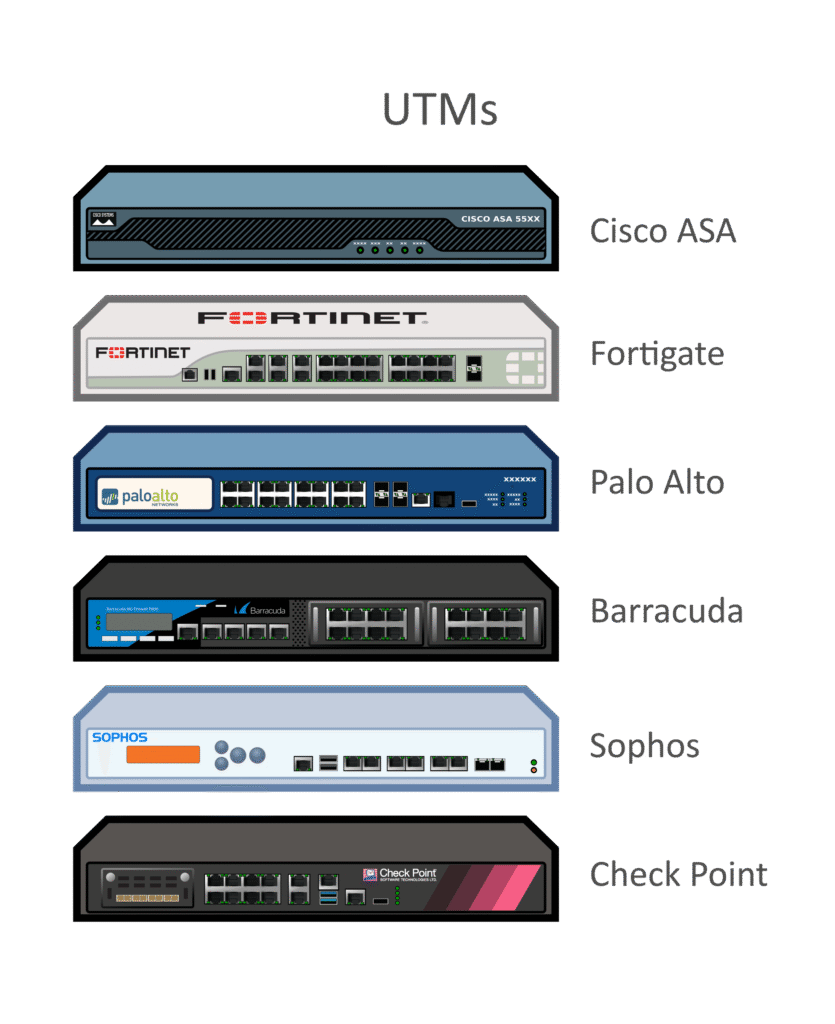
Popular firewall platforms Vendor
- Palo Alto Networks firewall
- Fortinet FortiGate
- Cisco ASA / Firepower
- Check Point Software Technologies firewall
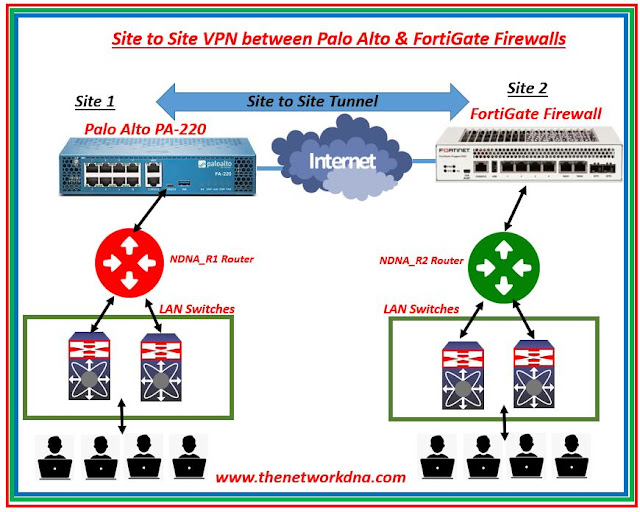
5. VPN and Secure Remote Access
This module teaches how to create secure connections between networks using Virtual Private Networks (VPN).
Topics
- IPsec VPN
- SSL VPN
- Remote access security
- Site-to-site VPN
VPN technologies allow secure communication over public networks like the internet.
6. Intrusion Detection and Threat Protection
Students learn how to detect cyber attacks and monitor suspicious network activity.
Topics
- IDS / IPS (Intrusion Detection & Prevention)
- Malware detection
- Network monitoring tools
- Traffic analysis
7. Web Filtering and Application Security
Firewalls can also filter web traffic and block malicious applications.
Topics
- URL filtering
- Application control
- Content filtering
- Anti-spam and anti-virus gateways
8. Security Monitoring and Analysis
This module teaches how to analyze network logs and detect attacks using security tools.
Tools commonly used
- Wireshark
- Nmap
- Nessus
- Security monitoring platforms
These tools help detect network vulnerabilities and analyze traffic patterns.
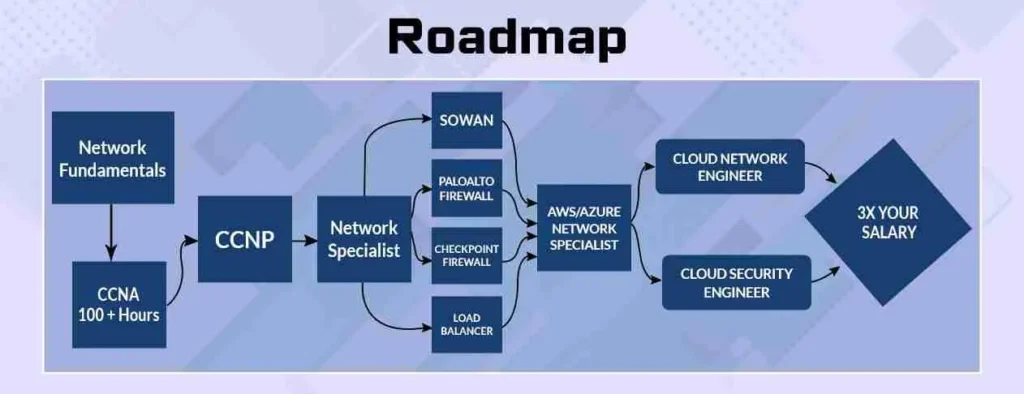
Job Roles After Firewall Certifications
After completing a firewall course such as certifications from Fortinet, Palo Alto Networks, Cisco, or Check Point Software Technologies, you can work in several network security and firewall-related job roles.
1. Firewall Engineer
A Firewall Engineer is responsible for configuring, managing, and troubleshooting firewall devices. The engineer creates security policies, NAT rules, VPN configurations, and access control rules to protect the network from cyber threats. They also monitor firewall logs and ensure that only authorized traffic enters the network.
2. Network Security Engineer
A Network Security Engineer protects the organization’s network infrastructure. They deploy firewalls, intrusion prevention systems (IPS), VPN gateways, and web filtering systems. Their job is to design secure network architecture and prevent cyberattacks such as malware, phishing, and unauthorized access.
3. Security Operations Center (SOC) Engineer
SOC engineers work in a Security Operations Center where they monitor security alerts and network activity. They analyze firewall logs, detect suspicious traffic, and respond to security incidents. Firewall knowledge helps them identify attacks and block malicious connections quickly.
4. Cybersecurity Analyst
Cybersecurity Analysts analyze security risks and vulnerabilities in networks and systems. They use firewall tools, threat detection systems, and security monitoring platforms to protect company data. They also perform security assessments and recommend improvements to the network security infrastructure.
5. Security Consultant
Security consultants provide expert advice to companies on how to secure their networks. They design firewall architectures, recommend security tools, and implement best practices for protecting enterprise systems.
6. Cloud Security Engineer
Cloud security engineers manage firewall and security policies in cloud platforms like Amazon Web Services, Microsoft Azure, or **Google Cloud. They configure cloud firewalls, network security groups, and VPN connections to secure cloud infrastructure.
Firewall Engineer salary in India (per month) depends on experience, certifications (like Fortinet FortiGate or Palo Alto Networks firewall), and company type.
1. Fresher Firewall Engineer (0–2 years)
Salary: ₹25,000 – ₹60,000 per month
Usually works as:
- Firewall support engineer
- NOC security engineer
- Junior network security engineer
Freshers monitor firewall logs, configure basic rules, and support senior engineers.
2. Mid-Level Firewall Engineer (3–5 years)
Salary: ₹70,000 – ₹1.5 lakh per month
Engineers at this level:
- Configure firewall policies
- Manage VPN and NAT
- Troubleshoot network security issues
- Work on enterprise security systems.
3. Senior Firewall Engineer (6–10 years)
Salary: ₹1.5 lakh – ₹3 lakh per month
Senior engineers:
- Design firewall architecture
- Manage enterprise security networks
- Handle advanced threat prevention and security policies.
4. Firewall Security Architect (10+ years)
Salary: ₹3 lakh – ₹5+ lakh per month
This is a high-level role responsible for:
- Designing complete security architecture
- Implementing Zero-Trust networks
- Managing large enterprise or data-center security.
Average Firewall Engineer salary in India:
- About ₹77,000 per month on average (around ₹9.2 lakh per year).
Overall salary range in India:
Around ₹3 LPA to ₹25 LPA depending on experience and company.
Firewall Network Security Engineer Salary in India
A Firewall / Network Security Engineer salary in India (monthly basis) depends on experience level, skills, and company.
Entry-Level (0–2 Years Experience)
At the beginner stage, firewall security engineers usually earn a moderate salary. Freshers or junior engineers typically get around ₹20,000 to ₹40,000 per month. In some companies, it may start even lower, especially for support roles.
Mid-Level (2–5 Years Experience)
With experience and hands-on skills (firewalls, VPN, security tools), salary increases. Mid-level engineers earn around ₹50,000 to ₹1,00,000 per month.
According to market data, average firewall engineer salary is about ₹9.2 LPA (≈ ₹77,000/month) in India .
Senior-Level (5–10 Years Experience)
Senior firewall or network security engineers earn significantly higher salaries. Typical range is ₹1 lakh to ₹2 lakh per month depending on company and expertise.
For example, network/firewall security engineers can earn up to about ₹1 lakh/month or more in top roles .
Top-Level / Expert (10+ Years Experience)
Highly experienced professionals (architects, leads, CCNP/CCIE level) earn very high salaries.
- ₹2 lakh to ₹4 lakh+ per month
- In top companies, even higher packages are possible
Senior roles in companies like Genpact show salaries up to ₹23–27 LPA (≈ ₹2–2.2 lakh/month)