FWDM,CWDM & DWDM
What is WDM?
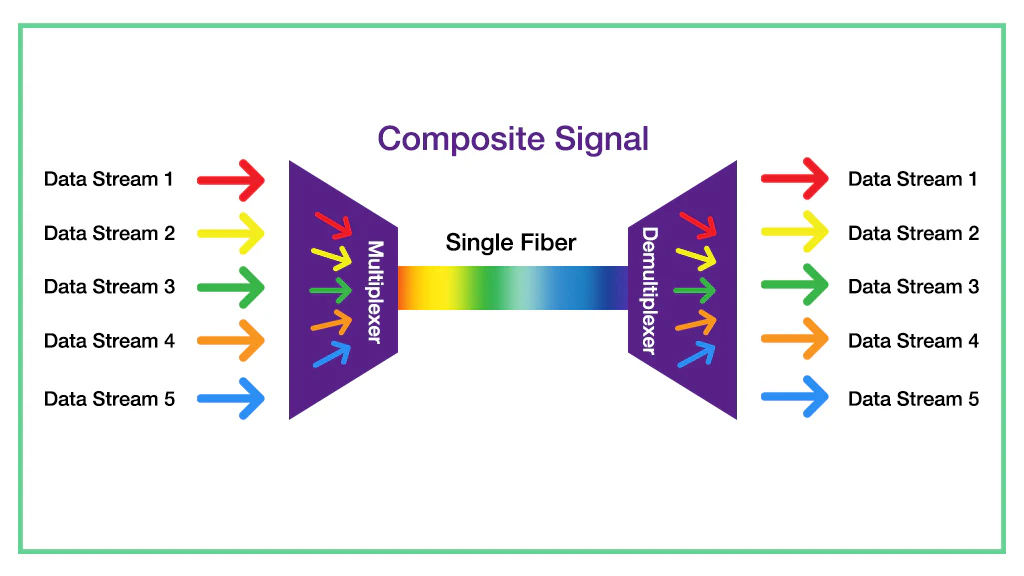
WDM (Wavelength department multiplexing) refers to a fiber-optic transmission approach that makes use of multiple optical wavelengths to transmit information in an unmarried unit. This fiber-optic transmission technique allows for the simultaneous transmission of facts in distinctive formats and speeds on a single fiber making use of special wavelengths of light. Wavelength Division Multiplexing (WDM) is a technology used in fiber optic communications to combine and transmit multiple optical carrier signals on a single fiber optic cable by using different wavelengths (colors) of laser light. This method effectively increases the capacity of a single fiber to carry multiple independent data streams.
A single fiber can carry two or more light colors, and an optical waveguide can take several signals at different optical spectrum wavelengths or frequencies.
There are several types of WDM, each catering to different requirements in terms of capacity, distance, and cost:
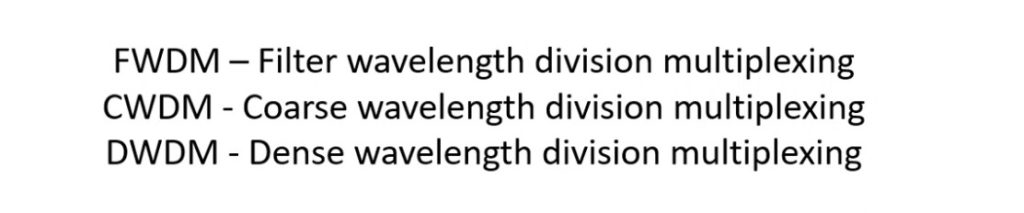
WDM is classified into three categories: Coarse Wavelength Division Multiplexing (CWDM), Dense Wavelength Division Multiplexing (DWDM), and Filter Wavelength Division Multiplexing (FWDM). These classifications address diverse community needs, with CWDM being cost-effective, DWDM excelling in high-capacity, long-distance transmissions, and FWDM pushing the boundaries of fiber optic capability.
What is CWDM?
Coarse Wavelength Division Multiplexing (CWDM)
The CWDM increases fiber optic cable bandwidth in networking and telecommunications. This method multiplexes optical carrier messages on a single optical fiber to carry other signals using different laser light wavelengths or colors. It’s price-powerful and appropriate for brief-distance applications (typically up to 80km). Metropolitan area networks frequently employ this technique, which allows them to increase the capacity of their current fiber networks without installing new fiber.
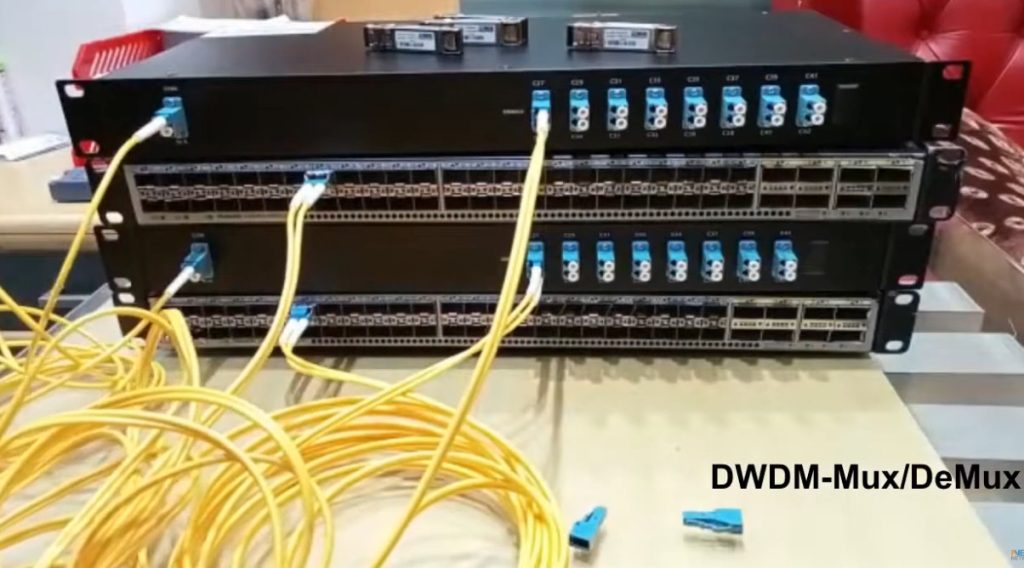
CWDM operates in a straightforward yet very efficient manner. Light emitters produce signals at different wavelengths in a typical CWDM arrangement. The multiplexer at the transmitter side combines more than one wavelength right into an unmarried optical fiber. A demultiplexer at the receiving end divides the combined optical signals back into their original wavelengths.Then, each wavelength is pointed in the direction of a certain receiver.
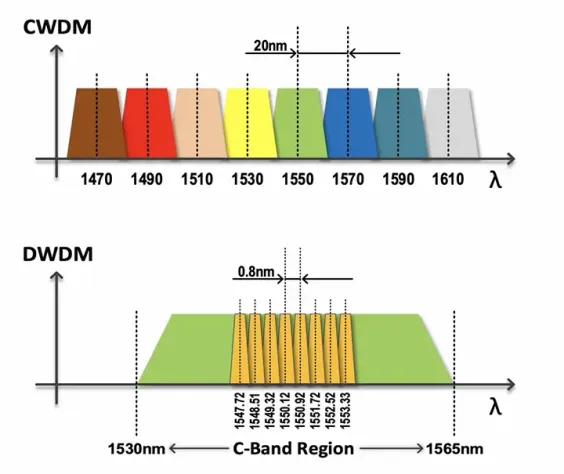
CWDM is a cost-effective communication technology that is efficient. Compared to DWDM, it utilizes a wider range of wavelengths. This means its components don’t need to be extremely precise, reducing the overall cost of the technology. CWDM can guide as much as 18 wavelengths with a 20 nanometer spacing.
What is DWDM?
Dense Wavelength Division Multiplexing (DWDM)
DWDM, an optical fiber multiplexing generation that will increase the bandwidth of fiber networks.
It combines a couple of records signals from resources over a single pair of optical fibers even as keeping the separation of the statistics streams. Each wavelength has a width of about 0.8 nanometers and is implemented using a single optical cable.
DWDM systems can support up to 80 or more channels. Each channel has a unique wavelength that users can use to transmit factual, voice and video alerts over long distances without having to regenerate or amplify alerts.
What is FWDM?
Filter Wavelength Division Multiplexing (FWDM)
FWDM is a WDM technology that combines or separates light at different wavelengths across a broad wavelength range.
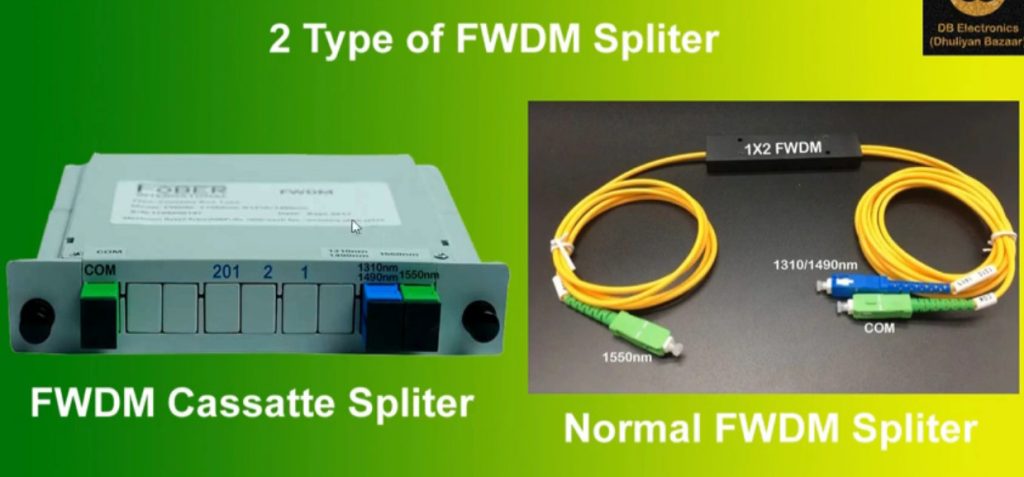
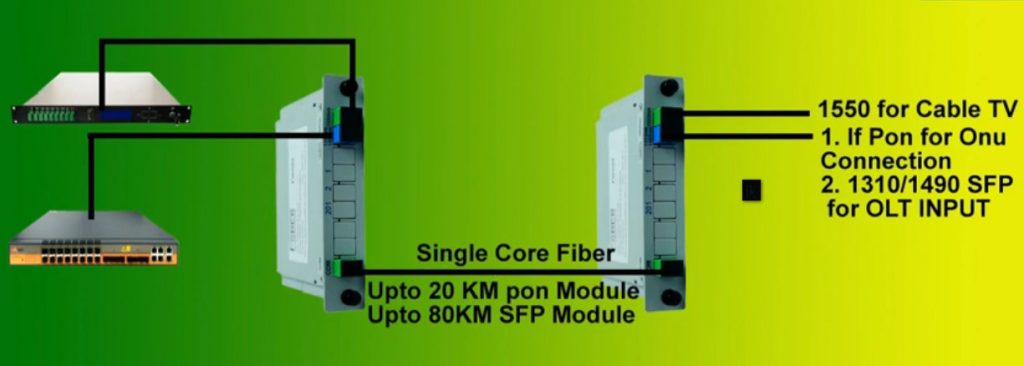
FWDM uses specialized filters that mix or divide light signals according to their wavelengths. This capability allows several data transfers at separate wavelengths without interference. Everything happens via a single optical fiber at the same time.
This method makes use of thin-film filters, which are precise and efficient at guiding specific light wavelengths into or out of the fiber. FWDM has the ability to send a large amount of data over a long distance without the need for new connections. This ability makes it possible for fiber optic to carry more data, making FWDM a critical option for bandwidth management.
Wavelength division multiplexing is the classic technology that provides optimal solutions for transporting large amounts of data between sites. While this technology is effective, the increased demands for faster and more reliable communication brought FWDM, DWDM, and CWDM. While these classifications have a similar task, they differ significantly in their delivery and suitability.
What’s The Difference Between Them?
The WDM multiplexer assigns the different data channels to different wavelengths of light using Coarse Wavelength Division Multiplexing (CWDM) or Dense Wavelength Division Multiplexing (DWDM).
Pro Optix has a range of four WDM multiplexers which are designed for different performance and density requirements.
CWDM transmits multiple signals over a single fiber optic line by utilizing various wavelengths. This costs less because there is less need for precision among the components as a result of wider spacing between wavelengths. It is commonly used in urban networks and is most suitable for short to medium range connections. CWDM comes with a wider channel spacing. The extensive channel spacing is higher proper for shorter distances.
FWDM can use specific filters to direct each wavelength to or from the fiber. This technology allows for mixing and separating light signals of different wavelengths. FWDM can also be applied to other systems like CWDM and DWDM which may help in better management of wavelengths due to its flexibility.
FWDM Compared to DWDM, FWDM usually supports a limited number of channels. Adding more channels in FWDM is possible but may require additional infrastructure or upgraded equipment. This may be less efficient compared to the tighter channel spacing of DWDM. Low. Its bandwidth capacity is also lower than DWDM.
The distance and reach abilities of WDM technologies are closely aligned with wavelength spacing. The wavelength spacing of DWDM is slightly tighter than that of DWDM, significantly increasing capacity. Therefore, DWDM is more expensive and complex than CWDM, and it is most suitable for high-traffic long-distance communication networks (exceeding 100 km).
FWDM (Fiber Wavelength Division Multiplexing), CWDM (Coarse Wavelength Division Multiplexing), and DWDM (Dense Wavelength Division Multiplexing) are technologies used in optical communication to multiplex multiple signals onto a single optical fiber by using different wavelengths (or channels) of light. This allows for increased capacity and more efficient use of the available fiber infrastructure. Let’s break them down:
1. FWDM (Fiber Wavelength Division Multiplexing):
- Definition: FWDM is a broad term that refers to any type of Wavelength Division Multiplexing used over fiber optics. It’s essentially a generic term, and doesn’t refer to a specific variant like CWDM or DWDM.
- Usage: FWDM is not a common term in practice. Typically, when people refer to FWDM, they mean either CWDM or DWDM.
2. CWDM (Coarse Wavelength Division Multiplexing):
- Definition: CWDM is a type of Wavelength Division Multiplexing that uses fewer, more widely spaced channels compared to DWDM. The channels are spaced by 20 nm (nanometers) in the wavelength range from 1270 nm to 1330 nm (or sometimes from 1264 nm to 1337 nm), with up to 18 channels.
- Wavelength Range: 1270 nm to 1330 nm
- Channel Spacing: 20 nm
- Advantages:
- Cost-effective: CWDM systems are generally less expensive than DWDM due to simpler technology and fewer requirements for precise laser tuning.
- Lower Complexity: The system can be deployed with simpler and less costly hardware.
- Applications:
- Metro networks: For short to medium-distance communication.
- Enterprise networks: Interconnecting buildings or data centers within a city.
- Low to moderate data rates: Typically up to 10 Gbps per channel.
3. DWDM (Dense Wavelength Division Multiplexing):
- Definition: DWDM is a more advanced form of Wavelength Division Multiplexing that uses tightly spaced channels, often as close as 0.8 nm or 1.6 nm apart. This enables the transmission of many more channels (up to 80 or more) within the same wavelength range compared to CWDM.
- Wavelength Range: Typically 1525 nm to 1565 nm (in the C-band, but may include other bands)
- Channel Spacing: As small as 0.8 nm, or 1.6 nm
- Advantages:
- High Capacity: DWDM systems can support high data rates (from 10 Gbps to 400 Gbps or more per channel).
- Longer Distances: DWDM systems are ideal for long-haul communication and undersea cables.
- High Spectral Efficiency: More channels can be packed into a given wavelength range, leading to better utilization of fiber resources.
- Applications:
- Long-haul fiber optic networks: Typically for telecommunications carriers, backbone networks, and internet service providers.
- High-speed data transmission: Often used for high-capacity networks and data center interconnects.
| Feature | CWDM | DWDM |
|---|---|---|
| Channel Spacing | 20 nm | 0.8 nm to 1.6 nm |
| Number of Channels | Up to 18 | 40, 80, or more |
| Wavelength Range | 1270 nm to 1330 nm | 1525 nm to 1565 nm (C-band) |
| Cost | Less expensive | More expensive due to precision |
| Data Rate | Typically 1-10 Gbps per channel | 10 Gbps to 400 Gbps or more |
| Distance | Shorter (metro, enterprise) | Longer (long-haul, undersea |
Summary:
- FWDM is a general term for wavelength multiplexing over fiber, but it’s not commonly used on its own.
- CWDM is used for cost-effective, short-distance applications with fewer, widely spaced channels.
- DWDM is used for high-capacity, long-distance communication, utilizing tightly packed channels with very precise wavelength control.