FTTX,FTTH,FTTB,FTTC,FTTN,FTTP
What is FTTH (Fiber to the Home)
Choosing the Right Fiber-Optic Internet: FTTH vs. FTTP, FTTN, FTTC, and FTTB In today’s digital age, high-speed internet connectivity is essential for both residential and commercial purposes. Fiber optic technology has emerged as a superior solution due to its ability to transmit data at incredible speeds and provide reliable connections. Various fiber-to-the-X (FTTX) technologies have been developed to deliver fiber optic connections to different locations, including homes, premises, nodes, and buildings. This comprehensive article will delve into the intricacies of each technology, providing an in-depth comparison of Fiber to the Home (FTTH), Fiber to the Premises (FTTP), Fiber to the Node (FTTN), Fiber to the Curb (FTTC), and Fiber to the Building (FTTB).
Fiber to the Home (FTTH):
FTTH refers to the deployment of fiber optic cables directly to individual residences or households. It provides end-users with the highest possible bandwidth and speeds, capable of supporting multiple services simultaneously, such as ultra-high-definition video streaming, online gaming, and real-time video conferencing. FTTH offers symmetrical upload and download speeds, making it ideal for applications that require efficient data transmission in both directions. Although FTTH requires significant infrastructure investment, it provides unparalleled performance and future-proof connectivity.
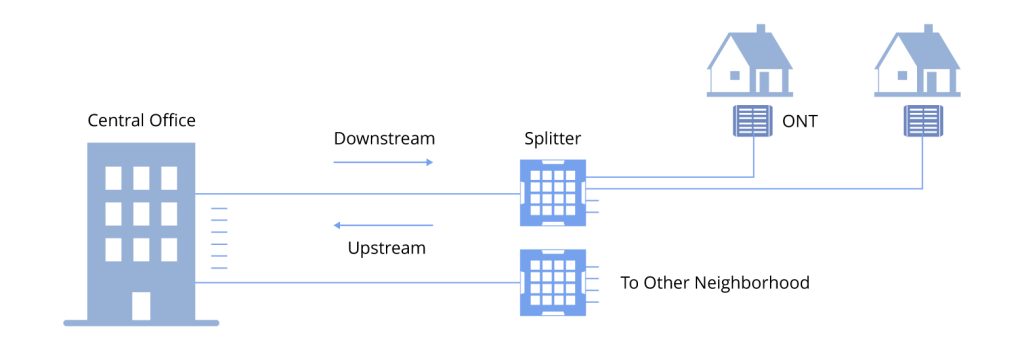
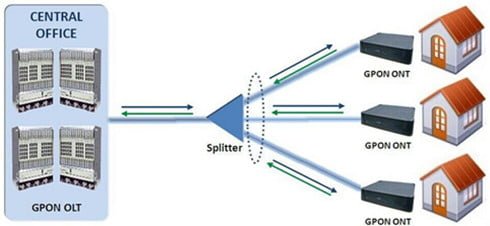
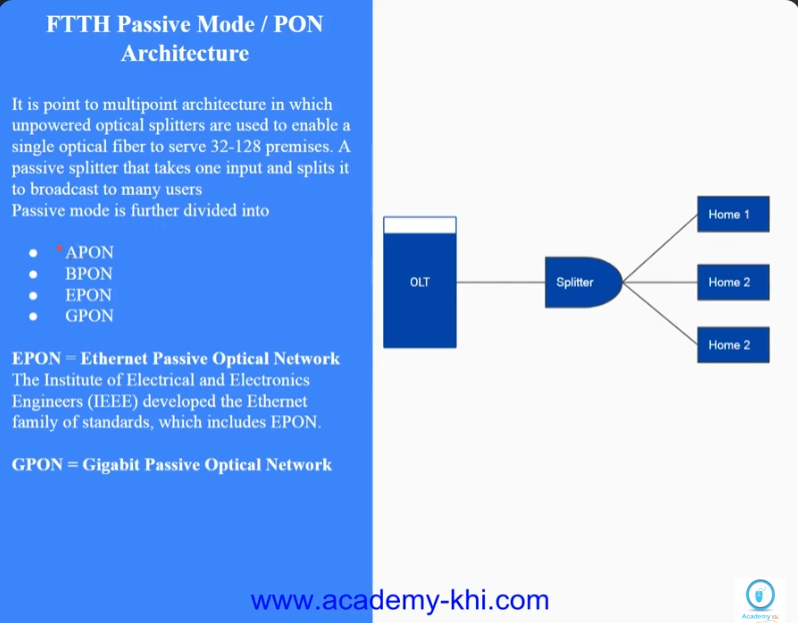
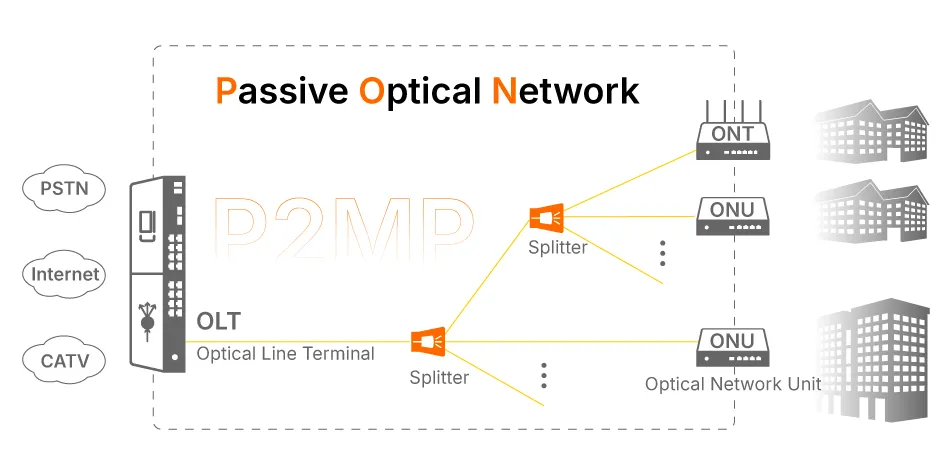
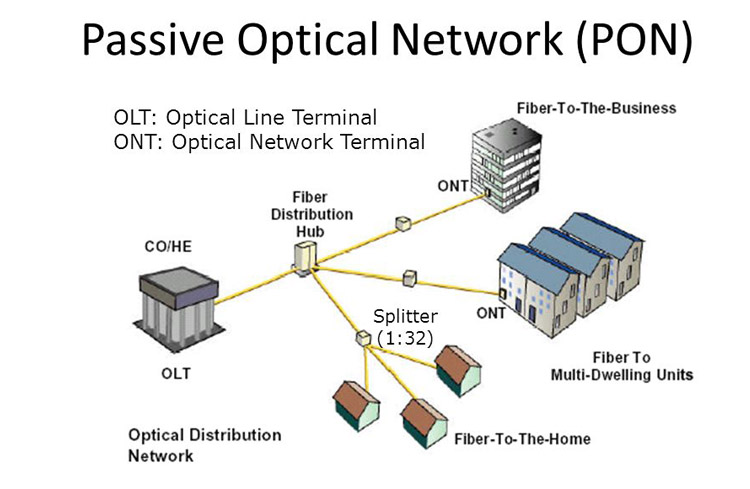
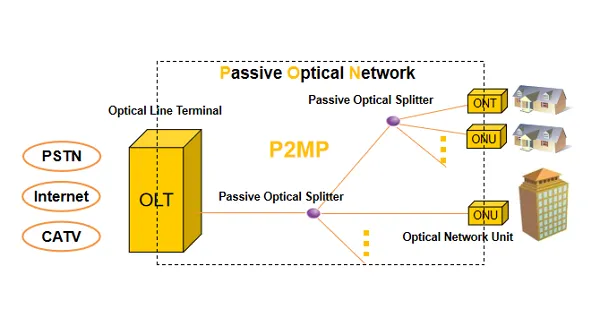
FTTH – PON: FTTH utilizes a passive optical network (PON) where multiple customers share a single connection without active components. A bi-directional PON splitter facilitates downstream signals from the central office to all users and combines upstream signals back to communicate with the central office via a single fiber. This splitter, a crucial passive component in FTTH, significantly reduces costs by allowing shared access, making it a preferred architecture for FTTH deployments.
Simple Way FTTH Desricption
What is FTTH?
FTTH stands for Fiber to the Home. As the name suggests, a fiber optic connection is delivered directly to your home, ensuring high-speed internet.
FTTH is the best option available for households looking for high-speed internet. It’s highly recommended for streaming, downloading, uploading, and other similar usage.

What is FTTH? (Simple Explanation)
FTTH means the fiber cable goes all the way to your home, not just to the street or a nearby box. Because of this, FTTH provides:
- Very high internet speed
- Stable connection
- Good for gaming, streaming, online classes
- Faster downloads and uploads
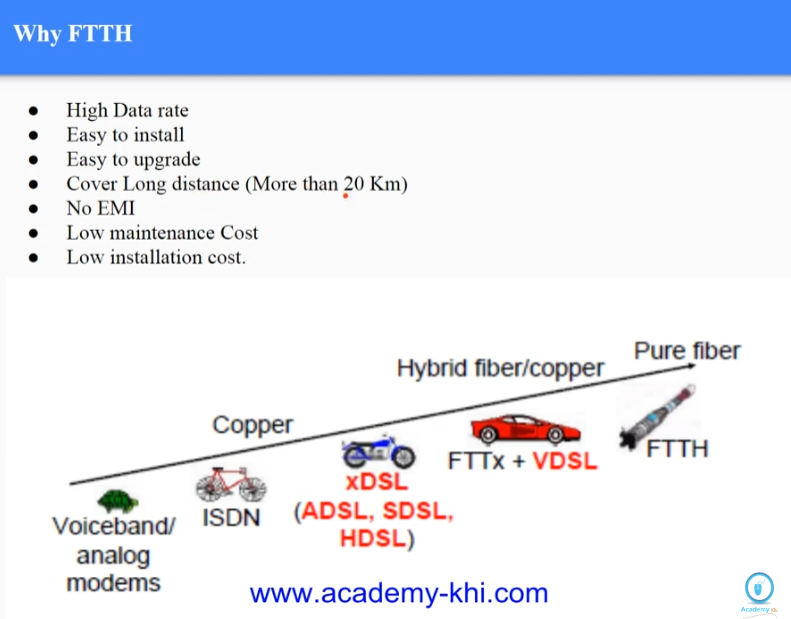
It is much better than old copper wire or DSL connections.
How FTTH Works (Step-by-Step)
- Internet Service Provider (ISP) sends internet through fiber optic cables
- Fiber cable reaches a distribution box near your home
- Fiber cable is connected directly into your house
- Light signals inside the fiber carry data at high speed
- A device in your home converts the light signal into internet you can use
FTTH Devices (Short Explanation )
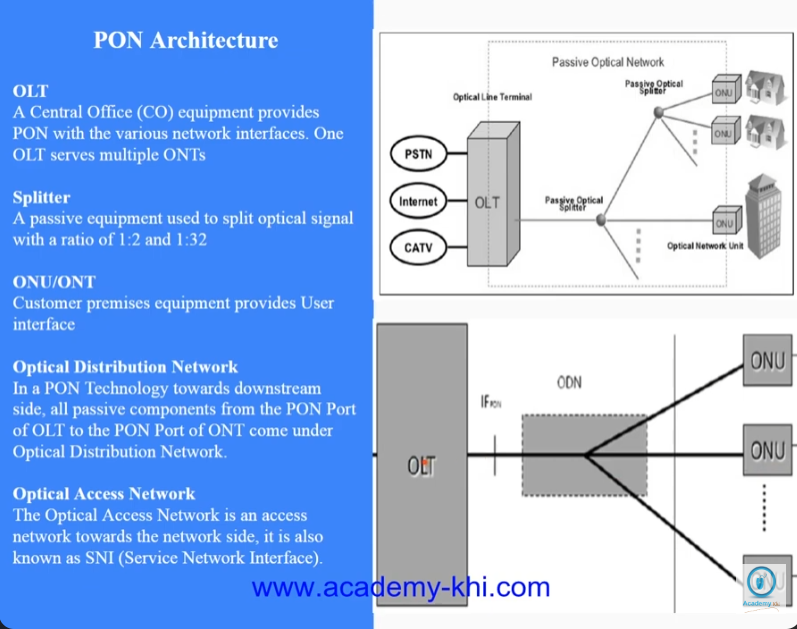
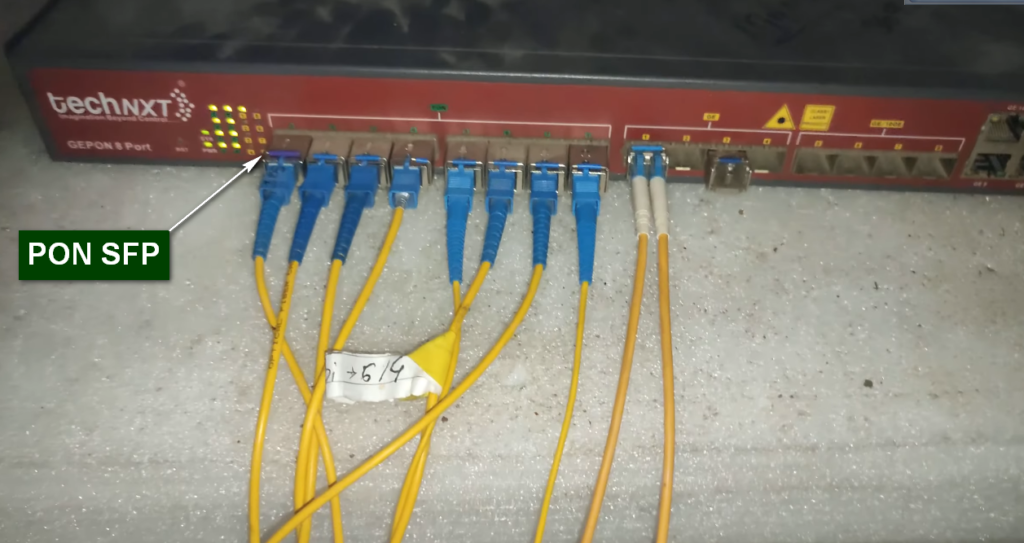
OLT (Optical Line Terminal)
- Located at the ISP central office
- Sends and manages internet data for many users
Fiber Optic Cable
- Carries data as light signals
ODF / Fiber Distribution Box
- Splits one fiber line to multiple homes
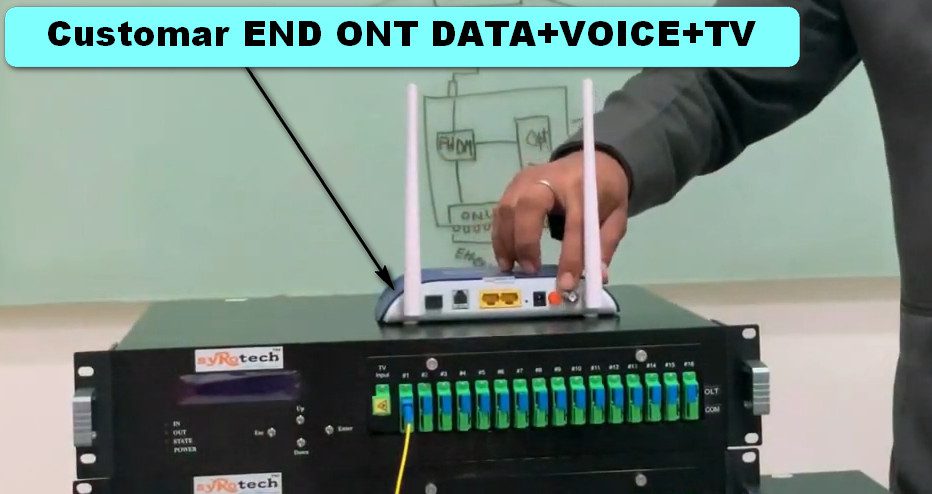
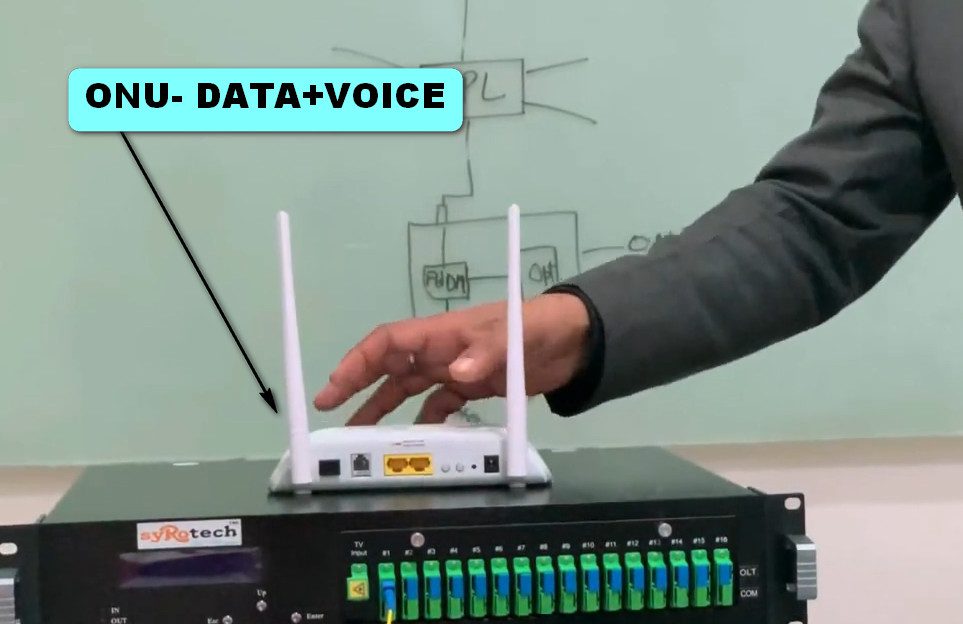
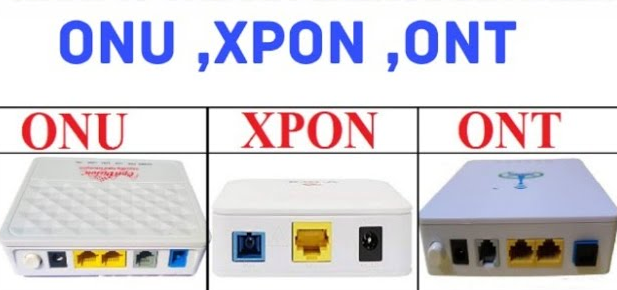
ONT / ONU
- Installed at the customer’s home
- Converts light signals into internet
Router / Wi-Fi ONT
- Distributes internet to devices
Advantages of FTTH:
- High Bandwidth: FTTH allows for extremely high bandwidth capacity, enabling users to experience seamless internet browsing, media streaming, and other data-intensive activities.
- Symmetrical Speeds: With symmetrical upload and download speeds, FTTH ensures optimal performance for activities that require real-time data transfer, such as video conferencing and cloud computing.
- Future-Proof: FTTH is considered a future-proof technology as it can accommodate increasing bandwidth demands and emerging technologies without requiring major infrastructure upgrades.
Very fast speed (up to 1 Gbps or more)
✅ Clear video calls
✅ No signal loss over distance
✅ Future-proof technology
What is FTTB (Fiber to the Building)
Fiber to the Building (FTTB):
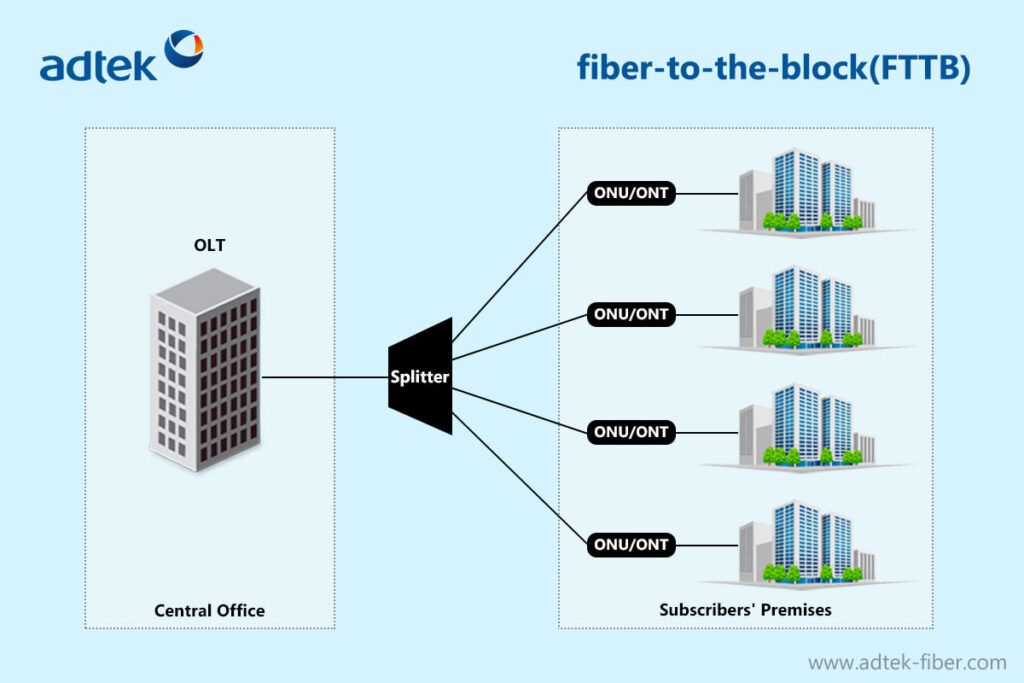
FTTB is a broadband internet infrastructure that extends fiber optic cables directly to a building or multi-dwelling unit (MDU). FTTB is an extension of Fiber-to-the-Premises (FTTP) technology and is commonly used in urban areas where it may not be practical to deploy fiber optic cables to every individual residence.
In an FTTB setup, the fiber optic cables are terminated at a distribution point within the building, such as a basement or equipment room. From there, the internet service provider (ISP) uses other network technologies, such as Ethernet or coaxial cable, to deliver high-speed internet access to individual units or tenants within the building.
What is FTTB?
FTTB stands for Fiber to the Building. The fiber cable delivers high-speed internet to the building’s basement or a specific room.
From there on, the internet is delivered to all the flats using Ethernet or coaxial cables. Compared to FTTH, FTTP gives a little less speed due to the last stretch of cables.

FTTB, Fiber to The Building
FTTB(Fiber to The Building), uses digital broadband technology to directly connect the fiber to the community and then to each user through twisted pair (Super Category 5 twisted pair or 4 pairs of unshielded twisted pair) .
FTTB (Fiber To The Building): It is a network connection mode of FTTX+LAN. It mainly connects optical signals into the main distribution box of an office building or apartment building to realize access to optical fiber signals, but in an office building or The interior of the apartment building is still using the coaxial cable, twisted pair or fiber optic to achieve the signal distribution input to achieve high-speed data applications. We call FTTX+LAN Broadband Access Network (FTTB), which is the most reasonable, practical and cost-effective broadband access method.
Advantages of FTTB:
- Increased bandwidth: Fiber optic cables can deliver significantly higher bandwidth compared to copper cables, enabling faster and more reliable internet speeds.
- Symmetrical speeds: With FTTB, both upload and download speeds can be symmetrical, which is essential for applications like video conferencing, cloud computing, and uploading large files.
- Future-proof infrastructure: Fiber optic cables have the potential to support much higher speeds than current consumer demands, ensuring the infrastructure remains relevant for years to come.
- Reduced latency: Fiber technology provides low-latency connections, resulting in improved performance for real-time applications like online gaming, video streaming, and VoIP services.
- Scalability: FTTB networks can easily accommodate increasing bandwidth needs by upgrading the equipment at the building’s distribution point without replacing the entire infrastructure.
advantage
FTTB uses dedicated line access, no dialing required, and the installation is simple. The client only needs to install a network card on the computer to perform 24-hour high-speed Internet access. FTTB provides a maximum uplink and downlink rate of 10Mbps (exclusive).
And based on the IP speed limit, when the bandwidth is full, the delay will not increase.
Disadvantage
The advantages of FTTB as a high-speed Internet access method are obvious, but we should also see that ISPs must invest a lot of money to lay high-speed networks to each user’s home, thus greatly limiting the promotion and application of FTTB. Most netizens still need to do a lot of work.
What is FTTX (Fiber to the X)
What is FTTx?
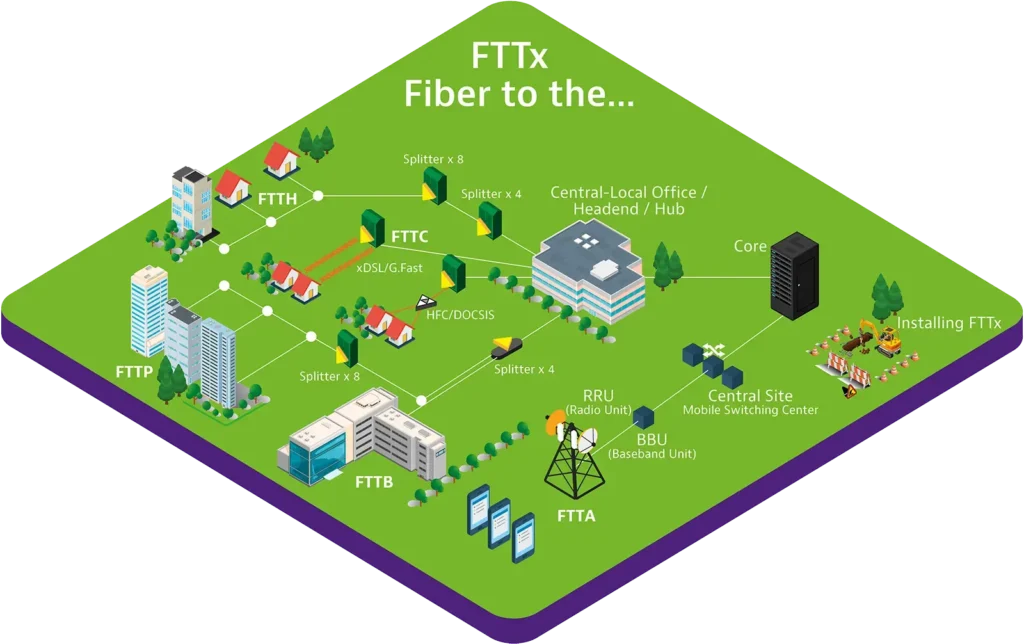
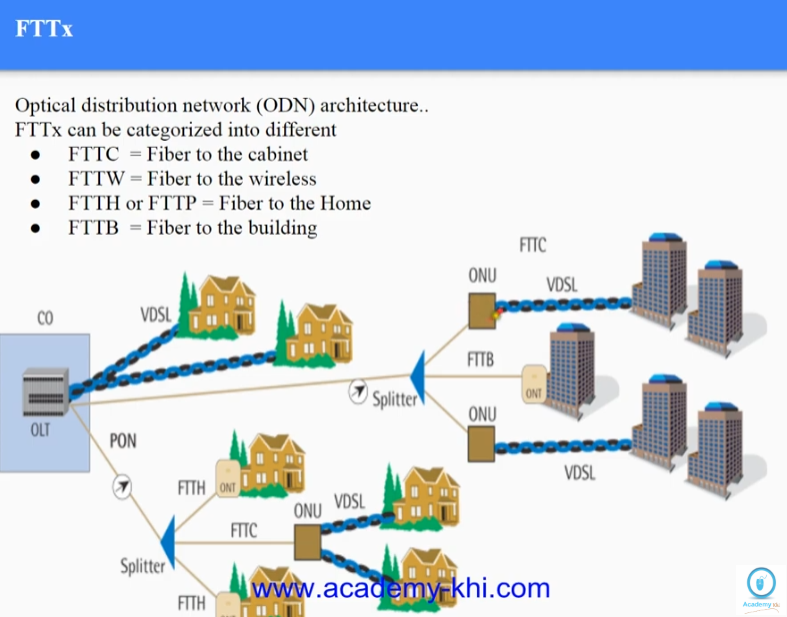
The term FTTx is used for all types of fibre infrastructure including Fibre-to-the-Home (FTTH), Fibre-to-the-Premises (FTTP), Fibre-to-the-Curb (FTTC), and Fibre-to-the-Node (FTTN). FTTH stands for Fibre-to-the-Home and is essentially the same as FTTP (Fibre-to-the-Premises).
FTTx, or fiber to the x, is a term used to describe various broadband network architectures that rely heavily on optical fiber to provide all or part of the local loop used for last-mile telecommunications, that is, from the service provider’s core network to a termination point, such as a home, business or connected device.
This technology is essential for improving broadband connectivity, including 1G and 10G networks, which help bridge the digital divide by delivering scalable high-speed internet access to homes and businesses.


Key Takeaways
FTTx Enhances Broadband Connectivity
FTTx (Fiber to the x) refers to a range of network architectures that use optical fiber to deliver high-speed internet, especially for the “last mile” between service providers and end users. It supports scalable broadband, including 1G and 10G networks, helping bridge the digital divide.Multiple FTTx Configurations Exist
FTTx includes several deployment models:
- FTTH (Fiber to the Home): Direct fiber to individual homes.
- FTTB (Fiber to the Building): Fiber to a building, with internal distribution via other means.
- FTTC (Fiber to the Curb): Fiber to a nearby curb, with copper for the final stretch.
- FTTN (Fiber to the Node): Fiber to a central node, then copper or coaxial to homes.
CommScope Provides End-to-End FTTx Solutions
CommScope offers a comprehensive portfolio for building FTTx networks, from central offices to end-user premises. Their solutions are designed for quick deployment, high performance, and durability in challenging environments.Simplified Deployment for Service Providers
CommScope’s products reduce installation complexity and technician skill requirements, enabling faster and more cost-effective network rollouts.Empowering Communities Through Connectivity
By partnering with service providers, CommScope helps deliver reliable, high-speed internet to underserved areas, contributing to digital inclusion and community empowerment.
What is Fibre to the X (FTTx)?
Fibre to the X is a collective term that is used to describe various types of broadband network architectures, depending on wherever they terminate. The ‘X’ in ‘FTTx’ represents a particular object. It could be a home, a cabinet or any end-user premise. Resultantly, FTTx could be Fibre to the Home (FTTH), Fibre to the Building (FTTB), Fibre to the Premises (FTTP) and Fibre to the Curb (FTTC). FTTx is used to drive next-generation access by a significant upgrade to the broadband available by making a step-change in the speed and quality of the service.
Fibre to the X (FTTx) network architecture finds its use in Last-mile connectivity. The network is spread out from the end-user premise to the carrier network edge. It can deliver faster and better connectivity to homes and enterprises around the world.
FTTx has many benefits related to speed and capacity and that is the reason legacy copper-based networks are being replaced with Fibre to the X (FTTx). Other advantages include higher transmission rates and lower energy consumption. Fibre to the X network takes fibre closer to the end-user. This helps in leveraging the latest construction, connection and transmission techniques.
With the development of cloud computing, smart cities and 5G, requirements for higher bandwidth and network speed have increased. Fibre to the X offers a low-latency, high-bandwidth fibre network that can fulfil all these requirements. In addition, it also helps in achieving high capacity and consistent connectivity. It also helps in providing long-distance signal transmission, a lightweight form factor, and immunity against electromagnetic interference
Fibre to the X Monitoring and Maintenance
Planning should go into Fibre to the X (FTTx) maintenance and operations and contracts should be arranged properly to make sure appropriate levels of manpower are available when called upon. Here are some planning guidelines:
- Engineers and technicians must have experience and be well acquainted with underground fibre laying, knowledge of aerial duct, and cable network systems. This all is required for nest practices and workflow studies.
- It is also important to liaison with local authorities and carefully plan the installation of the FTTx network as will result in safe and efficient operations. It is also important to have power supply services from local authorities.
- In the area where fibre has to be deployed, there must be complete safety. Some steps to be taken in this direction include the use of caution signboards, a copy of the local authority’s permission letter, and properly organised traffic signals.
- Complete air and oxygen tests should be carried out before entry inside the manhole. Technicians must use proper ventilation if necessary. Technicians and labour working underground on the FTTx project are required to have in operation gas warning equipment that continuously monitors levels such as toxic, flammable, oxygen, and carbon dioxide.
- In case of detection of flammable gas, the local Fire Service must be contacted immediately. Before starting the work on all existing electrical cables, technicians should inspect for the possibility of damage and exposed conductors.
What is FTTH: Fibre to the Home?
FTTH is the fibre that reaches the fibre-optic access solutions designed for residential setups. In this network, optic fibre is directly connected to individual homes or multitenant buildings. FTTH includes both PONs and PTP Ethernet-based solutions. Fibre-to-the-node (FTTN) solutions are not included in the FTTH segment. These are instead tracked according to the technology used in the last mile connectivity (typically VDSL). FTTH is an efficient and cost-effective substitute for existing copper infrastructure. This technology is efficient enough to provide much higher bandwidth to consumers and enterprises. FTTH allows for high-bandwidth services to be made available to consumers. It also leaves room bandwidth room for the future demands that new services will pose.
FTTH finds its use primarily in SFU – single-family unit, which provides a relatively small number of ports. For example, POTS, RF (18dBmV) and 10/100/1000 BASE-T. Active and Passive are the two methods in which the optical fibre method can be implemented. At present, the maximum deployment of FTTH is done in the passive method.
This method uses two typical technologies – Passive Optical Ethernet Network (EPON) and Passive Optical Networks with Gigabit capability (GPON). Connecting homes directly to the fibre optic cable lead to huge bandwidth improvements for consumers.
Existing fibre optic technology can provide bidirectional transmission speeds as high as 100 megabits per second. Constant enhancements in fibre optic related equipment increase the bandwidth available and there is no need to change the fibre.
What is the difference between FTTX vs FTTH?
Fibre to the X (FTTx) refers to all types of fibre infrastructure including FTTH, FTTP, FTTC, and FTTN, while FTTH refers to fibre-to-the-home and is synonymous with FTTP. One thing common in both is a fibre optic cable running directly from the Internet Service Provider (ISP) to a home or business location.
What is FTTC (Fibre to the Cabinet)
What is FTTC?
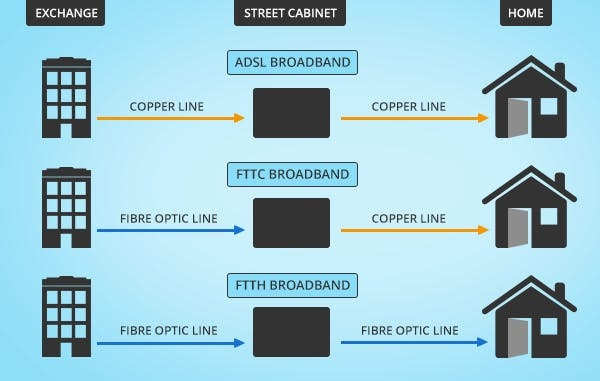
FTTC stands for Fiber to the Cabinet. A cabinet is a distribution point near a home, building, or premises. It’s usually located within 300 meters of the home, but the distance may change depending on the scenario.
Sometimes, the last stretch (to the home or building) uses copper cable due to the lack of a full-fiber connection.
What is FTTC Short Explain?
FTTC stands for Fiber To The Curb (or Fiber To The Cabinet).
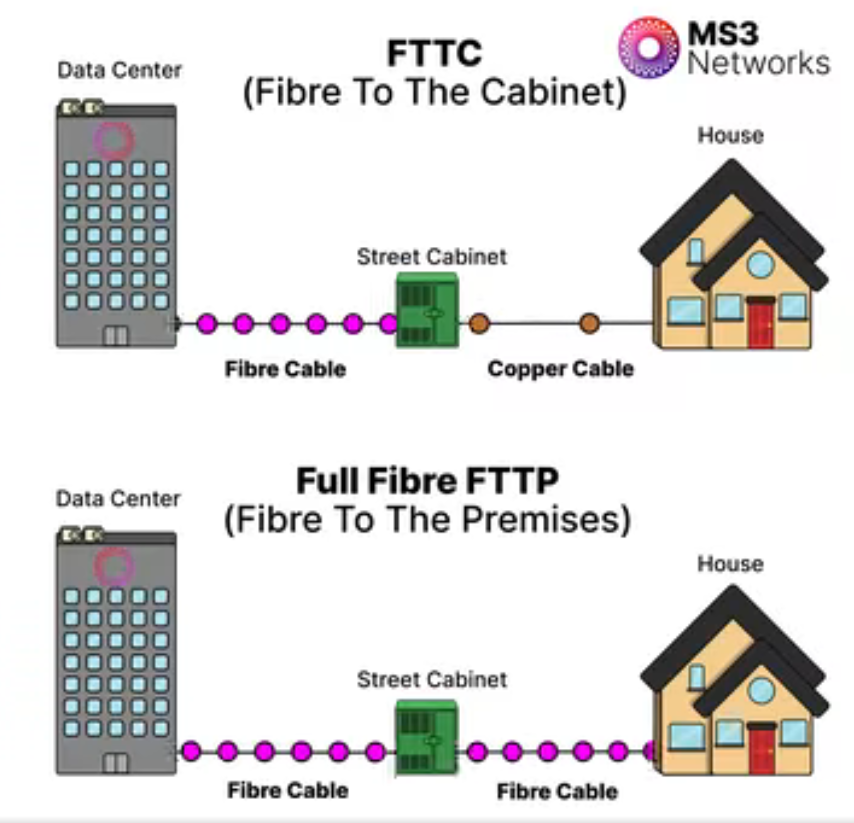
In FTTC, fiber optic cable runs from the ISP to a street cabinet near your home.
From the cabinet to your house, copper cables (telephone line) are used.
How FTTC Works
- Internet starts at the ISP
- Fiber cable goes to a street cabinet/curb
- A DSLAM is installed in the cabinet
- Copper cable connects the cabinet to homes

Advantages of FTTC:
- Extended Coverage: FTTC extends fiber optic connectivity closer to end-users, allowing for improved speeds and performance compared to traditional DSL connections.
- Cost-Efficient: By utilizing existing copper or coaxial cables
What is FTTP (Fiber To The Premises)
FTTP or Fiber To The Premises uses optical fiber for transmit high-speed internet connection to individual homes, apartments, etc. Optical fiber can handle a large amount of high-speed data that covers a long distance. It is fast compared to traditional networks. In this article, we will see FTTP in detail.
What is FTTP?
Fiber To The Premises is a fiber optic cable delivery medium that provides Internet access directly to a user or groups of users through an Internet service provider. It mostly refers to fiber broadband which is wired directly to the home instead of offices that services the area.
History of FTTP
FTTP is a type of fiber optic communication delivery and in 1970 first fiber optic released. It replaced the copper wire communication. The first commercial fiber optic communications system was developed in 1975 and second generation fiber optic communication was developed in 1980 and afterwards many new version come with the increase in wavelength and speed.
Characteristics of FTTP
- It is made up of fiber thus transmission of internet is fast.
- FTTP are able to carry much more data than copper cables, especially for the long distances.
- FTTP can be categorized according to where the optical fiber ends like FTTH(Fibre to the home) and FTTB(Fibre to the building).
Advantages of FTTP
- It provides superior bandwidth.
- It also provides highest internet transfer speed among all internet service.
- It is reliable and secure.
- It is resistance to Electromagnetic Interferences like heating.
- It is more durable, tougher and not as susceptible to damage.
Disadvantages of FTTP
- It is costly.
- It is difficult to install.
- It requires longer implementation period.
- Internet connection constantly goes offline during operation hours is a major issue.
Conclusion
In Conclusion, FTTP provides a high internet speed because it is a broadband technology that covers a large distance. When we come to broadband areas we easily have to access an internet connection but the thing is that this broadband is not available in every area and it costly as compared to the traditional broadband.
The Benefits of FTTP
- Lightning-fast speeds: With FTTP, you can enjoy the benefits of ultrafast broadband speeds, allowing you to seamlessly stream high-definition videos, play online games without lag, and download large files in a matter of seconds.
- Reliability: Since FTTP eliminates the need for copper wires, which are prone to signal degradation, you can expect a more reliable and stable internet connection. This is especially important for businesses that rely on a consistent and uninterrupted internet connection.
- Future-proof: FTTP is a future-proof technology that can support increasing bandwidth demands. As technology continues to evolve, and more data-intensive applications are introduced, having a fibre-optic connection ensures that you won’t be left behind.
- Symmetrical speeds: Unlike traditional broadband connections that offer faster download speeds than upload speeds, FTTP provides symmetrical speeds, meaning your upload and download speeds are the same. This is particularly beneficial for businesses that frequently upload large files or rely on video conferencing and cloud-based services.

What is FTTN (Fiber To The Node)
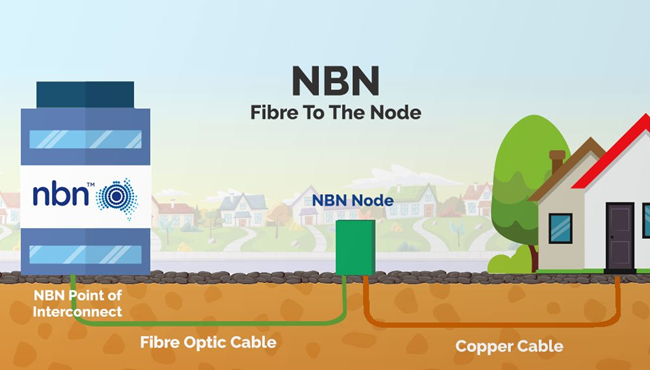
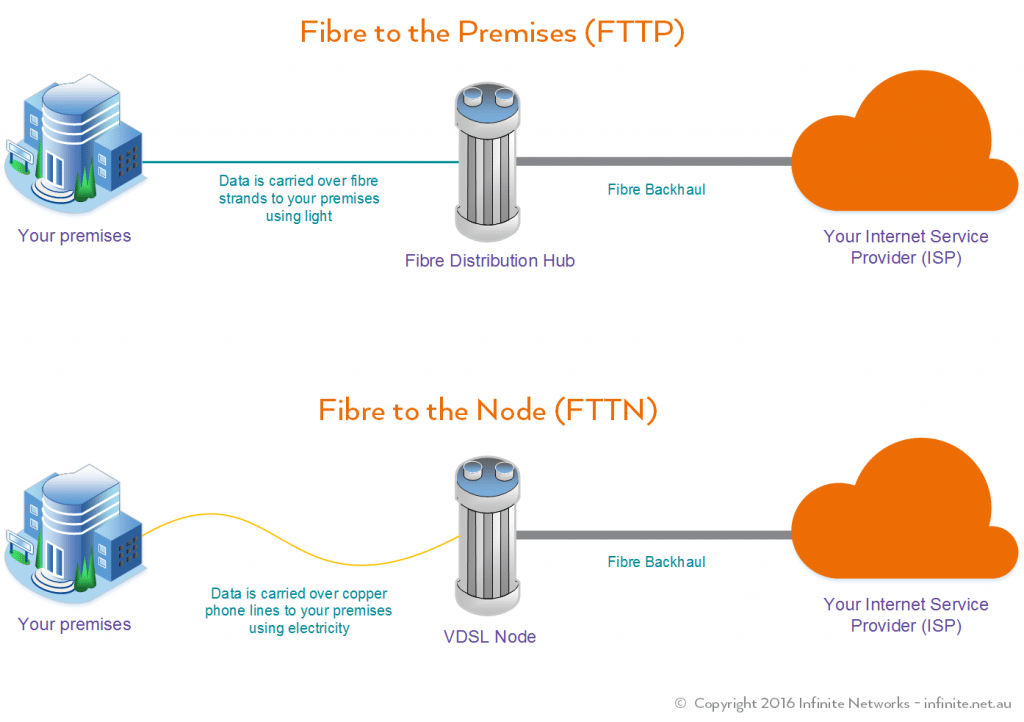
Fiber to the Node (FTTN) is a telecommunications architecture where fiber optic cables run to a central node that serves a neighborhood or area. From this node, the connection is distributed to individual homes or businesses using existing copper or coaxial cables. This setup allows for faster internet speeds and more reliable connections compared to traditional copper-based networks. FTTN is significant in the telecom industry as it provides a cost-effective way to upgrade infrastructure and improve service quality without the need for full fiber deployment to each end-user.
Overview of Fiber to the Node
Fiber to the Node (FTTN) involves running fiber optic cables to a central node, which then distributes the connection to homes or businesses via copper or coaxial cables. This method enhances internet speeds and reliability without requiring full fiber deployment to each user, making it a cost-effective infrastructure upgrade.
Benefits of Fiber to the Node
Fiber to the Node (FTTN) offers several advantages that make it an attractive option for upgrading telecommunications infrastructure.
- Speed: Faster internet speeds compared to traditional copper networks.
- Reliability: More stable connections with fewer interruptions.
- Cost-effective: Lower deployment costs than full fiber to the home.
- Scalability: Easier to upgrade and expand as demand grows.
- Accessibility: Wider reach, bringing high-speed internet to more areas.
Fiber to the Node vs. Fiber to the Cabinet
Understanding the differences between Fiber to the Node (FTTN) and Fiber to the Curb (FTTC) is crucial for making informed decisions.
- Deployment: FTTN uses existing copper or coaxial cables from a central node, making it less expensive but potentially slower. FTTC brings fiber closer to the end-user, offering higher speeds but at a higher cost.
- Suitability: FTTN is ideal for enterprises needing cost-effective upgrades over large areas. FTTC is better for mid-market companies requiring faster speeds and more reliable connections.
Frequently Asked Questions about Fiber to the Node
What is the main advantage of Fiber to the Node (FTTN) over traditional copper networks?
FTTN offers significantly faster internet speeds and more reliable connections compared to traditional copper networks, making it a cost-effective way to upgrade existing infrastructure.
How does Fiber to the Node (FTTN) impact future network upgrades?
FTTN allows for easier and more scalable upgrades, as fiber can be extended closer to end-users over time, reducing the need for extensive infrastructure changes.
FTTC vs FTTH vs FTTB vs FTTP: What is the Difference?
Let’s quickly glance at FTTC vs FTTH vs FTTB vs FTTP.
| Feature | FTTC | FTTH | FTTB | FTTP |
| Fiber Endpoint | Near the curb or cabinet | Inside the home | At the building’s entry | At the premises |
| Last Mile | Copper wires | Pure fiber | Internal building wiring | Pure fiber |
| Internet Speed | Moderate | Ultra-fast | High | Ultra-fast |
| Reliability | Medium | Excellent | High | Excellent |
| Cost | Low to moderate | High | Medium | High |
| Best For | Budget users | Heavy internet users | Apartment buildings | Premium connectivity |
FTTC vs FTTH: What is the Difference?
The difference between FTTC and FTTH is pretty simple. The FTTC connection has an endpoint (a cabinet or a curb) usually located near the home. Multiple connections are stretched through the Cabinet to deliver internet across various homes. So, the last-mile connection to the modem is an optical cable.
FTTH is a direct connection to the home where the last mile connection is also fiber optic. The 100% fiber connection is for the full-speed internet.
When a new telecom service enters a city, it wishes to expand in multiple locations and cover the entire city. So, FTTC helps them cover more areas faster. Further, FTTH costs a lot more than FTTC. As a result, people who don’t use the internet much prefer FTTC over FTTH.
So, clearly, FTTC vs FTTH has a huge difference. However, that’s not the case with FTTH vs FTTB.
FTTH vs FTTB: What is the Difference?
In general, FTTH has a true fiber optic connection till the end (home of the user). In contrast, FTTB has a fiber connection only to the basement or utility room of the building. Depending on the setup, in some cases, FTTB may also have a full fiber connection till the last mile.
However, for most cases, FTTB only has a fiber connection until the building endpoint. From there, the connection is stretched using coaxial cable or others.
For apartments, FTTB is the preferred option, whereas people living in a house prefer FTTC or FTTH, depending on their budget. If you like high-speed internet, FTTH is clearly the option. But what about FTTP? Let’s understand FTTH vs. FTTP.
FTTH vs FTTP: What is the Difference?
As we have already noted, both FTTH and FTTP have high speeds. However, due to the configuration, FTTP has a much higher speed. For commercial properties, FTTP is the only option for high-speed internet. Remember, while FTTH is only for residential properties, the latter option is for both.
Even home users who want a premium option prefer the Fiber to the Premises option. The bandwidth allocation and SLA for FTTP are much higher than those for homes.
For regular residential users, FTTH is preferable unless you want to go with the premium services.
Which one to choose: FTTC, FTTH, FTTB, or FTTP?
FTTC is used for the Cabinet from where the connection is stretched to the other locations. As the cables used in the end are not necessarily Fiber, you may experience speed issues. The same goes with FTTB. However, FTTB is only limited to a building.
On the other hand, an FTTH connection goes directly to your home, giving the best internet speed. FTTP is the premium option, with high-speed internet available for residential and commercial use.
So, the answer depends on your needs.
Here’s a quick comparison of all these.
- FTTC vs FTTH: FTTH is better, but FTTC is more affordable.
- FTTH vs FTTB: Depending on the availability, FTTH is faster while FTTB is affordable.
- FTTH vs FTTP: For most residential users, FTTH is preferable.
- FTTC vs FTTB: FTTC is for society, while FTTB is for buildings.
FAQs
Q: What is the most reliable type of fiber connection?
A: The most reliable fiber connection is FTTP.
Q: Can you have pure Fiber for FTTB?
Yes, it’s possible to have a pure fiber connection for FTTB. However, it will depend on the setup and telecom operator.
Q: Are FTTC and FTTH available everywhere?
FTTC is widely available everywhere. However, FTTH connection depends on the location and telecom operator.
FTTH Slide








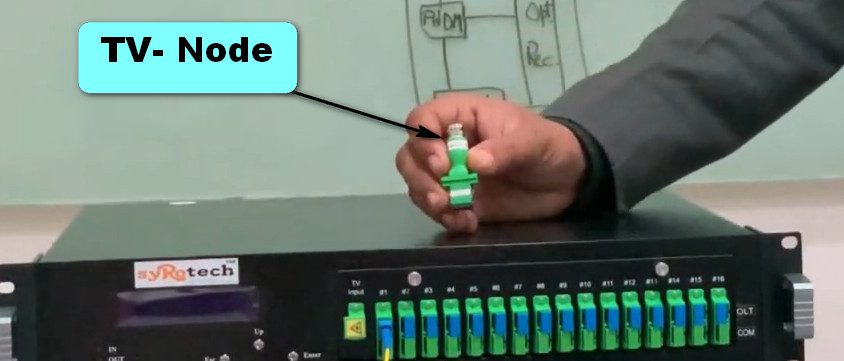
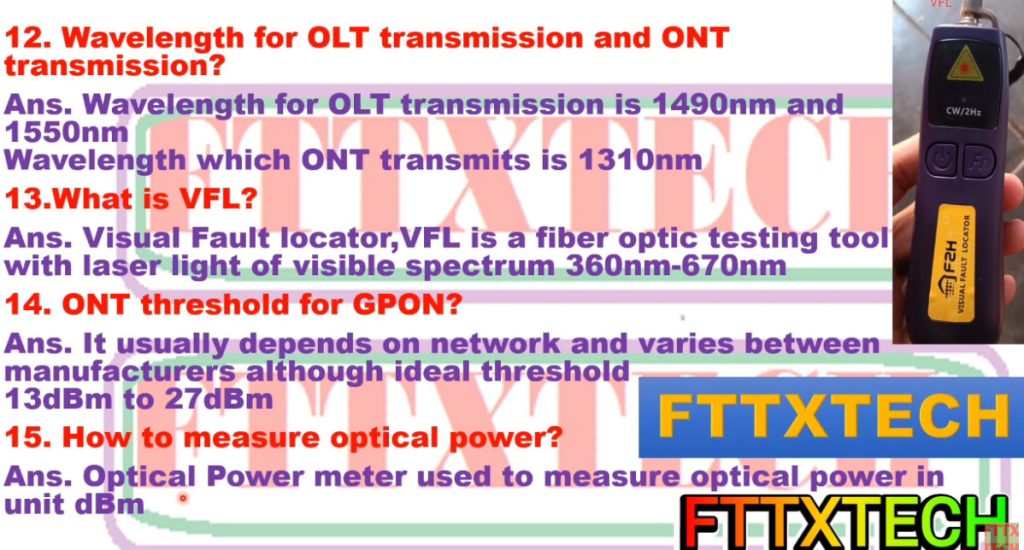
CATV 1550nm Wavelenth OLT 1310nm